Posts Tagged ‘US economy’
“It’s the economy, stupid”*…

Many Americans take pride in having the largest economy in the world… which, per the chart above, by one measure we do.
But then, if we adjust for population– calculate per capita– the picture changes…

And we note both that, on a PP basis, the U.S. would be lower and, more fundamentally, that the standing of the U.S. is slipping over time.
If we dive more deeply still, the picture complicates further…

This last chart illustrates the wealth inequality in the U.S., which drops from 2nd to 28th when wealth is measured by the median instead of the average… a wealth gap that has been growing since 1985 (and that is combined with an income gap that has been growing since 1980). For more, see World Inequality Database.
* James Carville
###
As we search for the source of that smell, we might recall that it was on this date in 1549 that Robert Kett agreed to head a group of rebels in the English county of Norfolk during the reign of Tudor king Edward VI. The rebels were incensed by enclosure (the fencing off of common lands by wealthy landlords, as a product of which many peasants lost access to grazing, fuel, and small plots they had long used), along with rising rents, inflation, unemployment, and declining wages; as a response, they began destroying fences. One of their early targets was yeoman Robert Kett who, instead of resisting the rebels, agreed to their demands and offered to lead them.
Kett and his forces, joined by recruits from the city of Norwich and the surrounding countryside and numbering some 16,000, stormed Norwich and took the city at the end of July. They were besieged by, then routed, a Royal Army detachment led by the Marquess of Northampton who had been sent by the government to suppress the uprising.
But what became known as “Kett’s Rebellion” ended on August 27, when the rebels were defeated by an army under the leadership of the Earl of Warwick at the Battle of Dussindale. Kett was captured, held in the Tower of London, tried for treason, and hanged from the walls of Norwich Castle on December 7.

“Unless we change direction, we are likely to end up where we are headed”*…

The economy is in a very confusing place. Happily, the good folks at Full Stack Economics weigh in with data in the form of illuminating charts….
It’s a turbulent time for the US economy. The economy largely shut down in March 2020 only to come roaring back a year later with the highest inflation in almost 40 years. No one is sure what’s going to happen next.
At Full Stack Economics, we believe that charts are an essential way to understand the complexities of the modern economy. So in recent weeks, I’ve been looking far and wide for the most surprising and illuminating charts about the US economy. I’ve compiled 18 of my favorites here. I hope you enjoy it…
Speaking for myself, I did enjoy (and appreciate) it. I’m still confused, but I’m confused at a much higher level.
Take a look for yourself: “18 charts that explain the American economy,” from @fullstackecon (@AlanMCole and @binarybits)
* Chinese proverb (often mis-attributed to Lao Tzu)
###
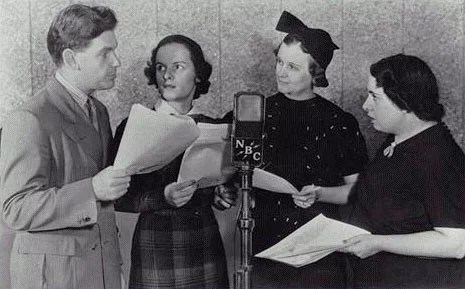
As we ponder the portents, we might recall that it was on this date in 1937, on NBC Radio, that The Guiding Light premiered. A soap opera created by Irna Phillips, who helped develop the template for the day-time serial drama targeted to women, it ran for a decade before shifting to CBS Radio, where it ran until 1956. But in 1952, CBS transplanted the series to television, where it ran as a daily (weekday afternoon) staple until 2009.
Irna went on to create other soaps (e.g., Another World) and in the process to introduce and mentor the giants of the form (including William J. Bell, James Lipton, and the great Agnes Nixon). With 72 years of radio and television runs, Guiding Light is the longest running soap opera, ahead of General Hospital, and is the fifth-longest running program in all of broadcast history– behind only the country music radio program Grand Ole Opry (first broadcast in 1925), the BBC religious program The Daily Service (1928), the CBS religious program Music and the Spoken Word (1929), and the Norwegian children’s radio program Lørdagsbarnetimen (1924–2010).
You must be logged in to post a comment.