Posts Tagged ‘rubliks cube’
“This was not that the subject was simple enough to be explained without mathematics, but rather that it was much too involved to be fully accessible to mathematics.”*…
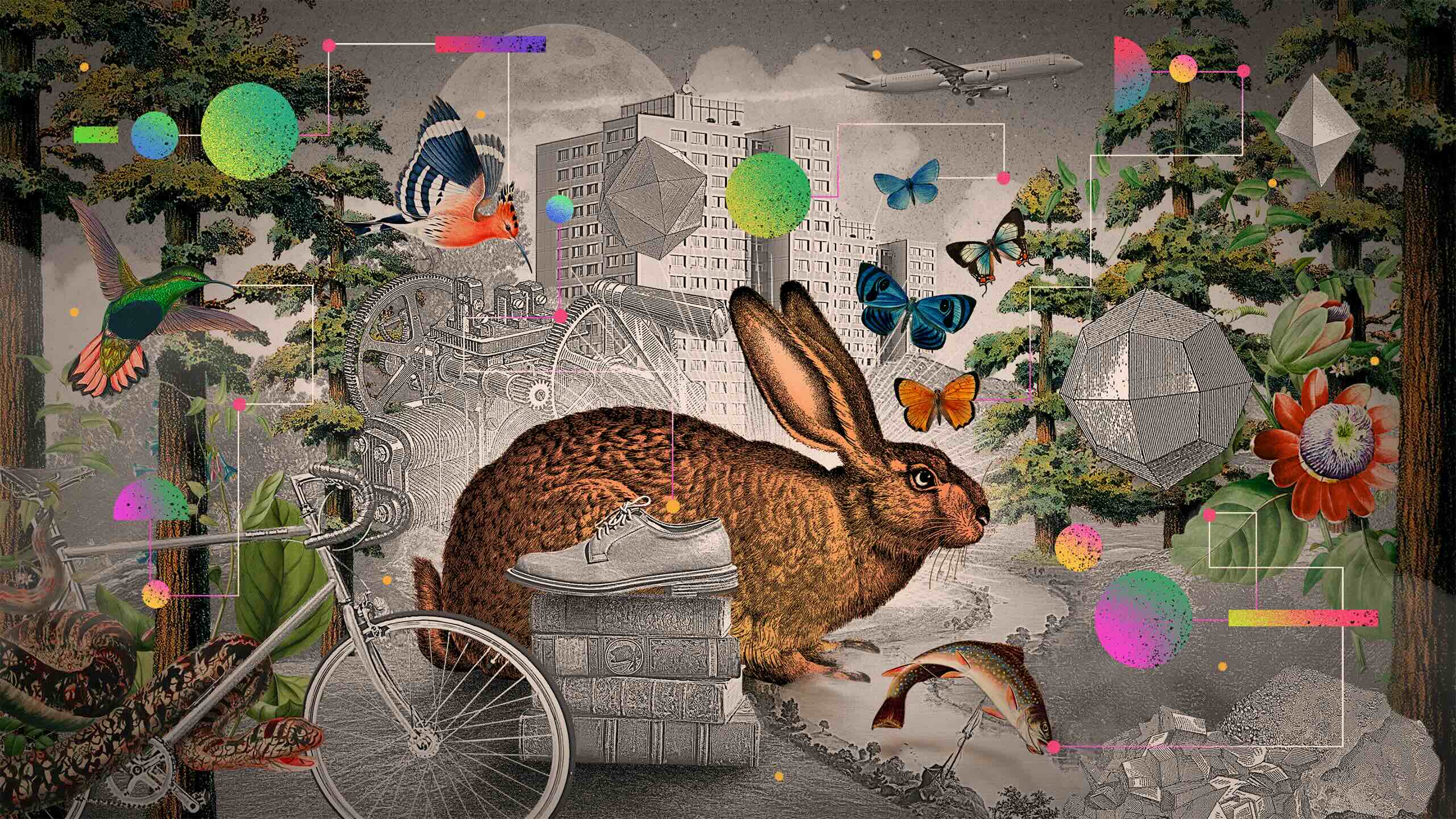
The idea of ‘biological agency’ — that life devises its own goals and behaves accordingly — complicates our understanding of what it means to be alive. But, Philip Ball asks, does it serve a scientific purpose?…
In 1993, a team led by the planetary scientist Carl Sagan tentatively concluded that there is life on Earth. Not much of a deduction, you might think — except that the researchers confined their evidence to observations made by the Galileo spacecraft, which had flown past our planet three years earlier on a looping journey to Jupiter. So great is the transformative power of life that its presence can be detected just from the light and radio waves our planet emits or reflects into space. Today we scan the cosmos for some of these telltale signatures light-years away.
Life leaves a mark, yet even now there’s no scientific consensus about what makes living things so different from inorganic substances like the rocks, gases, and oceans that are the sole components of dead worlds. Many scientists cite properties such as replication or metabolism. Others speak in more abstract terms about the way life is out of thermodynamic equilibrium with its surroundings. But some give another kind of answer. Living organisms are different because they do stuff for reasons.
It’s not enough to say that life is a nonequilibrium organized state through which there’s a constant flux of matter and energy. That description applies to hurricanes, too. But hurricanes just are. Only living entities have goals: to find food, to reproduce, to survive, sometimes simply to experience good things. (Dog owners will recognize that this is not just a human attribute.)
One way to express this idea is to say that living organisms have “agency.” It’s a hotly contested term. Some biologists reject it outright, at least for any organisms except humans, because we decide on our actions with conscious deliberation. (Whether we’re truly the only species to do so is another issue.) Others think that agency is a fundamental attribute of all life. Since there’s no agreed-upon definition of the term, to some extent it can mean whatever you want it to mean. But the debate about biological agency touches on fundamental issues in our understanding of what it means to be alive, because agency evokes a notion that biologists and philosophers have always wrestled with: teleology, the apparent purposiveness of life. If we admit agency into biology, do we open the floodgates to ideas about design, vitalism, or cosmic meaning? Or is it just a recognition of what makes life such a special state of matter?
To me, the notion of agency indeed speaks to our intuitive sense of what makes living things so special: not mere machines pushed around by environment and circumstance. I suspect that aversion to agency betrays a queasiness about confronting life as something more than some kind of genetic program. But there’s danger in the idea, too: It could so easily derail the work of studying the mechanistic explanations of how life works. I’m not looking to either bury or praise agency, but to explore whether it can be a scientifically productive idea…
[Ball unpacks the idea of agency, then reviews both scientific observations and the theories that they have provoked. He concludes…]
… I’m cautiously optimistic about the prospects of uniting such theoretical ideas with biological mechanisms. It seems unlikely to be coincidental, for example, that organisms that seem to show more agency also have molecular pathways that permit more openness to the influence of context and external information.
If we can get a clearer idea of what makes an agent, this could help us to understand how collective goals arise — as they did when multicellular organisms first arose long ago — and how they can break down, as in cancer. What’s more, a proper theory of agency might give us a clearer idea of what’s needed to make genuine artificial agents, not just computers and machines programmed with our own goals, but ones that can formulate their own. We might then also get a clearer idea of the potential benefits and dangers such truly agential machines might bring. But perhaps the most compelling argument for recognizing agency is that it might help us understand what makes life so different — not just humans, but life — that it is able to shape an entire planet in a manner visible from outer space.
Purpose? Goals? On the idea of “biological agency”: “Is Life Just Different?” from @philipcball.bsky.social in @quantamagazine.bsky.social.
* Erwin Schrödinger in What Is Life? (in which he wrestled, in his way, with Ball’s question, contending that life feeds on negative entropy) Full text here.
###
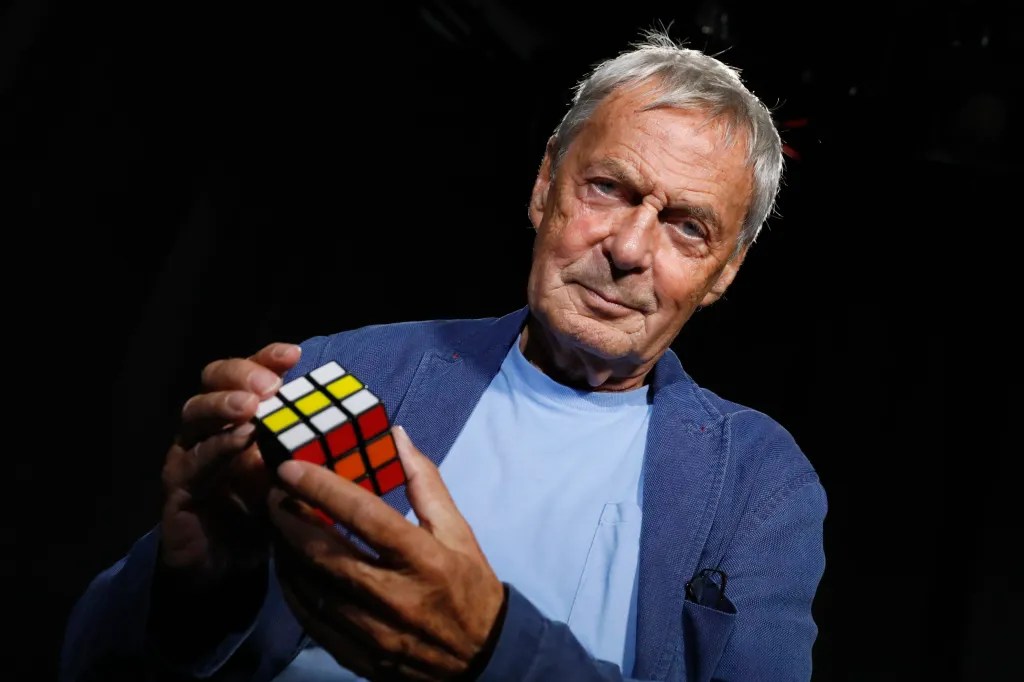
As we wonder why, we might send frustrated birthday greetings to Ernő Rubik; he was born on this date in 1944. An architect and inventor, he created the Rubik’s Cube (in 1974), which has become the world’s best-selling puzzle game, with over half a billion sold.
A Rubik’s Cube consists of 26 small cubes that rotate on a central axis; nine colored cube faces, in three rows of three each, form each side of the cube. After the cube arrangement is randomized (the highest level of entropy), the player must restore order (that’s to say, practice “negative entropy”), returning it to the original condition of faces with matching colors on each side — which is one among 43 quintillion possible configurations.
You must be logged in to post a comment.