Posts Tagged ‘retailing’
“Amazement awaits us at every corner”*…

Zoe Leonard (American, Born 1961) Analogue Detail. 1998-2007 Four Chromogenic Color Prints, Each 11 X 11″ (27.9 X 27.9 Cm) Analogue Was Made Possible Through The Artist’s Residency Program At The Wexner Center For The Arts At The Ohio State University. Acquired Through The Generosity Of The Contemporary Arts Council Of The Museum Of Modern Art, The Fund For The Twenty-First Century, The Modern Women’s Fund, And Carol Appel
Starting in the 1990s, artist Zoe Leonard began photographing the shops in New York City’s Lower East Side. As the New York Times reported [last week], small neighborhood stores like local bodegas are declining in the city as rents steadily rise and chain stores strong-arm their way in.
Leonard witnessed the start of the decline as mom-and-pop shops — with their hand-lettered signs and strange window displays — started vanishing throughout the decade. She photographed them with something equally obsolete: celluloid film. The artist captured the changing landscape with a vintage 1940’s Rolleiflex camera, using gelatin silver, chromogenic, and dye-transfer printing processes. She didn’t crop the black frame of the negative from the final image, either.
”The embrace of photography as an analog medium is reinforced in the work’s recurrent references to Kodak, photo studios, and graffiti,” the Museum of Modern Art writes. Leonard’s photos from the decade are currently on display at MoMA in the exhibition Zoe Leonard: Analogue, presenting 412 images together in a grid-like installation. “Analogue is a testament to the loss of both locally owned shops and straight photography,” MoMA’s press release states. The show is on display through August 30…
Read and see more (and larger, zoomable) versions of the images at “Remembering the Lost Mom-and-Pop Shops of New York City’s Lower East Side in the ’90s.”
***
As we ruminate on retailing, we might recall that it was on this date in 1992 that the Mall of America opened in Bloomington, Minnesota, becoming the largest shopping mall both in total area and in total store vendors in the U.S. It receives over 40 million visitors annually (the most of any mall in the world), and generates nearly $2 Billion in economic impact. The Mall has 7,900,000 square feet of space and 11,000 employees (13,000 in Holiday season). Its 12,000+ parking spaces are relatively few given the store and employee count; but as the Mall is on Minneapolis’ light rail system, and many shoppers arrive by shuttle from nearby hotels or the airport, they suffice.

“If you’re lucky, people will get the message”*…

From the early 80s to today, a graphic look at “The History of Icons.”
Special bonus: browse through the sketchbook of pioneer Susan Kare.
* “If you look at that blank canvas and say, ‘Now I’m going to create a masterpiece’ — that’s just foolhardy. You just have to make the best painting you can, and if you’re lucky, people will get the message.” – Susan Kare
###
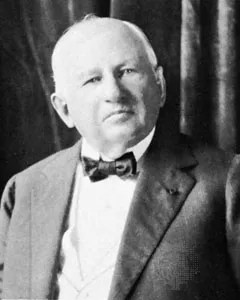
As we point and click, we might send mercantile birthday greetings to John Vansant Wanamaker; he was born on this date in 1838. A gifted merchant who helped define the modern consumer era, Wanamaker’s flagship store in Philadelphia– an enterprise that helped define the “department store”– was designed by famed architect Daniel Burnham, featured a pipe organ, an art gallery and a 2,500-pound bronze eagle that became a favored meeting place for Philadelphians.
Wanamaker was a committed innovator: he was the first to use electric arc lighting in a retail setting (in 1878); and starting in 1910, sensing its potential as an advertising medium, he used his stores as a base for experimentation with radio– starting a radio broadcast station in the store in 1922 to initiate radio receiver sales.
Wanamaker served as Postmaster General in the late 19th century, introducing the first commemorative stamp and laying the groundwork for Rural Free Delivery. And in the early 20th century, he helped establish Mother’s Day as an observance.
An aggressive advertiser and promoter, Wanamaker is credited with the famous observation, “half the money I spend on advertising is wasted; the trouble is I don’t know which half.”
Convenient Crustacea…
A Chinese inventor has developed a vending machine that distributes live Shanghai Hairy Crabs; a Japanese reporter demonstrates:
The inside of the machine is kept at 5 degrees celsius, a temperature cold enough to send the crabs into a state of hibernation. Signage on the machine assures potential purchasers that all the crabs inside are fresh; indeed, the owner promises that if a coin-op crab is dead-on-arrival, the disappointed buyer will receive three free crabs. But perhaps the biggest incentive to buy: eliminating the need for store personnel and reducing the overall cost of storage means that the crabs cost 30% less than the customary store price.
As readers will see, the second half of the video is a more general survey of Japanese vending machines– including the marvelous banana vending machine inside Shibuya station, and a bar equipped with sake dispensers.
Via Japan Probe.
As we lay in rolls of quarters, we might recall that it was on this date in 1858 that Hamilton E. Smith received a patent for cycling reheated water in a washing machine. While earlier washers existed, Smith’s innovation is generally agreed to have created the modern washing machine.

The romance of retail…

But then, Zippy can console himself that, as recent honoree H.L. Mencken observed, “no one ever went broke underestimating the intelligence of the American public.”
As we revisit our plans to open that book store, we might recall that this is the anniversary of the premiere (in 1954) of Walt Disney’s first prime-time television program (Disneyland, on ABC; later re-titled The Wonderful World of Disney), the second longest running television franchise in the country (as measured in seasons aired), and arguably the nation’s first major full-length infomercial (…though Bonomo, The Magic Clown, which ran on NBC from 1949 to 1954– and which was essentially an advertisement for Bonomo Turkish Taffy– has a defensible rival claim to that honor).

Your correspondent is headed for points antipodal, where, as it happens, the drains do not spiral in a different direction, but where connectivity promises to be uncertain… consequently, for the next week or so, these missives are likely to be more roughly than daily.
![Reblog this post [with Zemanta]](https://i0.wp.com/img.zemanta.com/reblog_e.png?w=700)
You must be logged in to post a comment.