Posts Tagged ‘money’
“A billion here, a billion there, and pretty soon you’re talking real money”

See how the amount donated by Americans to charity per year compares to the size of outstanding student debt. Or how Walmart’s revenue measures up against Elon Musk’s wealth. Or how the U.S. military budget stacks up against China’s… and so much more.
From the estimable David McCandless and his wonderful site Information is Beautiful, an illustration of how expenses and wealth that run to over a billion dollars compare.
Then peruse “$Trillions.”
###
As we ponder the pecuniary, we might recall that on this date in 1989, Exxon Valdez, an oil supertanker owned by Exxon Shipping Company, bound for Long Beach, California, struck Prince William Sound‘s Bligh Reef, 6 mi west of Tatitlek, Alaska. The tanker spilled more than 10 million US gallons of crude oil over the next few days.
The Exxon Valdez spill is the second largest in U.S. waters, after the 2010 Deepwater Horizon oil spill, in terms of volume of oil released. It is the costliest disaster ever with no direct human fatalities. The oil, extracted from the Prudhoe Bay Oil Field, eventually affected 1,300 miles of coastline, of which 200 miles were heavily or moderately oiled; and it wreaked havoc with the habitats salmon, sea otters, seals, and seabirds in its path.
Exxon spent an estimated $2 billion cleaning up the spill and a further $1 billion to settle related civil and criminal charges. Exxon was also assessed another $2.5 billion in punitive damages in a suit (Exxon v. Baker)… but that was reduced by the Supreme Court to roughly $500 million. Exxon remained hugely profitable– the process of payment was drawn out over decades and long term damage continues and is not funded by Exxon. Hence, the Exxon spill is often cited as shorthand in conversations about corporate responsibility as a case of accountability for societal damage inadequately enforced.

“The gambling known as business looks with austere disfavor upon the business known as gambling”*…

The quote above, from Ambrose Bierce, was true enough until relatively recently. Business has embraced gaming. When the Supreme Court struck down the federal ban on sports betting in 2018, Americans, who had legally wagered less than $5 billion on sports annually. Last year, they bet $150 billion, most of it online (with the active involvement of leagues and the broadcasters who serve up their games). And now prediction markets are on the scene, widening the apperture for online casino-like wagering to include politics, the Golden Globe awards, the return of Jesus Christ and virtually anything else… which could be a problem.
Indeed, just this past week, Common Sense Media released a report on gambling by young boys that reveals (among other deeply concerning things) that 1 in 3 American boys ages 11-17 are gambling before they can vote. (Full report here.)
Gambling addiction has been an issue in the U.S. for decades. But with the onslaught of new ways to wager, the problem is surging. And as Benjamin Errett (observes in an amusing piece on “McGuffins“– objects, devices, or events necessary to plot and the motivation of characters, but insignificant, unimportant, or irrelevant in itself), it’s a particularly problematic problem…
There’s a compelling argument to be made that money is the true MacGuffin. George Ainslie [here], a psychiatrist and behavioural economist, makes that case in a very readable paper on addiction and regrettable choices. He gets right to the weird thing about gambling as a compulsive behaviour: Spending money for a chance of getting more money (with the likelihood of losing it) is illogically direct. (I too got stuck on this paradox in The Wit’s Guide to Gambling, and some part of my brain is still spinning on the roulette table.) If you simply must have cocaine or hot fudge sundaes or hot cocaine fudge sundaes, the immediate pleasure and later pain are in different modalities. And so Ainslie concludes that money is a MacGuffin because it’s “the object of a hedonic game that is justified by its instrumental believability but which is actually shaped by its production of satisfaction in its own right.” Ergo, capitalism is a Hitchcock movie….
– source
Ainsle’s essay, prepared for a conference on addiction, is eminently worth reading and pondering.
###
As we turn our backs on baccarat, we might recall that it was on this date in 1960 that “Money (That’s What I Want)” by Barrett Strong entered the Billboard Hot 100. Written by Berry Gordy and Janie Bradford, the single was the first hit record by Gordy’s Motown Records (released on Motown’s Tamla label). The song peaked at #23 in April and was the only song recorded by Strong that reached the Hot 100, though Strong went on to write many of Motown’s biggest hits. It was, of course, covered by The Beatles, among many others.

And we might note that today is the first day of a “prefectly square” month…

“Money is a servant to politicians and the country. But, if the politicians and the country become the servant of the money, the politicians have failed.”*…

Given all that’s going on in the current adminsitration, it’s hard to keep track of the havoc. Here, an update on a drama playing out in the legislature (with heavy White House involvement).
Crypto interests came after the local banker last week in a bitter Congressional fight. As Matt Stoller explains, they didn’t win, but it’s not over…
… [Last] Thursday, the Senate Banking Committee abruptly canceled its meeting, known as a mark-up, to write little-noticed legislation to deregulate the financial system. And the reason is that two of the more powerful forces in D.C. – the banking lobby and the new MAGA-powered crypto world – came into conflict. The result, so far, is a stalemate.
I haven’t written about crypto for a few years, because there’s not much to say beyond “they did a lot of bribes in a bribe-prone system.” But depending on what happens next, we could be looking at the end of an iconic American figure, the local banker, and his or her replacement with something very different. The context of the legislative fight is, as you see in lots of other areas, the decline of the productive institutional fabric of America.
Culturally speaking, banks have a weird place in America, as they are the institutions that control permission to use resources. The endless number of bank heist movies, often with plucky burglars as heroic figures telling bank customers they needn’t worry because it’s not their money at risk, suggests that there’s a lot of skepticism of financial power in general. But there are two types of bankers, the generous local elite and the extractive beancounter. These represent a traditional populist vs oligarch framework.
Take the holiday classic film It’s a Wonderful Life. It’s about a small town banker named George Bailey, played by Jimmy Stewart. Bailey’s help financing useful things in Bedford Falls, like houses and businesses, contrasts with the avaricious Harry Potter, who is a stand-in for Wall Street.
There’s a reason for these cultural totems. Americans have always understood that distant control of credit is dangerous, the theme of movies such as Wall Street, Margin Call, and The Big Short. They also see that local control of credit and payments is key to self-sufficiency. Local banks uses to be, and to some extent still are, the powerhouse of American cities and towns.
That said, there have always been a variety of financial institutions to serve different kinds of customers, including large corporations. There are three kinds of banks in America, the small bank, the regional bank spanning a few states, and a few dozen national mega-banks. Local banks, a la George Bailey, are more efficient with better service and more commercial lending. According to the Institute for Local Self-Reliance, roughly half of U.S. assets were held in small banks, which did most of the productive lending. In 2020, small and regionals held just 17% of industry assets, but offered 46% of bank lending to new and growing businesses.
In the post-war era, this mix of banking was relatively stable, with roughly fourteen thousand local banks and thrifts serving as mortgage and commercial lenders, and check clearing institutions. But in the early 1980s, policymakers sought to consolidate the sector, enacting a series of deregulatory laws to encourage bank failures and mergers. The result is that today we have fewer than four thousand banks, and by the end of the Trump administration, we may have fewer than a thousand.
Of course, the world isn’t the same as it was forty five years ago. Since the 1980s, finance has changed. We are a capital markets driven economy, not a bank-driven one, and we use credit cards not checks, apps and ATMs more than branches. Bailouts have replaced proactive regulation, and we now have four giant Too Big to Fail banks that span multiple lines of business from investment banking to brokerage services. But local economies still depend on local banks, and there are fewer and fewer of them…
… Banking is a great business, because mostly you pay customers a small amount for the use of their money, and get the government to guarantee you a profit. You can make more if you actually do the work to lend money, but you don’t have to.
In return for this easy profit via a government safety net, bankers accept regulation. As the brilliant scholar Saule Omarova notes, the best way to understand banks is as franchises from the government. Bankers safeguard the nation’s money and payments system, and are well-paid for it, but it’s fundamentally a public and not a private duty. That’s why there are banking charters from the state.
The rise of crypto parallels the consolidation and corruption of banking. From the 1980s onward, small town bankers, like everyone else during the neoliberal era, became heavily oriented around removing rules against speculation and froth. The low interest rate environment of the New Deal gave way to a high interest rate world, and that put enormous pressure on the balance sheets of bankers who had lent money more cheaply. That, plus the turn of the Democrats away from protecting small towns in favor of consumer rights, led to a sharp anti-government sentiment among local bankers…
[Stoller unpacks the history of banking the last few decades and then turns to crypto…]
… While anti-monopolists argued for a renewal of public institutions to tamp down on concentrations of wealth and power, the crypto world went the opposite way, arguing that it was the very existence and power of public institutions that led to the crisis in the first place.
Crypto was ideological, at first framed around utopian rhetoric and the blockchain. Unfortunately, there were no actual real use cases for productive ends, it was entirely a way of scamming or speculating without rules. During the 2010s, when the Federal Reserve kept interest rates at zero and engineered a set of bubbles, crypto was one of the more prominent ones. In 2021, I wrote an article titled “Cryptocurrencies: A Necessary Scam” describing the ideological goal of crypto.
Fortunately, regulators kept crypto hived off from the real economy, so as the bubble blew up, it didn’t much matter. In 2022, when Sam Bankman-Fried and a host of crypto institutions collapsed in an orgy of fraud and leverage and money laundering and sanctions evasions, crypto seemed to be over. But it wasn’t, because of the power of the banking lobby, the weakness of Joe Biden’s administration, and the general pro-deregulation consensus in Congress…
… After Biden, the crypto industry had immense political leverage over a supine Congress and a friendly administration. Concerns over things like consumer protection ended, of course, but even more “serious” things like worries over national security and sanctions evaporated. Trump pardoned the Binance CEO Changpeng Zhao, and no one cared any longer that crypto was used to funnel money to Hamas and Venezuela.
The narrative around crypto changed, as crypto proponents dropped their naive ideological arguments. Industry proponents no longer argued there’s anything innovative, or that crypto is important for payments or any other purpose. It’s purely a mechanism to speculate. And the industry ended its commitment to a stateless approach. The trading side of crypto attacked stock market regulations, while the banking side demanded access to the banking franchise, including bank charters, access to the Federal Reserve safety net, and so forth. They started claiming they are bank-like, only better, and that the current banking order is lazy and protected by regulation.
And that brings us to the legislative fight last week. A few months ago, Congress did its first set of favors for the crypto industry, passing the Genius Act, which allowed for companies to issue “stablecoins,” which is to say, they can take dollar deposits as long as they back those deposits with actual dollars. However, they were mostly barred from paying interest on stablecoins. And the payment of interest on deposits is really key, because that’s what would allow stablecoin issuers and crypto exchanges to compete with banks over those cheap customer deposits that enable profits. It is an existential problem, not for the JP Morgan’s of the world, as they are so big it doesn’t matter, but for the rest of the banking sector, the local and community guys.
The most aggressive crypto firm, Coinbase, sort of offers interest on deposits, with what are called “rewards.” By calling them rewards instead of interest, Coinbase is trying to create a loophole in the Genius Act. But it’s a grey area, at best, and regulators could crack down.
The next piece of legislation pushed by the crypto world was called the Clarity Act, which has a number of elements, some of them involving rules around speculation. If it passes, we can expect very little regulation of the stock market, anti-money laundering, or insider trading going forward. But the fight that led to the cancelation of the markup of the Clarity Act is whether “rewards,” aka interest on deposits, are legal. Enter the banking lobby.
Community and regional bankers are not used to fighting with conservatives, because they haven’t had to. They did block liberal lawyer Omarova from becoming the bank regulator at the Office of Comptroller of the Currency. But they certainly aren’t used to dealing with feral and weird crypto MAGA online influencers with billions of dollars. That doesn’t make sense to them. And it should have been obvious that they were in the crosshairs of the crypto industry; the Federal Reserve just launched a rulemaking to give crypto a mini bank charter, which should scare the hell out of the local banks.
But they finally have started to get in gear, pointing to a Treasury report saying that $6.6 trillion of deposits might leave the banking system if crypto companies could pay interest on stablecoins. The Independent Community Bankers Association, the trade group for local bankers, mobilized its members against stablecoin rewards.
Much of the crypto world doesn’t care about stablecoins or banking; they are interested in removing the rules regulating speculation and gambling. For them, it’s a securities law matter. But for Coinbase, which makes roughly a billion dollars in revenue with stablecoins, that part of the bill does matter. And so Brian Armstrong pulled his support for the bill on the eve of the markup. There’s something a bit odd about Coinbase’s opposition, since they got 95% of what they wanted, and everyone else is fine with the legislation. But I don’t want to speculate too much on motivations, the point is Armstrong was unhappy with the final bill.
It’s not clear what happens now. The Senate Banking Committee has put enormous time and effort into this legislation, at the behest of crypto donors. But it really is an zero sum fight. If crypto exchanges can pay interest or rewards on stablecoins, then local banks lose their deposit base. If crypto exchanges can’t, then they won’t get access to cheap deposits. While Senators are desperate for some sort of compromise, it doesn’t look like there is one. Someone has to win and someone has to lose.
This battle is one where there is no good guy, but if there’s someone who is less bad, it would be the local bankers. They at least do lend into communities, and are subject to real regulation. Crypto is a disaster, and if we integrate crypto into the real economy, they will eventually demand their own bailout. But the critique that banks don’t pay much in interest on accounts is accurate. Furthermore, the credit card business is a bloated monopolistic mess. Still, those problems are largely about the Too Big to Fail banks, not the local guys, and the TBTF banks will be fine regardless.
Honestly, I’m exhausted by the question that we are forced to answer in this fight. Should credit allocation and payments be controlled by a set of lazy right-wing bankers who hate government, or a hungrier and deeply corrupt group of crypto scammers? It would be nice to have an alternative to those two interest groups. And eventually, we will, since it’s becoming clear that the state will have to take a much bigger role in credit allocation. But for now, the fact that crypto finally got stopped, at least temporarily, by the banking lobby, well at least it’s funny. And it does show how checks and balances are useful even when everyone involved is deeply flawed.
At this moment, I’ll take what I can get…
The end of an era? “The Slow Death of Banking in America,” from @mattstoller.skystack.xyz.
Pair with Molly White‘s “They’ve bought themselves a Congress” (“Coinbase calls the shots in the Senate…”) and from Matt Levine: “Stablecoin Narrow Banking” (“one solution here is to allow stablecoins to pay interest (like banks) but also impose capital requirements (like banks). I would not bet on that happening though…”) “Memecoin Venture Capital,” (“… today I want to talk about the fourth category, tokens promising no rights…”)
* Oliver Kemper
###
As we hollow out our mattresses, we might send painless birthday greetings to Felix Hoffman; he was born on this date in 1868. A chemist for the German chemical and pharmaceutical company Bayer, he sythesized both acetylsalicylic acid (ASA), which Bayer marketed as “aspirin,” and diamorphine, which was popularized under the Bayer trade name “heroin.”

“Risk comes from not knowing what you’re doing”*…
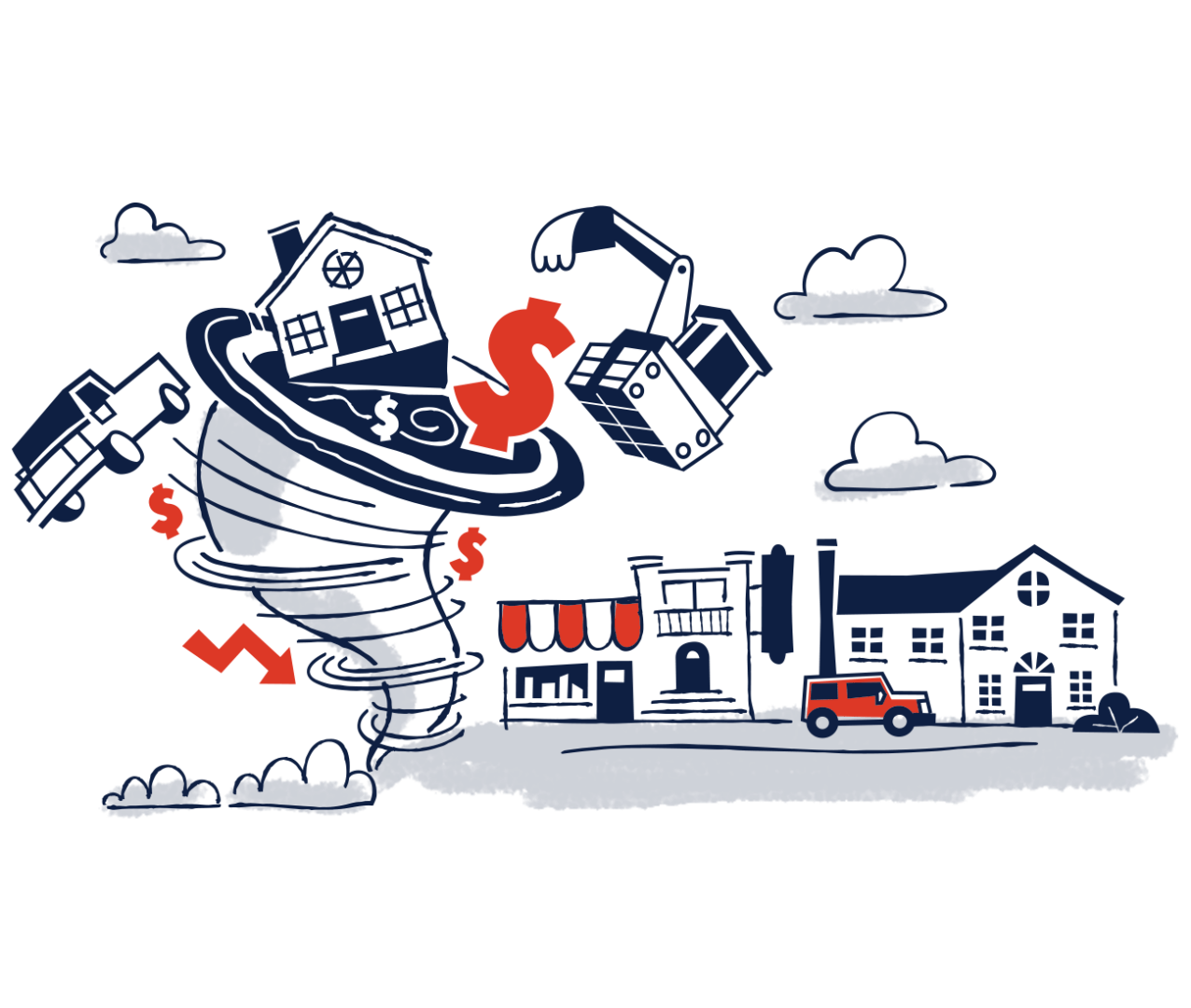
In a follow-on (in a fashion) to an (R)D earlier this month on financialization and gambling, Liz Hoffman on the striking changes underway in the financial sector…
Wall Street is starting to look a bit like a stage drama where nobody is playing the part that casting assigned.
To build a giant Louisiana data center, Meta raised $29 billion in equity from Blue Owl (a firm known for private credit) and private credit from PIMCO (a firm known for public bonds). Google has piles of cash and a red-hot stock, but is instead bringing its pristine credit rating to the deal table, backstopping crypto miners. The $7 billion that KKR and Apollo are putting into Keurig Dr Pepper is “equity” in the sense that it will help KDP reduce its debt load. But it isn’t coming from their traditional PE funds.
You think companies are built with equity and debt? That’s cute, today’s masters of the universe will chuckle while patting your head.
What used to be called simply “investing” or “lending” has been replaced by “capital solutions” — hybrid equity, kickers, and cash flows tailored to match the returns promised to investors on the other side. Growing pots of money now resemble liquid sand, moldable into whatever shape will fit the money hole in front of it. This shift has been obscured by narratives, overcooked in my view, about a battle between private credit and banks: “There’s one system,” Goldman Sachs President John Waldron told me a few weeks ago, and it’s changing quickly.
Goldman reorganized itself along these lines earlier this year… Apollo, one of the original private-equity firms, is now 80% credit… and firms from Chicago buyout shops to Middle Eastern sovereign wealth funds have launched “capital solutions” arms. Lawyers are jumping in downstream.
Prioritizing what companies actually need over whatever widgets Wall Street happens to sell is good customer service. Personal wealth management got a lot better when firms started asking “how much do you need to retire?” instead of “would you like to buy this structured note?”
And the rise of insurance money in investing has created patient capital that in many cases fits those money holes better than blunter instruments. Much of KKR and Apollo’s Keurig investment will end up in their insurance arms, backed by long-term contracts with the coffee-pod maker, people familiar with the matter said.
But flexible capital will almost certainly overflex, and not everyone with “go-anywhere” money should go anywhere. I suspect that before this cycle is over, we’ll see a few instances that leave everyone asking, “why did they own that?”… Sometimes “capital solutions” just code for investing in distressed companies, which is nothing if not a capital problem in search of a solution, trade publication Private Debt Investor wrote…
“What Wall Street’s obsession with ‘capital solutions’ tells us,” from @semafor.com.
[Image above: source]
* Warren Buffett
###
As we go back to basics, we might note that it’s International Accounting Day– a celebration of the field on this date each year that commemorates the publication of Luca Pacioli’s seminal work, Summa de Arithmetica, Geometria, Proportioni et Proportionalita, in 1494, which introduced the double-entry bookkeeping system—a foundational element of modern accounting.

“I make mistakes like the next man. In fact, being — forgive me — rather cleverer than most men, my mistakes tend to be correspondingly huger.”*…

All of us make mistakes. But some of us are in a position to make more consequential mistakes than others. Ava Benny-Morrison and Sridhar Natarajan illustrate…
The indictment reads like a cinematic plot: A Harvard Fellow and another activist allegedly wanted to buy AK-47s, Stinger missiles and grenades to topple South Sudan’s government. What they lacked was enough cash.
Now, Jane Street co-founder Robert Granieri concedes he put up the money — saying he was duped into funding the alleged coup plot. The role played by the wealthy recluse behind a Wall Street trading powerhouse emerges from the US prosecution of Peter Ajak, the Harvard Fellow who was accused last year of scheming to install himself atop the East African nation.
“Granieri is a longtime supporter of human rights causes,” his lawyer said in a statement. “In this case, the person Rob thought was a human rights activist defrauded Rob and lied about his intentions.”
The case came to light in March 2024, when federal prosecutors in Arizona charged Ajak and Abraham Keech with conspiring to illegally export arms to their home country. Both have pleaded not guilty.
While prosecutors haven’t said where the defendants obtained several million dollars for an attempt to buy military-grade weaponry, Ajak’s lawyers pointed to Granieri in a recent filing — saying the 53-year-old financier was “vital to the plan.”
“Without the significant financing that Mr. Granieri could and agreed to provide, the alleged conspiracy would have been impossible,” they wrote in the document filed in late May.
The lawyers accused authorities of selectively prosecuting two Black men, even though support also came from Granieri and Garry Kasparov, the chess champion and prominent Russian dissident. The US hasn’t accused either of them of wrongdoing.
Kasparov came to know Ajak when the chessmaster was chair of the Human Rights Foundation. He later connected Ajak with Granieri, according to people familiar with the situation, who asked not to be identified discussing the legal case…
… To industry outsiders, Jane Street is probably best known as the former employer of Sam Bankman-Fried, before he left to build a crypto empire that imploded.
But across Wall Street, the market-making firm is a source of fascination — known for turning mathematicians into traders who mint profits. It generated $20.5 billion in net trading revenue last year, helping it leap past the likes of Bank of America Corp. and Citigroup Inc.
Despite Jane Street’s ascent in the industry, Granieri has kept a low profile. He’s one of the firm’s four founders — and the only one still there. Yet he’s not featured on the company’s website, and public photos of him are scarce.
The firm’s success has allowed Granieri to pour money into other ventures and causes. He helped build the Scarlet Pearl, a casino resort on the Gulf Coast in Mississippi, was a major financial backer for Republican presidential candidate Nikki Haley, and has donated to the Equal Justice Initiative and Institute for Justice. He also channeled money into causes Kasparov backed around the globe…
The remarkable tale of a secretive financier’s funding of a planned coup in the world’s youngest country: “Jane Street Boss Says He Was Duped Into Funding AK-47s for Coup,” gift article from @bloomberg.com.
See also “BCG modelled plan to ‘relocate’ Palestinians from Gaza” (a gift article from @financialtimes.com):
Boston Consulting Group modelled the costs of “relocating” Palestinians from Gaza and entered into a multimillion-dollar contract to help launch an aid scheme for the shattered enclave, a Financial Times investigation has found. The consulting firm helped establish the Israel- and US-backed Gaza Humanitarian Foundation and supported a related security company but then disavowed the project, which has been marred by the deaths of hundreds of Palestinians, and fired two partners last month. BCG’s role was more extensive than it has publicly described, according to people familiar with the project, stretching over seven months, covering more than $4mn of contracted work and involving internal discussion at senior levels of the firm.
[Two months before BCG took the gig, US President Donald Trump had suggested emptying the shattered strip of its 2.2mn people so it could be rebuilt as the “Riviera of the Middle East” — a plan rights groups and UN officials equated to ethnic cleansing. As for the disaterously ineffective GHF, the UN has described it as a “fig leaf” for Israeli war aims and humanitarian groups have refused to co-operate with it.]
More than a dozen BCG staff worked directly on the evolving project — codenamed “Aurora” — between October and late May. Senior figures at BCG discussed the initiative, including the firm’s chief risk officer and the head of its social impact practice.
The BCG team also built a financial model for the postwar reconstruction of Gaza, which included cost estimates for relocating hundreds of thousands of Palestinians from the strip and the economic impact of such a mass displacement. One scenario estimated more than 500,000 Gazans would leave the enclave with “relocation packages” worth $9,000 per person, or around $5bn in total.
BCG said the senior figures were repeatedly misled on the scope of the work by the partners running the project. Referring to the work on postwar Gaza, BCG said: “The lead partner was categorically told no, and he violated this directive. We disavow this work.”…
See also: “Tony Blair’s staff took part in ‘Gaza Riviera’ project with BCG.”
* “Albus Dumbledore” in Harry Potter and the Half-Blood Prince (by J.K. Rowling who doesn’t figure into this post as she has embraced, not denied her cultural/political funding/activities)
###
As we think twice, we might recall that it was on this date in 2011 that, after 20 years of civil war, South Sudan gained its independence and seceded from Sudan.
.jpg)
You must be logged in to post a comment.