Posts Tagged ‘forecasting’
“Do for the future what you’re grateful the past did for you. (Or what you wish the past had done for you.)”*…

A love letter to infrastructure…
The Nobel Prize–winning developmental economist Amartya Sen describes income and wealth as desirable “because, typically, they are admirable general-purpose means for having more freedom to lead the kind of lives we have reason to value. The usefulness of wealth lies in the things that it allows us to do—the substantive freedoms it helps us to achieve.” This is also a fairly good description of infrastructural systems: they’re a general-purpose means of freeing up time, energy, and attention. On a day-to-day basis, my personal freedom doesn’t come from money per se—it mostly comes from having a home where these systems are built into the walls, which became abundantly clear during the coronavirus pandemic. Stable housing and a salary that covered my utility bills meant that, with the exception of food and taking out the trash, all of my basic needs were met without my ever even having to go outside. It’s worth noting that this is an important reason why guaranteed housing for everyone is important—not just because of privacy, security, and a legible address, but also because our homes are nodes on these infrastructural networks. They are our locus of access to clean water and sewage, electricity, and telecommunications.
But the real difference between money and infrastructural systems as general-purpose providers of freedom is that money is individual and our infrastructural systems are, by their nature, collective. If municipal water systems mean that we are enduringly connected to each other through the landscape where our bodies are, our other systems ratchet this up by orders of magnitude. Behind the wheel of a car, we are a cyborg: our human body controls a powered exoskeleton that lets us move further and faster than we ever could without it. But this freedom depends on roads and supply chains for fuels, to say nothing of traffic laws and safety regulations. In researcher Paul Graham Raven’s memorable formulation, infrastructural systems make us all into collective cyborgs. Alone in my apartment, when I reach out my hand to flip a switch or turn on a tap, I am a continent-spanning colossus, tapping into vast systems that span thousands of miles to bring energy, atoms, and information to my household. But I’m only the slenderest tranche of these collective systems, constituting the whole with all the other members of our federated infrastructural cyborg bodies.
…
The philosopher John Rawls once offered up a thought experiment, building on the classic question: How best should society be ordered? His key addition was the concept of a “veil of ignorance”: not just that you would live in the society you designed, but that you wouldn’t know ahead of time what role you would have within it. So, while you might want to live in a world where you are an absolute ruler whose every whim is fulfilled by fawning minions, the veil of ignorance means that there is no guarantee you wouldn’t be one of the minions—in fact, given the numerical odds, it’s a lot more likely. Positing a veil of ignorance is a powerful tool to consider more equitable societies.
Seen from this perspective, shared infrastructural systems provide for the basic needs of—and therefore grant agency to—members of a community in a way that would satisfy Rawls. Universal provision of water, sewage, electricity, access to transportation networks that allow for personal mobility, and broadband internet access creates a society where everyone—rich or poor, regardless of what you look like or believe—has access to at least a baseline level of agency and opportunity.
But here’s the kicker: it’s not a thought experiment. We’ve all passed through Rawls’s veil of ignorance. None of us chooses the circumstances of our birth. This is immediate and inarguable if you’re the child of immigrants. If one of the most salient facts of my life is that I was born in Canada, it’s also obvious that I had nothing to do with it. But it’s equally true for the American who proudly traces their family back to ancestors who came over on the Mayflower, or the English family whose landholdings are listed in the Domesday Book. Had I been born in India, my infrastructural birthright would have been far less robust as an underpinning for the life of agency and opportunity that I am fortunate to live, which stems in large part from the sheer blind luck (from my perspective) of being born in Canada.
…
Our infrastructural systems are the technological basis of the modern world, the basis for a level of global wealth and personal agency that would have been unthinkable only a few centuries ago. But those of us who have been fortunate enough to live as part of a collective cyborg have gained our personal agency at an enormous moral cost. And now anthropogenic climate change is teaching us that there are no others, no elsewhere.
For millennia, these systems have been built out assuming a steady, predictable landscape, allowing us to design long-lived networks where century-old aqueducts underlay new college campuses. But this predictability is becoming a thing of the past. More heat in the atmosphere means warmer weather and shifting climates, with attendant droughts, wildfires, and more frequent and severe hurricanes. But it also increases uncertainty: as the effects of greenhouse gases compound, we may reach tipping points, trigger positive feedback loops, and face other unprecedented changes to climates. Engineers can’t design systems to withstand hundred-year storms when the last century provides little guide to the weather of the next. No matter where in the world you reside, this is the future we will all have to live in. The only question that remains is what kind of world we want to build there.
Our shared infrastructural systems are the most profound and effective means that we’ve created to both relieve the day-to-day burdens of meeting our bodies’ needs and to allow us to go beyond their physiological limits. To face anthropogenic climate change is to become a civilization that can respond to this shifting, unpredictable new world while maintaining these systems: if you benefit from them today, then any future in which they are compromised is recognizably a dystopia. But that “dystopia” is where most of the world already lives. To face anthropogenic climate change ethically is to do so in a way that minimizes human suffering.
Mitigation—limiting the amount of warming, primarily through decarbonizing our energy sources—is one element of this transition. But the true promise of renewable energy is not that it doesn’t contribute to climate change. It’s that renewable energy is ubiquitous and abundant—if every human used energy at the same rate as North Americans, it would still only be a tiny percentage of the solar energy that reaches the Earth. Transforming our energy systems, and the infrastructural systems that they power, so that they become sustainable and resilient might be the most powerful lever that we have to not just survive this transition but to create a world where everyone can thrive. And given the planetwide interconnectedness of infrastructural systems, except in the shortest of short terms, they will be maintained equitably or not at all.
Ursula Franklin wrote, “Central to any new technology is the concept of justice.” We can commit to developing the technologies and building out new infrastructural systems that are flexible and sustainable, but we have the same urgency and unparalleled opportunity to transform our ultrastructure, the social systems that surround and shape them. Every human being has a body with similar needs, embedded in the material world at a specific place in the landscape. This requires a different relationship with each other, one in which we acknowledge and act on how we are connected to each other through our bodies in the landscapes where we find ourselves. We need to have a conception of infrastructural citizenship that includes a responsibility to look after each other, in perpetuity. And with that, we can begin to transform our technological systems into systems of compassion, care, and resource-sharing at all scales, from the individual level, through the level of cities and nations, all the way up to the global.
Our social relationships with each other—our culture, our learning, our art, our shared jokes and shared sorrow, raising our children, attending to our elderly, and together dreaming of our future—these are the essence of what it means to be human. We thrive as individuals and communities by caring for others, and being taken care of in turn. Collective infrastructural systems that are resilient, sustainable, and globally equitable provide the means for us to care for each other at scale. They are a commitment to our shared humanity.
Bodies, agency, and infrastructure: “Care At Scale,” from Debbie Chachra (@debcha), via the indispensable Exponential View (@ExponentialView). Eminently worth reading in full.
See also: “Infrastructure is much more important than architecture“; and resonantly, “Kim Stanley Robinson: a climate plan for a world in flames.”
* Danny Hillis’ “Golden Rule of Time,” as quoted by Stewart Brand in Whole Earth Discipline
###
As we build foundations, we might recall that it was on this date in 1904 that the first balloon used for meteorologic research in the U.S. was released near St. Louis, Missouri. The balloon carried instruments that measured barometric pressure, temperature, and humidity, that returned to Earth when the balloon burst.
The first weather balloon was launched in France in 1892. Prior to using balloons, the U.S. used kites tethered by piano wire– the downsides being the limited distance kites could ascend (less than 2 miles), the inability to use them if the wind was too light or too strong, and potential for the kites to break away.
Since this first launch, millions of weather balloons have been launched by the National Weather Service and its predecessor organizations.

“The only function of economic forecasting is to make astrology look respectable”*…

The pandemic economy has been strange and unpredictable from the get-go.
Throughout the past 14 months, the twists and turns have been surprising: The housing market boomed, the stock market soared, people got into day trading, everyone hoarded toilet paper, and lumber became a must-have. There’s been widespread disagreement about how much support from the government was needed, whether the country was doing too much or not enough, or whether help would come at all. We won’t know whether the country overshot or undershot the response for years, and there’s still uncertainty about what’s happening in the labor market, prices, and other areas. And the prevailing theme has been one that has nothing to do with the economy directly: As long as Covid-19 isn’t under control, the economy isn’t either.
“Having been a forecaster for 10 years, we were surprised all the time, because nobody has a crystal ball and particularly if you just pull out one data series, one month, there’s just no way,” said Claudia Sahm, a former Federal Reserve economist and now a senior fellow at the Jain Family Institute. “It’s going to be a wild ride; the data through the end of this year, they’re going to be tough.”
The country and the world are staring into a black box of uncertainty on the economy. It’s frustrating, but it’s also inevitable. Anyone who says they know exactly what is going on in the economy right now is lying. The same goes for anyone who says they know what’s going to happen next.
“Because of the unique nature of this crisis, there are going to be some swings,” said Mike Konczal, director of macroeconomic analysis at the Roosevelt Institute. “In a year, they’re going to be trivia questions, but right now we’re obsessing about them.”
Few people will probably remember two years from now that the price of used cars and trucks went up by 10 percent in April.
We know that the economy is different now than it was a year ago and that it will be different a year from now. What’s not clear is exactly how. And what we need now — including economists, experts, and policymakers — is the intellectual humility to recognize that’s the case.
“At this point, most things should be presumed temporary until proven permanent,” said Jed Kolko, chief economist at the jobs website Indeed.
It’s unnerving to admit what we don’t know, and the pandemic has been a real exercise in that. But after so long of staring into the abyss, maybe it’s time we embrace it…
Anyone who says they know exactly what’s happening in the economy is lying. Emily Stewart (@EmilyStewartM) explores that uncertainty and what it might mean: “The black box economy.”
* John Kenneth Galbraith
###
As we consult the stars, we might note that today is National Be a Millionaire Day. While many sources confirm this celebratory fact, there’s no real information on its origin. The term “millionaire” was coined in France around 1719 to describe speculators in the Mississippi Bubble who earned millions of livres in weeks before the bubble burst; it seems first to have appeared in the U.S. in 1786, when Thomas Jefferson wrote about the French… so the “holiday” surely dates from sometime after that.

“People seemed to believe that technology had stripped hurricanes of their power to kill. No hurricane expert endorsed this view.”*…
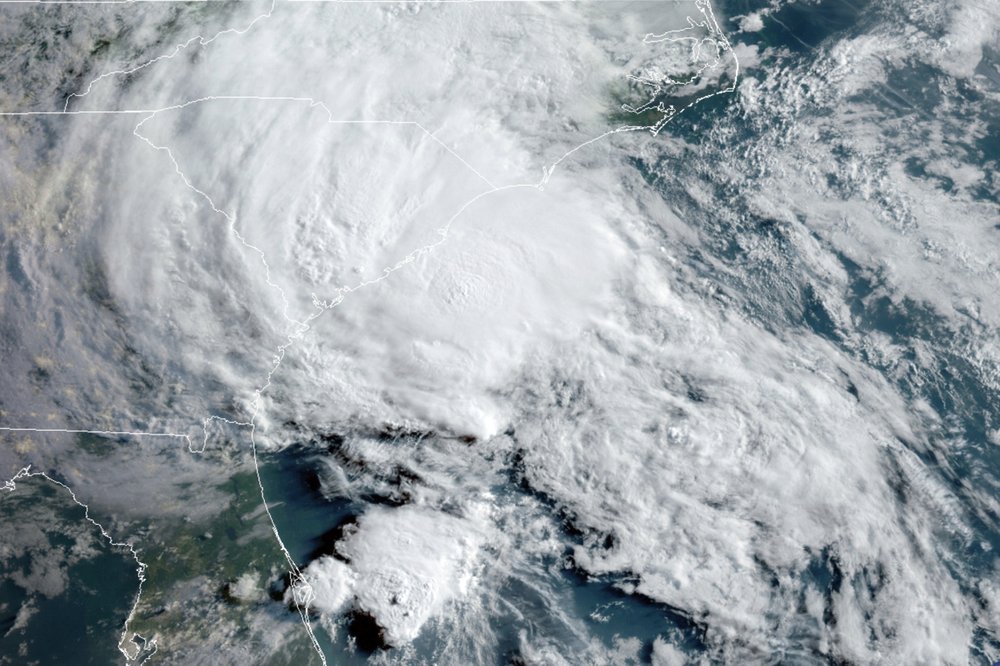
For six straight years, Atlantic storms have been named in May, before [hurricane] season even begins. During the past nine Atlantic hurricane seasons, seven tropical storms have formed between May 15 and the official June 1 start date. Those have killed at least 20 people, causing about $200 million in damage, according to the WMO.
Last year, the hurricane center issued 36 “special” tropical weather outlooks before June 1, according to center spokesman Dennis Feltgen. Tropical Storms Arthur and Bertha both formed before June 1 near the Carolinas.
torms seem to be forming earlier because climate change is making the ocean warmer, University of Miami hurricane researcher Brian McNoldy said. Storms need warm water as fuel — at least 79 degrees (26 degrees Celsius). Also, better technology and monitoring are identifying and naming weaker storms that may not have been spotted in years past, Feltgen said…
With named storms coming earlier and more often in warmer waters, the Atlantic hurricane season is going through some changes with meteorologists ditching the Greek alphabet during busy years…
A special World Meteorological Organization committee Wednesday ended the use of Greek letters when the Atlantic runs out of the 21 names for the year, saying the practice was confusing and put too much focus on the Greek letter and not on the dangerous storm it represented. Also, in 2020 with Zeta, Eta and Theta, they sounded so similar it caused problems.
The Greek alphabet had only been used twice in 2005 and nine times last year in a record-shattering hurricane season.
Starting this year, if there are more than 21 Atlantic storms, the next storms will come from a new supplemental list headed by Adria, Braylen, Caridad and Deshawn and ending with Will. There’s a new back-up list for the Eastern Pacific that runs from Aidan and Bruna to Zoe.
Meanwhile, the National Oceanic Atmospheric Administration is recalculating just what constitutes an average hurricane season… But the Atlantic hurricane season will start this year on June 1 as traditionally scheduled, despite meteorologists discussing the idea of moving it to May 15…
With so much activity, MIT’s [Kerry] Emanuel said the current warnings are too storm-centric, and he wants them more oriented to where people live, warning of specific risks such as floods and wind. That includes changing or ditching the nearly 50-year-old Saffir Simpson scale of rating hurricanes Category 1 to 5.
That wind-based scale is “about a storm, it’s not about you. I want to make it about you, where you are,” he said. “It is about risk. In the end, we are trying to save lives and property”… Differentiating between tropical storms, hurricanes and extratropical cyclones can be a messaging problem when a system actually has a cold core, because these weaker storms can kill with water surges rather than wind… For example, some people and officials underestimated 2012’s Sandy because it wasn’t a hurricane and lost its tropical characteristic…
Rethinking hurricanes in a time of climate change: “Bye Alpha, Eta: Greek alphabet ditched for hurricane names.”
* Erik Larson, Isaac’s Storm: A Man, a Time, and the Deadliest Hurricane in History
###
As we accommodate climate change, we might spare a thought for George Alfred Leon Sarton; he died on this date in 1956. A chemist by training, his primary interest lay in the past practices and precepts of his field…an interest that led him to found the discipline of the history of science as an independent field of study. His most influential work was the Introduction to the History of Science (three volumes totaling 4,296 pages). Sarton ultimately aimed to achieve an integrated philosophy of science that connected the sciences and the humanities– what he called “the new humanism.” His name is honored with the prestigious George Sarton Medal, awarded by the History of Science Society.

“Most of us spend too much time on the last twenty-four hours and too little on the last six thousand years”*…

“Willard’s Chronographer of American History” (1845) by Emma Willard — David Rumsey Map Collection
In the 21st-century, infographics are everywhere. In the classroom, in the newspaper, in government reports, these concise visual representations of complicated information have changed the way we imagine our world. Susan Schulten explores the pioneering work of Emma Willard (1787–1870), a leading feminist educator whose innovative maps of time laid the groundwork for the charts and graphics of today…
Willard’s remarkable story– and more glorious examples of her work– at “Emma Willard’s Maps of Time.”
* Will Durant
###
As we picture it all, we might recall that it was on this date in 1870 that Congress authorized the formation of the U.S. weather service (later named the Weather Bureau; later still, the National Weather Service), and placed it under the direction of the Army Signal Corps. Cleveland Abbe, who had started the first private weather reporting and warning service (in Cincinnati) and had been issuing weather reports or bulletins since September, 1869, was the only person in the country at the time who was experienced in drawing weather maps from telegraphic reports and forecasting from them. He became the weather service’s inaugural chief scientist– effectively its founding head– in January, 1871. The first U.S. meteorologist, he is known as the “father of the U.S. Weather Bureau,” where he systemized observation, trained personnel, and established scientific methods. He went on to become one of the 33 founders of the National Geographic Society.

Cleveland Abbe
“It’s tough to make predictions, especially about the future”*…

As astrophysicist Mario Livo recounts in Brilliant Blunders, in April 1900, the eminent physicist Lord Kelvin proclaimed that our understanding of the cosmos was complete except for two “clouds”—minor details still to be worked out. Those clouds had to do with radiation emissions and with the speed of light… and they pointed the way to two major revolutions in physics: quantum mechanics and the theory of relativity. Prediction is hard; ironically, it’s especially hard for experts attempting foresight in their own fields…
The idea for the most important study ever conducted of expert predictions was sparked in 1984, at a meeting of a National Research Council committee on American-Soviet relations. The psychologist and political scientist Philip E. Tetlock was 30 years old, by far the most junior committee member. He listened intently as other members discussed Soviet intentions and American policies. Renowned experts delivered authoritative predictions, and Tetlock was struck by how many perfectly contradicted one another and were impervious to counterarguments.
Tetlock decided to put expert political and economic predictions to the test. With the Cold War in full swing, he collected forecasts from 284 highly educated experts who averaged more than 12 years of experience in their specialties. To ensure that the predictions were concrete, experts had to give specific probabilities of future events. Tetlock had to collect enough predictions that he could separate lucky and unlucky streaks from true skill. The project lasted 20 years, and comprised 82,361 probability estimates about the future.
The result: The experts were, by and large, horrific forecasters. Their areas of specialty, years of experience, and (for some) access to classified information made no difference. They were bad at short-term forecasting and bad at long-term forecasting. They were bad at forecasting in every domain. When experts declared that future events were impossible or nearly impossible, 15 percent of them occurred nonetheless. When they declared events to be a sure thing, more than one-quarter of them failed to transpire. As the Danish proverb warns, “It is difficult to make predictions, especially about the future.”…
One subgroup of scholars, however, did manage to see more of what was coming… they were not vested in a single discipline. They took from each argument and integrated apparently contradictory worldviews…
The integrators outperformed their colleagues in pretty much every way, but especially trounced them on long-term predictions. Eventually, Tetlock bestowed nicknames (borrowed from the philosopher Isaiah Berlin) on the experts he’d observed: The highly specialized hedgehogs knew “one big thing,” while the integrator foxes knew “many little things.”…
Credentialed authorities are comically bad at predicting the future. But reliable– at least more reliable– forecasting is possible: “The Peculiar Blindness of Experts.”
See Tetlock discuss his findings at a Long Now Seminar. Read Berlin’s riff on Archilochus, “The Hedgehog and the Fox,” here.
* Yogi Berra
###
As we ponder prediction, we might send complicating birthday greetings to Edward Norton Lorenz; he was born on this date in 1917. A mathematician who turned to meteorology during World War II, he established the theoretical basis of weather and climate predictability, as well as the basis for computer-aided atmospheric physics and meteorology.
But he is probably better remembered as the founder of modern chaos theory, a branch of mathematics focusing on the behavior of dynamical systems that are highly sensitive to initial conditions… and thus practically impossible to predict in detail with certainty.
In 1961, Lorenz was using a simple digital computer, a Royal McBee LGP-30, to simulate weather patterns by modeling 12 variables, representing things like temperature and wind speed. He wanted to see a sequence of data again, and to save time he started the simulation in the middle of its course. He did this by entering a printout of the data that corresponded to conditions in the middle of the original simulation. To his surprise, the weather that the machine began to predict was completely different from the previous calculation. The culprit: a rounded decimal number on the computer printout. The computer worked with 6-digit precision, but the printout rounded variables off to a 3-digit number, so a value like 0.506127 printed as 0.506. This difference is tiny, and the consensus at the time would have been that it should have no practical effect. However, Lorenz discovered that small changes in initial conditions produced large changes in long-term outcome. His work on the topic culminated in the publication of his 1963 paper “Deterministic Nonperiodic Flow” in Journal of the Atmospheric Sciences, and with it, the foundation of chaos theory…
His description of the butterfly effect, the idea that small changes can have large consequences, followed in 1969.

You must be logged in to post a comment.