Posts Tagged ‘Eroica’
“You live and learn. At any rate, you live.”*…

… and to the extent that we care about our democracy, that’s an issue.
In an article based on his recent Sakurada-Kai Foundation Oxbridge Lecture at Keio University, Tokyo, John Dunn argues that our democracies depend on our picking up the pace of learning. The abstract:
There cannot be a coherent democratic theory because democracy is not a determinate topic. Representative democracy is a relatively modern regime form. It now needs rehabilitation because so many instances have performed poorly for so long. Representative democracy is now also an aging regime. As a type of state, it is subject to the territorial contentiousness and contested legitimacy of any state. It claims its legitimacy from iterative popular choice, but the plausibility of that claim is increasingly strained by the drastic disparities in life chances reproduced through the property systems it protects. The inherent difficulty for citizens to judge how to advance their collective interests is aggravated by the recent transformation of the information economy. In the cumulative damage inflicted by climate change it faces a deadlier peril than any previous regime and one which only a citizenry that can enlighten itself in time can reasonably hope to nerve itself to meet…
There follows a fascinating– and provocative– elaboration of this thesis in which Dunn considers the history of democracy and the alternatives with which it has, since its inception, vied. He concludes in a bracing fashion…
… The varieties of autocracy which will be on offer wherever the rest of the world has the opportunity to take them up will be without exception the reverse of enlightened – instrumentally and compulsively bound to the extremes of obscurantism, Darkness as a full-on fideist commitment, deliberate self-blinding as a navigational strategy. Move fast, break lots, and never pause to inspect the wreckage.
Representative democracy has recently proved itself a poor structure for collective enlightenment, but the case for it depends on its at least not precluding that, its being still open to making the attempt, and responding to what it can contrive to learn. The most optimistic vision of democracy in action has always seen it as an opportunity for collective self-education on the content of shared goods and the means to achieve them. If that is scarcely a realist picture of what it has ever been, at least it is an image of the right shape. It is too late to ask who will educate the educators. At this point we must educate ourselves together and heed the lessons of that education or we must and will die – not just each of us one by one, as we were always fated to do, but soon enough all of us and for ever…
Eminently worth reading in full: “Can Democracy be Rehabilitated?“
Apposite: “How American Democracy Fell So Far Behind,” from Steven Levitsky and Daniel Ziblatt (gift article– and source of the image above)
* Douglas Adams, Mostly Harmless
###
As we devote ourselves to democracy, we might spare a thought for Ludwig van Beethoven; he died on this date in 1827. A crucial figure in the transition between the Classical and Romantic eras in Western music, he remains one of the most famous and influential of all composers. His best-known compositions include 9 symphonies, 5 concertos for piano, 32 piano sonatas, and 16 string quartets. He also composed other chamber music, choral works (including the celebrated Missa Solemnis), a single opera (Fidelio), and numerous songs.
Relevantly to the piece above…
Beethoven admired the ideals of the French Revolution, so he dedicated his third symphony to Napoleon Bonaparte… until Napoleon declared himself emperor. Beethoven then sprung into a rage, ripped the front page from his manuscript and scrubbed out Napoleon’s name…
Beethoven’s temper and Symphony No. 3 ‘Eroica’

“My spirit will arise from my grave”*…
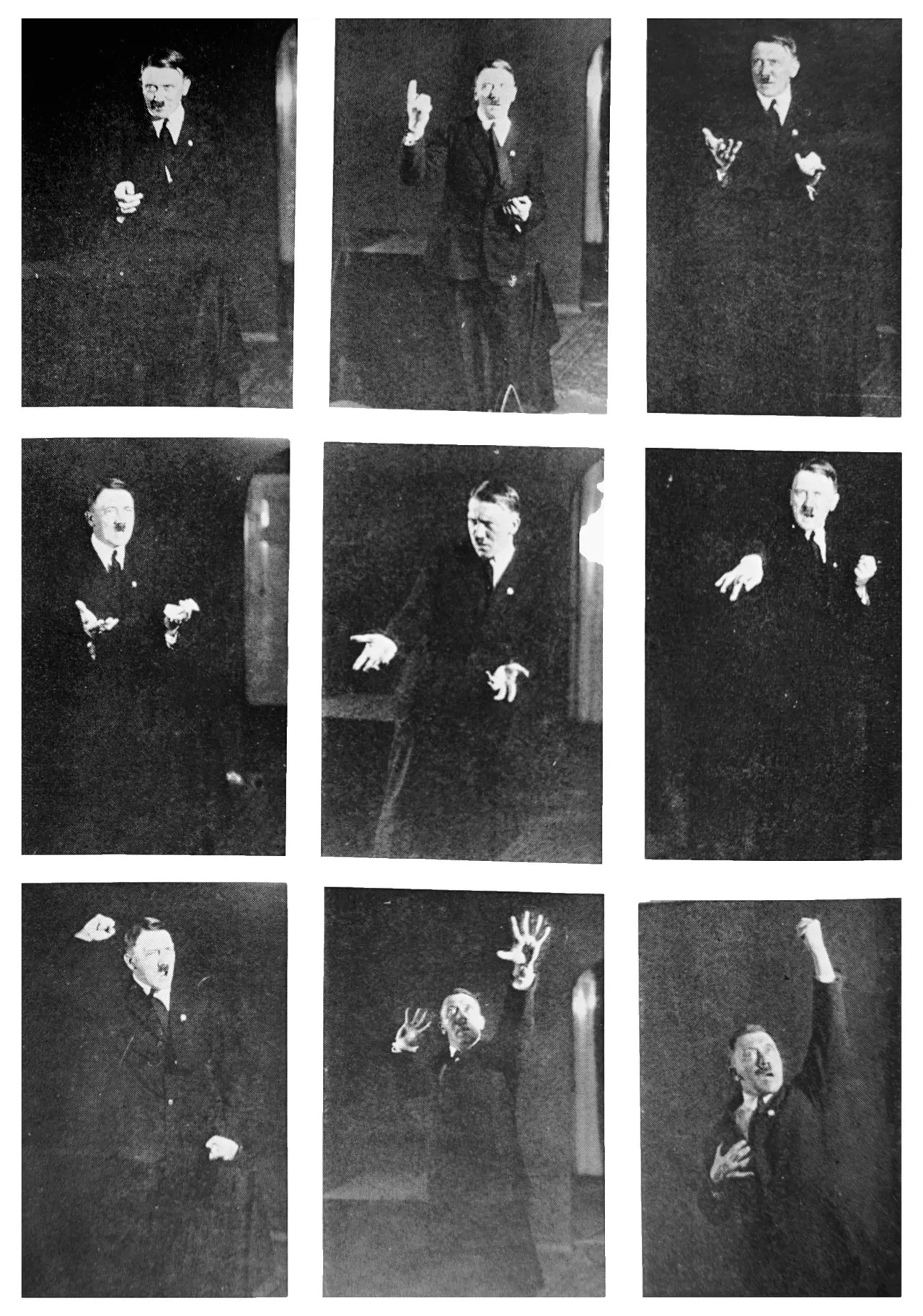
Hitler didn’t seize power; he was given it. As Adam Gopnik reports in a review of Tim Ryback‘s important new book, media lords thought that they could control him; political schemers thought that they could outwit him. The mainstream left had become a gerontocracy. And all of them failed to recognize his immunity to shame…
Hitler is so fully imagined a subject—so obsessively present on our televisions and in our bookstores—that to reimagine him seems pointless. As with the Hollywood fascination with Charles Manson, speculative curiosity gives retrospective glamour to evil. Hitler created a world in which women were transported with their children for days in closed train cars and then had to watch those children die alongside them, naked, gasping for breath in a gas chamber. To ask whether the man responsible for this was motivated by reading Oswald Spengler or merely by meeting him seems to attribute too much complexity of purpose to him, not to mention posthumous dignity. Yet allowing the specifics of his ascent to be clouded by disdain is not much better than allowing his memory to be ennobled by mystery.
So the historian Timothy W. Ryback’s choice to make his new book, “Takeover: Hitler’s Final Rise to Power” (Knopf), an aggressively specific chronicle of a single year, 1932, seems a wise, even an inspired one. Ryback details, week by week, day by day, and sometimes hour by hour, how a country with a functional, if flawed, democratic machinery handed absolute power over to someone who could never claim a majority in an actual election and whom the entire conservative political class regarded as a chaotic clown with a violent following. Ryback shows how major players thought they could find some ulterior advantage in managing him. Each was sure that, after the passing of a brief storm cloud, so obviously overloaded that it had to expend itself, they would emerge in possession of power. The corporate bosses thought that, if you looked past the strutting and the performative antisemitism, you had someone who would protect your money. Communist ideologues thought that, if you peered deeply enough into the strutting and the performative antisemitism, you could spy the pattern of a popular revolution. The decent right thought that he was too obviously deranged to remain in power long, and the decent left, tempered by earlier fights against different enemies, thought that, if they forcibly stuck to the rule of law, then the law would somehow by itself entrap a lawless leader. In a now familiar paradox, the rational forces stuck to magical thinking, while the irrational ones were more logical, parsing the brute equations of power. And so the storm never passed. In a way, it still has not…
Both the review and the book on which it focuses are eminently worth reading in full: “The Forgotten History of Hitler’s Establishment Enablers” (possible paywall; in which case, archived copy here), from @adamgopnik in @NewYorker.
* Hitler, as quoted in a letter from von Ribbentrop (to Churchill and Atlee) sent just before von Ribbentrop was captured at the end of the war
###
As we hear the echo, we might spare a thought for Ludwig van Beethoven; he died on this date in 1827. A crucial figure in the transition between the Classical and Romantic eras in Western music, he remains one of the most famous and influential of all composers. His best-known compositions include 9 symphonies, 5 concertos for piano, 32 piano sonatas, and 16 string quartets. He also composed other chamber music, choral works (including the celebrated Missa Solemnis), a single opera (Fidelio), and numerous songs.
Relevantly to the piece above…
Beethoven admired the ideals of the French Revolution, so he dedicated his third symphony to Napoleon Bonaparte… until Napoleon declared himself emperor. Beethoven then sprung into a rage, ripped the front page from his manuscript and scrubbed out Napoleon’s name. Some modern reproductions of the original title page have scrubbed out Napoleon’s name to create a hole for authenticity’s sake!
Beethoven’s temper and Symphony No. 3 ‘Eroica’
But, of course, it was too late…
Simple! Simply simplify…

from Ji Lee (whose work is imminently worth a browse… check out, for instance, “The Redundant Clock“)
As we re-ink our pads, we might take a moment to celebrate an anniversary of great and true beauty: on this date in 1724, Bach’s “St. John Passion” premiered; then exactly 81 years later, on this date in 1805, Beethoven conducted the premiere of his third symphony, “Eroica.”
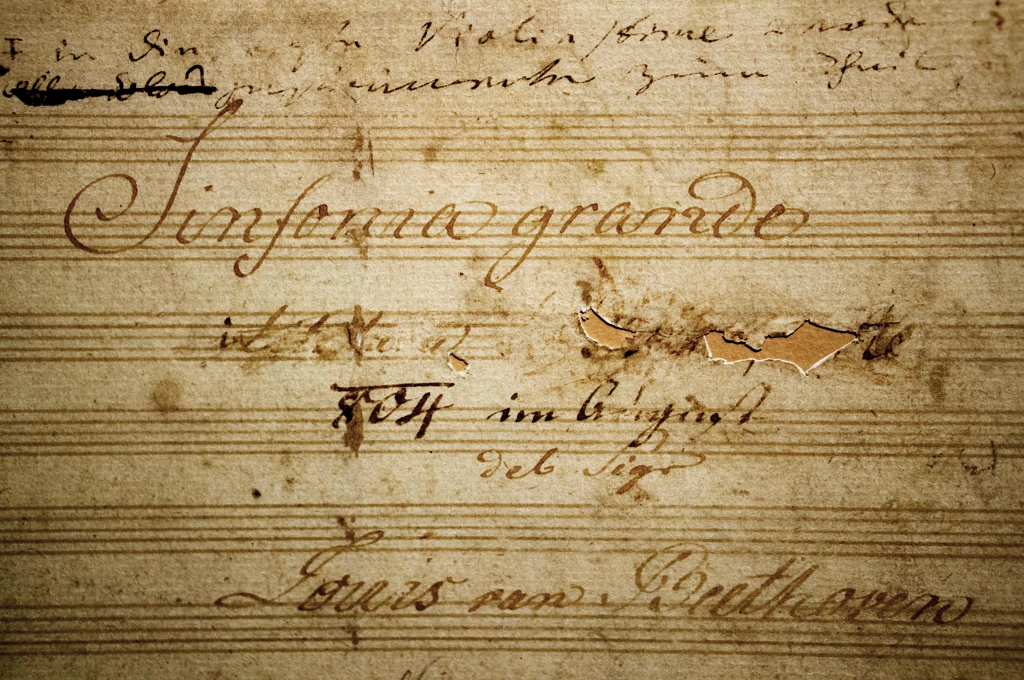 Title page of the manuscript of Beethoven’s Symphony #3, opus 55
You must be logged in to post a comment.