Posts Tagged ‘digital divide’
“Economic problems have no sharp edges. They shade off imperceptibly into politics, sociology, and ethics. Indeed, it is hardly an exaggeration to say that the ultimate answer to every economic problem lies in some other field.”*…

The number of households that live above the poverty line but are barely scraping by is ticking higher…
Over time, higher costs and sluggish wage growth have left more Americans financially vulnerable, with many known as “ALICEs.”
Nearly 40 million families, or 29% of the population, fall in the category of ALICE — Asset Limited, Income Constrained, Employed — according to United Way’s United for ALICE program, which first coined the term to refer to households earning above the poverty line but less than what’s needed to get by.
That figure doesn’t include the 37.9 million Americans [individuals, as opposed to families as measured above] who live in poverty, comprising 11.5% of the total population, according to data from the U.S. Census Bureau.
“ALICE is the nation’s child-care workers, home health aides and cashiers heralded during the pandemic — those working low-wage jobs, with little or no savings and one emergency from poverty,” said Stephanie Hoopes, national director at United for ALICE…
Read on for an explanation of how high inflation and higher interest rates have aggravated what was already a problem: “29% of households have jobs but struggle to cover basic needs,” from @CNBC.
Apposite: “Millions of Americans are about to lose internet access, and Congress is to blame.”
(Image above: source)
***
As we knit a safety net, we might recall that, on this date in 2020, as a product of the COVID-19 recession, the U.S. unemployment rate to hit 14.9 percent, its worst rate since the Great Depression. Federal legislators enacted six major bills, centered on the American Rescue Plan and costing about $5.3 trillion, to help manage the pandemic and mitigate the economic burden on families and businesses. Those programs have now expired.

“All history is the history of unintended consequences”*…
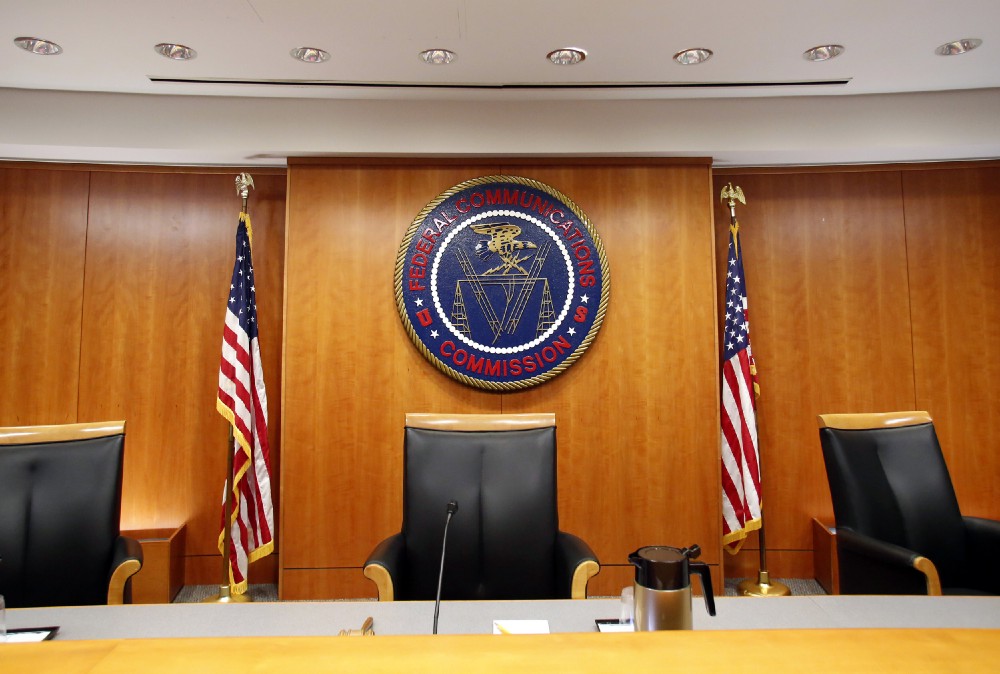
Your correspondent confesses that this piece is mildly geeky in an “inside baseball” kind of way. But beyond its importance in its own right, it raises a possible broader systemic issue worth pondering…
Urged on by broadband giants such as Charter Communications, Senate Majority Leader Mitch McConnell (R-KY) is pushing to confirm a Republican to the Federal Communications Commission. However, McConnell’s goal seems to extend further: creating a deadlocked Biden FCC 2–2, then blocking confirmation of a third Democrat. What McConnell intends as a gift to his corporate patrons could turn into a nightmare for them.
McConnell and his allies believe they can force the Biden FCC into a business friendly “consensus agenda” that will move forward on 5G and corporate consolidation while blocking Democratic priorities such as net neutrality and broadband subsidies for the poor. And perhaps that is how the Democrats will respond. But in this new world of total war between Democrats and Republicans, this deadlock creates the incentive and ability for the Democratic FCC Chair to use her authority over the agency’s bureaus to push back and pressure anyone standing in the way of a full commission.
Not everything at the FCC requires a vote of the Commission. The vast majority of day-to-day work happens through the FCC’s many offices and bureaus — all of which report to the Chair. These actions must be appealed to the full Commission before parties can go to the courts. Absent the usual rulemaking process, a Democratic FCC Chair can — and should — take large (and largely unreviewable) steps to advance a consumer protection agenda without a single Commission vote.
Even more powerfully, the Chair can effectively shut down the agency until Republicans approve a third Democrat. While this sounds like an industry dream, this would quickly devolve into an industry nightmare as the necessary work of the FCC grinds to a halt. Virtually every acquisition by a cable provider, wireless carrier, or broadcaster requires FCC approval. Unlike in antitrust law, there is no deadline for the agency to act. The Chair of a deadlocked FCC could simply freeze all mergers and acquisitions in the sector until Democrats have a majority.
If that does not work, the FCC Chair could essentially put the FCC “on strike,” cancelling upcoming spectrum auctions and suspending consumer electronics certifications (no electronic equipment of any type, from smartphones to home computers to microwave ovens, can be sold in the United States without a certification from the FCC that it will not interfere with wireless communications). Such actions would have wide repercussions for the wireless, electronics, and retail industries. But the FCC Chair could slowly ratchet up the pressure until industry lobbyists pushed Republicans to confirm a third Democrat.
Finally, we come to net neutrality. Stopping the Biden FCC from restoring the Obama-era legal framework for broadband is the grand prize that supposedly justifies McConnell’s unprecedented obstructionism. Even here, the next FCC Chair can act. At present, the FCC is suing the state of California to block California’s own net neutrality law. The FCC can switch sides in the litigation, throwing its weight against the industry and supporting the right of states to pass their own net neutrality laws. The FCC can do the same in the D.C. Circuit — no Commission vote required.
Political observers might question whether a Biden FCC Chair would take such brazenly political action and put at risk so much of the economy. Admittedly, Democrats often seem to lack the same willingness as Republicans to engage in Mutually Assured Destruction. But we live in a time of unprecedented polarization and partisan division — as the last-minute campaign to deadlock the FCC shows. The only way for President-elect Biden and Democrats to work with Republicans is to show them at the outset that they can be just as destructive to Republican interests and constituencies as Republicans are to Democratic interests and constituencies. And there’s no better way to do that than to threaten the corporate chieftains at the top of the Republican food chain, the ones currently urging Republicans to deadlock the FCC.
Rather than an industry-friendly “consensus agenda,” Senator McConnell and his Wall Street allies are setting the stage for a war of total destruction. Wise investors should sell now and wait for the dust to clear — if it ever does.
Harold Feld (@haroldfeld), Senior Vice President of Public Knowledge, on how Senator McConnell’s strategy of obstruction might backfire: “In the Republican War on the Biden FCC, Wall Street May End Up the Biggest Loser.”
* historian T.J. Jackson Lears
###
As we focus on Georgia, we might recall that it was on this date in 1948 that the United Nations adopted the Universal Declaration of Human Rights. Of the 58 members of the U.N. at the time, 48 voted in favor, none against, eight abstained, and two did not vote. Considered a foundational text in the history of human and civil rights, the Declaration consists of 30 articles detailing an individual’s “basic rights and fundamental freedoms” and affirming their universal character as inherent, inalienable, and applicable to all human beings.
The full text– eminently worth reading– is here.

You must be logged in to post a comment.