Posts Tagged ‘narratives’
“I am a camera with its shutter open, quite passive, recording, not thinking… Some day, all this will have to be developed, carefully printed, fixed.”*
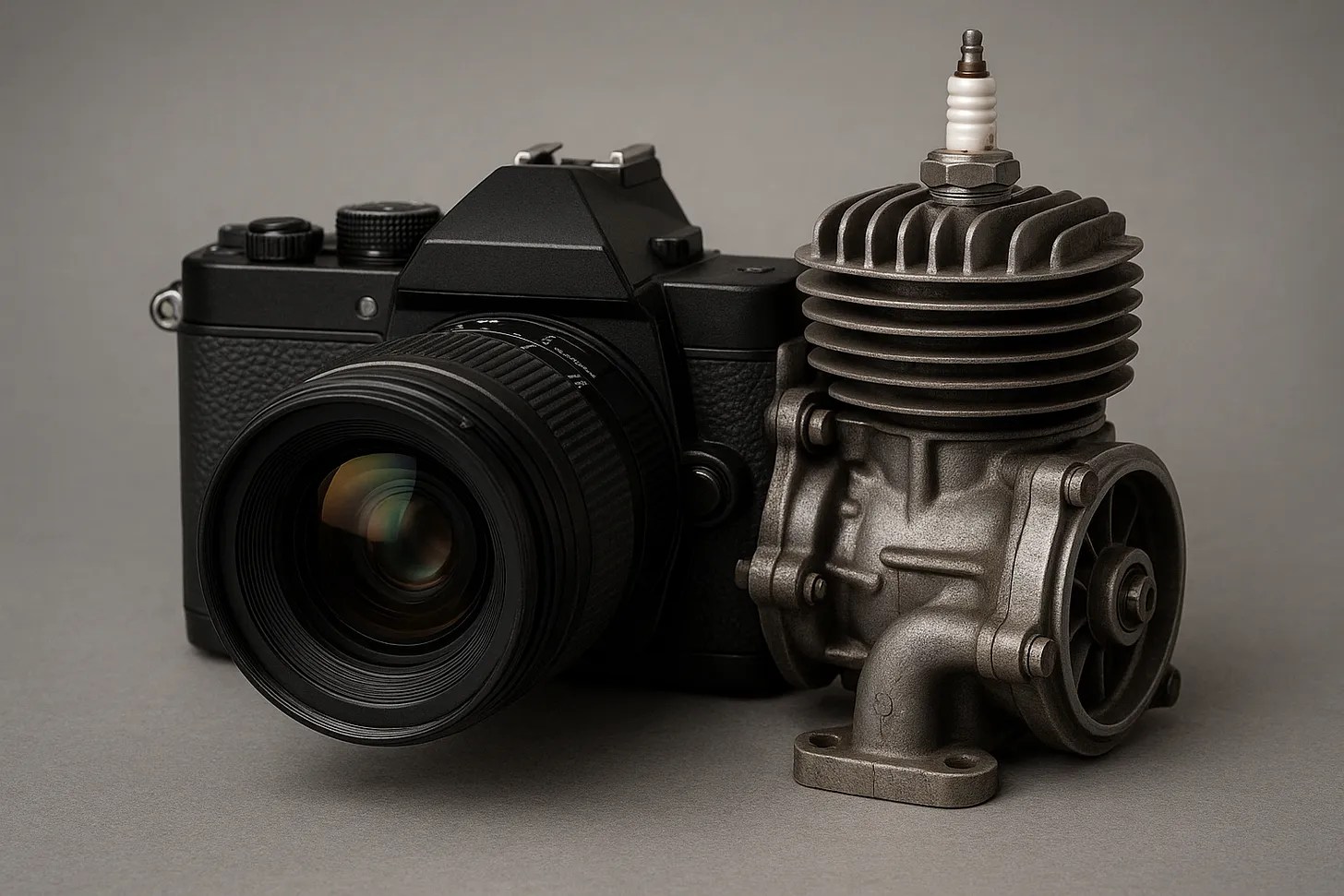
How do we make sense of the world? How do we make our ways through it? Venkatesh Rao cautions against both of the currently-dominant narratives that shape our perceptions and actions: the “helpless witness,” as evinced in the quote above, and the other dominant lens, the “blind builder”…
It is hard to make sense of events these days because we feel constantly forced into a false choice between blind builder narratives and helpless witness narratives. Stories told by people so enthralled by new agencies they don’t notice their insensibility to current realities, or the poverty of their future visions driving their excited building. Or stories told by people so lacking in agency of any sort that their visions, while richer, are uniformly bleak and framed by their own sense of utter helplessness and doom.
The fundamental inadequacies of these frames, much more than the right/left political leanings usually associated with them, is perhaps the real reason for my refusal to ally with any of the narratives on offer. I don’t want to be either blind or helpless, or move along a tradeoff curve between them.
An interesting pattern that’s popped for me as a way out of this bind, and a possible stance from which to narrate and inhabit more powerful sorts of stories, is working with media that are simultaneously about seeing and doing...
Eminently worth reading in full: “Not Just a Camera, Not Just an Engine,” from @vgr.bsky.social.
* Christopher Isherwood, “Goodbye to Berlin” (in The Berlin Stories)
###
As we reframe, we might recall that, on this date in 1872, Susan B. Anthony was fined $100 for voting.
In 1863, she and Elizabeth Cady Stanton had founded the Women’s Loyal National League. In 1866, the pair initiated the American Equal Rights Association which campaigned for equal rights for both African Americans and all women. In 1869, they created the National Woman Suffrage Association and on this day in 1872, Anthony attempted to vote in her hometown of Rochester, New York– and was fined $100 for doing so. She refused to pay the fine and the authorities declined to take further action against her. In 1878, Anthony and Stanton presented Congress with an amendment giving women the right to vote. It became the 19th Amendment to the U.S. Constitution in 1920. In 1979, the United States honored Anthony by placing her image on the one-dollar U.S. coin.

“After nourishment, shelter and companionship, stories are the thing we need most in the world”*…

Shortly after 335 B.C., within a newly built library tucked just east of Athens’ limestone city walls, a free-thinking Greek polymath by the name of Aristotle gathered up an armful of old theater scripts. As he pored over their delicate papyrus in the amber flicker of a sesame lamp, he was struck by a revolutionary idea: What if literature was an invention for making us happier and healthier? The idea made intuitive sense; when people felt bored, or unhappy, or at a loss for meaning, they frequently turned to plays or poetry. And afterwards, they often reported feeling better. But what could be the secret to literature’s feel-better power? What hidden nuts-and-bolts conveyed its psychological benefits?
After carefully investigating the matter, Aristotle inked a short treatise that became known as the Poetics. In it, he proposed that literature was more than a single invention; it was many inventions, each constructed from an innovative use of story. Story includes the countless varieties of plot and character—and it also includes the equally various narrators that give each literary work its distinct style or voice. Those story elements, Aristotle hypothesized, could plug into our imagination, our emotions, and other parts of our psyche, troubleshooting and even improving our mental function.
Aristotle’s idea was so unusual that, for more than two millennia, his account of literary inventions existed as an intellectual one-off, too intriguing to be forgotten but also too idiosyncratic to be developed further. In the mid-20th century, R. S. Crane and the renegade professors of the Chicago School revived the Poetics’ techno-scientific method, using it to excavate literary inventions from Shakespearean tragedies, 18th-century novels, and other works that Aristotle never knew. Later, in the early 2000s, one of the Chicago School’s students, James Phelan, co-founded Ohio State’s Project Narrative, where I now work as a professor of story science. Project Narrative is the world’s leading academic think tank for the study of stories, and in our research labs, with the help of neuroscientists and psychologists from across the globe, we’ve uncovered dozens more literary inventions in Zhou Dynasty lyrics, Italian operas, West African epics, classic children’s books, great American novels, Agatha Christie crime fictions, Mesoamerican myths, and even Hollywood television scripts.
These literary inventions can alleviate grief, improve your problem-solving skills, dispense the anti-depressant effects of LSD, boost your creativity, provide therapy for trauma (including both kinds of PTSD), spark joy, dole out a better energy kick than caffeine, lower your odds of dying alone, and (as impossible as it sounds) increase the chance that your dreams will come true. They can even make you a more loving spouse and generous friend…
Recurring story elements that have proven effects on our imagination and our psyche: “Eight of Literature’s Most Powerful Inventions—and the Neuroscience Behind How They Work.” (Excerpted from Angus Fletcher’s Wonderworks: The 25 Most Powerful Inventions in the History of Literature.)
* Philip Pullman
###
As we noodle narratives, we might send a combo birthday and St Patrick’s Day greeting to Catherine “Kate” Greenaway; she was born on this date in 1846. Creator of books for children such as Mother Goose (1881), Little Ann (1883), and The Pied Piper of Hamelin (1889), she was one of the most the most accomplished illustrators of her time– and the inspiration for The Kate Greenaway Medal, awarded annually by the Chartered Institute of Library and Information Professionals in the U.K. to an illustrator of children’s books.


You must be logged in to post a comment.