Posts Tagged ‘Disneyland’
“Better not bring up a lion inside your city, but if you must, then humor all his moods”*…
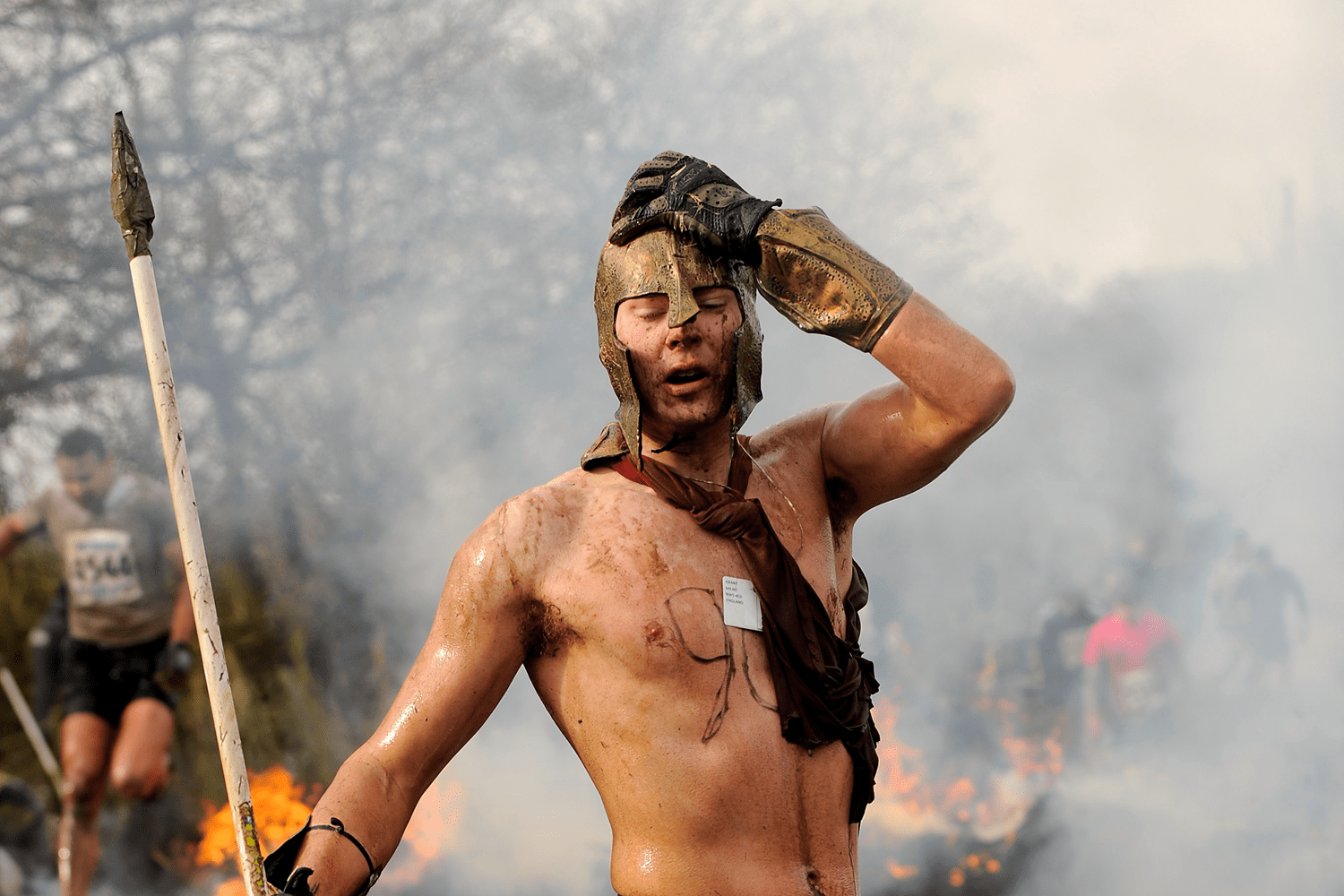
Historian Bret Devereaux on why it’s ill-advised to idolize Spartans…
The Athenian historian Thucydides once remarked that Sparta was so lacking in impressive temples or monuments that future generations who found the place deserted would struggle to believe it had ever been a great power. But even without physical monuments, the memory of Sparta is very much alive in the modern United States. In popular culture, Spartans star in film and feature as the protagonists of several of the largest video game franchises. The Spartan brand is used to promote obstacle races, fitness equipment, and firearms. Sparta has also become a political rallying cry, including by members of the extreme right who stormed the U.S. Capitol on Jan. 6, 2021. Sparta is gone, but the glorification of Sparta—Spartaganda, as it were—is alive and well.
Even more concerning is the U.S. military’s love of all things Spartan. The U.S. Army, of course, has a Spartan Brigade (Motto: “Sparta Lives”) as well as a Task Force Spartan and Spartan Warrior exercises, while the Marine Corps conducts Spartan Trident littoral exercises—an odd choice given that the Spartans were famously very poor at littoral operations. Beyond this sort of official nomenclature, unofficial media regularly invites comparisons between U.S. service personnel and the Spartans as well.
Much of this tendency to imagine U.S. soldiers as Spartan warriors comes from Steven Pressfield’s historical fiction novel Gates of Fire, still regularly assigned in military reading lists. The book presents the Spartans as superior warriors from an ultra-militarized society bravely defending freedom (against an ethnically foreign “other,” a feature drawn out more explicitly in the comic and later film 300). Sparta in this vision is a radically egalitarian society predicated on the cultivation of manly martial virtues. Yet this image of Sparta is almost entirely wrong. Spartan society was singularly unworthy of emulation or praise, especially in a democratic society…
Eminently worth reading in full. U.S. admiration of a proto-fascist city-state is based on bad history: “Spartans Were Losers,” from @BretDevereaux in @ForeignPolicy.
In the spirit of offering alternative perspectives: Brad DeLong in defense of Gates of Fire, if not of the worshipful view of the Spartans.
* Aristophanes, The Frogs
###
As we rethink role models, we might recall that it was on this date in 1951 that Disney’s Alice in Wonderland had its American premiere (in New York, two days after premiering in London).
Walt Disney first tried to adapt Alice into a feature-length animated feature film in the 1930s, but were scrapped in favor of Snow White and the Seven Dwarfs (1937). The idea was revived in the 1940s. The film was originally intended to be a live-action/animated film, but Disney decided it would be the fully animated feature film. During its production, many sequences adapted from Lewis Carroll’s books were later omitted, such as Jabberwocky, White Knight, the Duchess, and Mock Turtle.
Alice in Wonderland was considered a disappointment on its initial release, so was shown on television as one of the first episodes of Disneyland. Its 1974 re-release in theaters proved to be much more successful, leading to subsequent re-releases, merchandising, and home video releases.

“He, indeed, who gave fewest pledges to Fortune, has yet suffered her heaviest visitations”*…

As Zachary Crockett explains, taking the kids to a baseball game, a movie, or Disneyland is a bigger financial commitment than it used to be for middle-class families… a much bigger commitment…
In the 1950s and ’60s — the so-called Golden Age of American capitalism — family outings were within the realm of affordability for most median income earners. Many blue-collar workers could afford new homes and cars and still take their kids to Disneyland.
Despite rising wages, many of those same activities are now out of reach for everyday Americans.
The Hustle analyzed the cost of three family activities in 1960 vs. 2022:
1. A baseball game
2. A movie at a theater
3. A one-day Disneyland visit
We found that these family outings have increased in cost at 2-3x the rate of inflation — and that, in order to afford them, today’s American families have to work up to 2x as many hours as they did 60 years ago…
The painful details at: “America’s favorite family outings are increasingly out of reach,” from @zzcrockett in @TheHustle.
* John Maynard Keynes
###
As we rethink our plans, we might recall that it was on this date in 1951 that Disney’s Alice in Wonderland had its American premiere (in New York, two days after premiering in London). The average price of a movie ticket that year was $0.47 (or $4.53, adjusted for inflation); popcorn was 5-10 cents per bag.
“Everyone waits in line”*…

What we can learn from studying the crowd-management approaches at Disneyland…
Who gets to do what and when at a themepark may sound like a trivial question, but I think it’s a perfect little microcosm for the distributional problems that are at the heart of all political economy – questions that the pandemic’s shortages and shocks threw into stark relief…
Stay in your lane: “The definitive answers to Disney’s pernicious queueing debates,” from Cory Doctorow (@doctorow)
The video that Cory recommends:
(image at the top: source)
* Paul Theroux
###
As we bide our time, we might recall that it was on this date in 1971 that traffic-choking crowds jammed Walt Disney World to capacity (on the day after Thanksgiving). Shortly before noon the Florida park closed its gates to additional visitors.

“Animation can tell more than live action”*…

A clumsy accident leads a young girl onto the streets of Mumbai in the hope of making things right. A gentle and touching father/daughter story depicted in exquisite stop-motion from Indian animation mainstay, Suresh Eriyat and his Studio Eeksaurus.
The idea for the story of Tokri came to Suresh from an incident that happened in his life. A little girl walked up to him one day at a signal trying to sell him some baskets. In Mumbai, one often finds beggars at traffic signals, and most of them are usually children. Suresh did not think much of it and shooed her away. As he drove off, he was hit with guilt, wondering what circumstance made the little girl sell baskets, and what if his brashness had done little but drag her situation for longer. He was perhaps her umpteenth attempt at selling it. There began his inspiration for the story.
Suresh wished to revive the popularity of clay animation through this film. Although clay animation is known to be a painstaking process that is both time consuming and tedious, it is an art that gives life to inanimate objects, bringing with it an energy on screen that shines through, one frame at a time. The project thus began with an enthusiastic group of young artists who had never worked on stop-motion of this scale before, and had never anticipated that it would eventually take 8 years to complete…
See the 14 minute film:
And you can peek behind that scenes of the production– and see how very hard Suresh and his team worked to earn the dozens of awards and accolades they’ve justly scored:
[TotH to Boing Boing]
###
As we celebrate skill, we might recall that it was on this date in 1964 that Universal Studios, in the Universal City area of Los Angeles, opened to the public as a theme park. (It had been in operation as a motion picture studio since 1912.)

Also on this date (that is, today) Hong Kong Disneyland is closing indefinitely due to a resurgence of the coronavirus (having re-opened about a month ago after a pandemic-driven closure). While Universal Studios LA is also closed (though the City Walk shopping area is partially open), the Orlando-based Walt Disney World and Universal Studios Florida are open, both with warnings that suggest “Exposure to COVID-19 is an inherent risk in any public location where people are present; we cannot guarantee you will not be exposed during your visit.”

Hong Kong Disneyland
“Life is not a theme park, and if it is, the theme is death”*…

French photographer Romain Veillon documented the after-life of Dreamland, a theme park built in Nara Prefecture in 1961, that was expected to become Japan’s answer to Disneyland. But its fate was sealed when both Disney and Universal Studios opened up their own parks in nearby Osaka and Tokyo. Closed in 2006, it lay dormant until it was razed in 2016– just after Veillon’s photos were taken.
Visit the ruins at “Deserted Japanese theme park photographed just before demolition.”
* Russell Brand
###
As we contemplate an E Ticket, we might recall that it was on this date in 1955 that the Atchison, Topeka & Santa Fe Railway signed a five-year contract with Disney, agreeing to pay $50,000 per year in exchange for Disney’s use of the name “Santa Fe” and company logo on all Disneyland trains, stations, literature, etc.

Walt Disney (left), with California Governor Goodwin J. Knight (center) and Santa Fe Railway President Fred Gurley (right) on Opening Day at Disneyland
You must be logged in to post a comment.