Posts Tagged ‘Protest music’
“Power tends to corrupt, and absolute power corrupts absolutely”*…
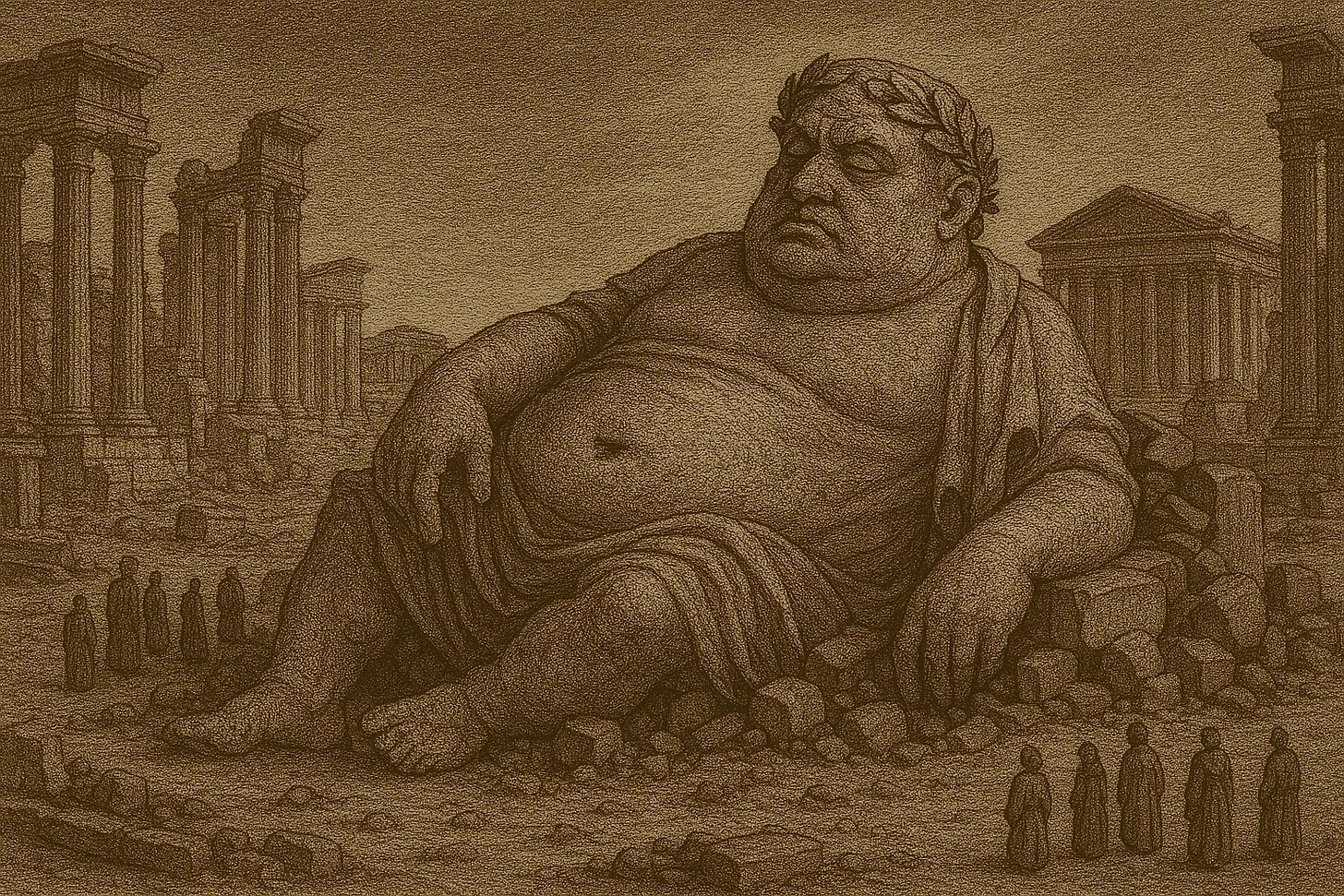
The estimable Henry Farrell has re-posted a (slightly revised) piece that was sub-linked in an early (R)D– a compelling argument that “we need, right at the moment, to think very clearly about how power is won or lost”…
… The current U.S. president is looking to seize power that he clearly is not entitled to under the law and the constitution, and that will usher through some kind of regime change if he succeeds. Many people are trying to resist. What are Trump’s strengths and weaknesses? What are the strengths and weaknesses of those who want to oppose him?
There’s a simple account of power that I think is useful here. It is developed in this paper by the late Russell Hardin, but really descends from David Hume’s understanding of politics.
The fundamental argument is this: that power in modern societies depends on social coordination. That is just as true of aspiring authoritarians like Trump as of the people who want to mobilize against him. As Hume says (quoted in Hardin):
No man would have any reason to fear the fury of a tyrant, if he had no authority over any but from fear; since, as a single man, his bodily force can reach but a small way, and all the farther power he possesses must be founded either on our own opinion, or on the presumed opinion of others.
Those who want to win power can only do so by persuading others. All tyrants must worry that their grip on power rests on such opinion. Hardin:
As a contemporary lawyer puts this argument: “No state could possibly compel people to obey all these rules at gunpoint; there would not be enough soldiers and policemen to hold the guns (a sort of Orwellian vision of society), they would have to sleep sooner or later, and then anarchy might break out.”
Equally, even if the people might overwhelm the tyrant if they ever joined together, it is very hard for them to organize against him, especially in a fully developed authoritarian state.
That is why authoritarian rulers devote a lot of time to preventing unrest from breaking out. Their best strategy for survival is to actually be popular. But that is hard to keep up. Acceptable substitutes include preventing people from discovering how unpopular the regime is, controlling media (to prevent coordination), and deploying the threat of physical violence to intimidate.
The problem with all of these strategies is that the ruler can do none of it on their own. Even the threat of violence, when looked at closely, requires some degree of willing coordination among the soldiers and policemen. That is why dictators are so careful about how they treat their armed forces. Authoritarians need to worry about the masses, but even more about their own coalitions.
More generally: struggles for power are struggles over the means of coordination. Who is capable of coordinating better, wins. And want-to-be authoritarians and mass publics face different coordination problems.
If you are an aspiring authoritarian, your strategy is to persuade others that they need to be part of your coalition. Hardin (this time on Adam Smith):
In a competitive world of pastoralists, one benefits best from association with the most powerful tribe. Hence, if someone rises to capable leadership with [sic] a tribe, others will be attracted to join with it. The result eventually will be remarkable power in the control of the leader of the tribe. Combination for the sake of survival then makes it possible not merely to survive but to thrive and even to plunder.
In more modern circumstances, your best strategy as an aspiring tyrant is likely to convince others (a) that they do live in a society of competing groups, and (b) that the smart money will always be on joining the dominant group, and not being one of the dominated ones.
Hardin continues:
This is essentially an argument from coordination. We coalesce because it is individually in our interest to do so as long as others do so as well. What we need to guide is in coalescing with others is merely the evidence of sufficient leadership and sufficient members to make our joining them clearly beneficial.
That, however, isn’t quite right. The authoritarian who wants to build a ruling coalition needs not only to make her success seem like a fait accompli. She also needs to persuade others that they will prosper rather than suffer from joining. The aspiring authoritarian needs to persuade allies that she (and they) will predate on outgroups, and that she will not predate on the allies themselves.
That process of persuasion becomes more difficult, the more unbounded the ambitions of the wannabe authoritarian are (I lay out a version of this argument here, in a paper that began from a conversation with Hardin and Margaret Levi a quarter of a century ago). The more powerful and unruly the authoritarian becomes, the more readily they can make promises or threats. Equally, the less credible those promises or threats become, both to allies and to enemies.
Absolute power implies absolute impunity: if I enjoy such power, I have no incentive to behave trustworthily to anyone. For just the same reason, no-one has any incentive to trust me. You will not believe my promises, and you may fear that if you give in to my threats, you will only open yourself to further abuse. Thus – as I, as an aspiring authoritarian move closer to unbounded control, I need to artfully balance the benefits that my power can bring to my allies with the fear those allies may reasonably have over what happens should that power be turned against them.
The problem faced by mass publics is different. For all the language about the ‘tyranny of the masses,’ they find it difficult to coordinate on rewarding friends and punishing enemies. That makes them less likely to go bad, at least in the way that tyrants can go bad. But it also makes it more difficult for them to coordinate against incipient tyranny, even when they know that everyone would be better off if they did.
On the one hand, under some circumstances, the costs of action may be quite low. If protest is cheap, then protestors are playing a nearly pure coordination game, where everyone will resist if they reasonably assume that everyone else will resist too. Hardin:
coordination may so greatly reduce costs that the latter are almost negligible, so that the slightest moral commitment may tip the scales toward action. Just as it would be odd for many Americans in communities in which voting is easy to balk at the minor cost in inconvenience, so it might seem odd for many workers or soldiers or others to balk at joining a crowd to march on the palace or the Bastille. This is not identical to a multiple coordination problem, such as that in the driving convention, in which one simply wants to go with the majority. In the revolutionary coordination, one has an active preference between the outcome of full attack and that of no attack. Still, one prefers to attack if enough others do and not to attack if enough others do not.
On the other, rulers and aspiring rulers can recognize this risk and counter-attack.
It was perhaps the startling ease with which spontaneous revolutions took control in cities that led the French under Thiers to put down the Paris Commune with such thoroughgoing brutality as to make it seem more nearly like murder than warfare. The answer to the coordination explanation of revolutionary action is draconian force. This lesson of the Commune has been learned well by many later regimes and leaders in various places, such as the Nazis in Czechoslovakia, Stalin in the Soviet Union, Pinochet in Chile, and Videla in Argentina, with their harsh, blanket suppression of dissenters and potential dissenters. They raise the likely costs of revolutionary activity enough to change its structure. … If the old state raises the costs enough to individuals for revolutionary activity, it overcomes the power of coordination to reduce the costs of revolutionary activity. It forces potential revolutionaries to see their problem overwhelmingly as a prisoner’s dilemma in which free-riding is in the individuals’ interest.
This helps explain some of the actions of Trump and those around him. Their approach to both universities and law firms has been to make simple coordination seem like a prisoner’s dilemma, by picking off opponents, one by one, and by trying to create a common understanding that collective resistance is useless, since your potential allies are likely to defect. The early decision of one extremely prominent law firm, Paul Weiss, to defect, shaped common expectations so that several others rushed immediately to defect too, for fear that they would be stranded amidst the dominated group, rather than joining the dominating coalition in a subordinated role.
To bring the different strands of the argument together, Trump’s strategy has been much less effective than it might have been. Trump has shown he is unwilling to stick by deals. Law firms that have submitted find that they are on the hook for far more than they bargained for. Columbia University, after making humiliating and profound concessions, finds that it is expected to make far greater ones, with no guarantee that even these will satisfy the Trump administration’s demands
As a whole body of research on “tying the king’s hands” argues, independent actors will prefer to flee monarchs who refuse to be bound rather than to cooperate with them, because they know that such monarchs can’t be trusted. Any deal that they make can later be un-made, and probably will be, if unmaking it is to the king’s advantage. The best option may be not to submit, especially if you believe that others are similarly unwilling to comply. This may, in effect, turn what was a prisoner’s dilemma (in which everyone’s best strategy is to defect) back into a nearly pure coordination game again, allowing easier collective resistance.
Or, it may not. If people don’t have reason to believe that others will stand up, then they still are unlikely to stand up themselves.
This then, gives us a simplified but useful understanding of where we are right now. The good news is that the Trump administration is playing its hand very badly. If Trump had been more willing to accept defectors into his camp, by sticking to deals that gave them something worth having, he would be in a much stronger situation than he is at the moment. Furthermore, and somewhat less obviously, this may also disrupt his own existing coalition. Wall Street, for example, may worry that it is next for the chopping block. Silicon Valley the same.
The bad news is that the opposition is much more disorganized than it ought to be. Coordination is bolstered by shared knowledge that others will coordinate too. We don’t have that, in part because of lack of leadership, in part because of a media landscape that makes it difficult to generate such shared knowledge. Remember Hume’s phrase about the “presumed opinion of others.” Our presumptions about what other people think can play an extraordinarily powerful role in shaping how we ourselves think, and what we are prepared to do. And in a country where such presumptions can be grossly skewed, it can be very hard to generate coordinated action. Finally, exactly because the opposition is disorganized, and because humans are human, it faces its own collective version of Trump’s temptation to humiliate and subjugate defectors from the other side, rather than welcoming them in.
The strategic implications for what to do are not surprising. Leadership is crucial. It is really, really hard to make a coalition cohere if the plausible leaders abdicate. More generally, figure out how to generate common knowledge that will enable coordination. Protests – especially if they are widespread, and especially if they happen in unusual places, or involve surprising coalitions can help generate information cascades. But getting media coverage and broader conversation is important.
Welcome in the strayed sheep, and work on widening the cracks in the other coalition. Leopard-face-eating memes may feel personally satisfying, but they usually do not ease the process of converting disillusioned opponents into active allies. As Adam Przeworski says, the Polish coalition to push back against the populists only succeeded when people who were ferociously divided over a moral issue agreed to make common cause.
Crucially, the parties forming the alliance agreed not to confront the major issue that divided them: abortion. They agreed that defending democracy was more important than whatever values divided them, and that conflicts over abortion would be managed once victory over PiS was secured. Hence, both the opponents and the supporters of the freedom of choice could promise their respective electorates that they would promote their values if democracy was restored, while claiming that the immediate task was to restore it.
If power involves coordination, coordinate! Help build your coalition as far as it can go. Do everything you can to minimize defections from it, and to maximize defections from the other side. Take advantage of the opposition’s vulnerabilities and mistakes – especially the trust problems that are likely to flourish in a coalition around an actor who aspires to untrammeled power and is deeply untrustworthy.. Assume that the other side is trying to attack your own vulnerabilities, and mitigate as much as possible. And do what you can now; things are likely to get much harder, very quickly, if the opposition’s victory becomes a self-confirming expectation…
The respective vulnerabilities of tyrants and crowds: “Absolute power can be a terrible weakness,” from @himself.bsky.social.
Pair with: “Power always reveals.”
And apposite: “Two scholars ask whether democracy can survive if AI does all the jobs,” gift article from The Economist.
###
As we get it together, we might recall that it was on this date in 1962 that Bob Dylan appeared for the first time at Carnegie Hall in New York City as part of a hootenanny which included his first public performance of “A Hard Rain’s a-Gonna Fall.”
The Anti-Skinheads…
 American Juggalo
click here for video
Once a year, the fans of Insane Clown Posse— a group self-anointed the “Juggalos“– gather at Cave-in-Rock, Illinois for a week of music, carnival rides, and partying.
In contrast to the Skinhead movement, Juggalos pride themselves on inclusiveness, embracing all races, genders, creeds, and economic backgrounds (though they tend to be drawn, like Skinheads, largely from the economically-challenged), and consider themselves a family.
The inimitable Bob Lefsetz on American Juggalo:
This ain’t Coachella. It’s not even Bonnaroo.
We’re used to corporate sponsors, patrons staying in hotel rooms. Everybody in America is a winner, on their way up.
But here you have an endless supply of what society calls losers. And they all seem to know it.
This film is as powerful as the great documentaries of Frederick Wiseman and D.A. Pennebaker. It captures a vibe, a feeling, which you don’t find too often in today’s mainstream media.
I can’t imagine many of these people are Democrats. They want every dollar they earn, because it’s not many. And where’s the better life, the jobs Obama promised?
It’s an endless carnival of the disenfranchised. An underbelly pushed under the rug, joining together to have a good time.
What happens when your parents aren’t rich, when your life has taken a wrong turn? You get tattoos and become a Juggalo.
This certainly ain’t the beautiful people.
And it’s not all stoners. There are Straight Edge Juggalos, and if one of the talking heads is to be believed, even brain surgeon Juggalos. But I’m guessing those are in the minority.
This is not plastic-surgeried, dieted down to nothing television America. This is the people servicing you, doing those low paying jobs you’ve got contempt for.
But they’re also us.
They’re bonded as family, and that’s admirable…
As we dream the American Dream, we might spare a warm thought for Woodrow Wilson “Woody” Guthrie, the musical voice of voiceless Americans for half a century; he died on this date in 1967. Guthrie began writing and singing as he travelled with other refugees west from the Dust Bowl in the 30s. He became a professional, and moved to New York in 1939. Almost as soon as he landed in the East, he met Alan Lomax, who was collecting folk recordings for the Library of Congress. For two years, Guthrie added to Lomax’s store– which led to the album Dust Bowl Ballads, the nation’s introduction to “Protest Folk,” a form that Guthrie pioneered with such songs as “This Land is Your Land.”
In the 1950s, Guthrie was diagnosed with Huntington’s chorea, a genetic disorder that was treated in those days with confinement to a psychiatric hospital– in Guthrie’s case, Brooklyn State Hospital, then Creedmore– where he spent his last 12 years.
In 1963, Bob Dylan was asked to contribute a 25-word “thought” to the preface of a forthcoming book on Guthrie; Dylan responded with a 144-line poem… in which, having asked where a man could go to “look for this hope that yer seekin’,” Dylan suggests
You can either go to the church of your choice
Or you can go to Brooklyn State Hospital
You’ll find God in the church of your choice
You’ll find Woody Guthrie in Brooklyn State Hospital

You must be logged in to post a comment.