Posts Tagged ‘Nobel Prize’
UFOs (Unusual Feynman Objects)…
Richard Feynman was a once-in-a-generation intellectual. He had no shortage of brains. (In 1965, he won the Nobel Prize in Physics for his work on quantum electrodynamics.) He had charisma. (Witness this outtake from his 1964 Cornell physics lectures [available in full here].) He knew how to make science and academic thought available, even entertaining, to a broader public. (We’ve highlighted two public TV programs hosted by Feynman here and here.) And he knew how to have fun. The clip above brings it all together.
From Open Culture (where one can also find Feynman’s elegant and accessible 1.5 minute explanation of “The Key to Science.”)
As we marvel at method, we might recall that it was on this date in 1864 that Giovanni Batista Donati made the first spectroscopic observations of a comet tail (from the small comet, Tempel, 1864 b). At a distance from the Sun, the spectrum of a comet is identical to that of the Sun, and its visibility is due only to reflected sunlight. Donati was able to show that a comet tail formed close to the Sun contains luminous gas, correctly deducing that the comet is itself partially gaseous. In the spectrum of light from the comet tail, Donati saw the three absorption lines now known as the “Swan bands” superimposed on a continuous spectrum.

Calling Gil Scott-Heron…

From the good folks at Staple Crops:
Hip-Hop Word Count™
The Hip-Hop Word Count is a searchable ethnographic database built from the lyrics of over 40,000 Hip-Hop songs from 1979 to present day.
The Hip-Hop Word Count describes the technical details of most of your favorite hip-hop songs. This data can then be used to not only figure out interesting stats about the songs themselves, but also describe the culture behind the music.
How can analyzing lyrics teach us about our culture?
The Hip-Hop Word Count locks in a time and geographic location for every metaphor, simile, cultural reference, phrase, rhyme style, meme and socio-political idea used in the corpus of Hip-Hop.
The Hip-Hop Word Count then converts this data into explorable visualisations which help us to comprehend this vast set of cultural data.
This data can be used to chart the migration of ideas and builds a geography of language.
The readability scores are on a scale from 0 (illiterate) to 20 (post-graduate degree).
So, how do different artist’s fare? For reference, Staple Crops ran energy policy speeches by both Obama and McCain from the 2008 campaign; each scored a 12– “Educational Level: High School Graduate, Reading Level: Time Magazine.”
By comparison, Fifty Cent’s “I Get Money” scored a 7– “Educational Level: Junior High School, Reading Level: True Confessions.”
At the other extreme, Jay-Z’s “Dead Presidents 2” and Rakim’s “Microphone Fiend” both scored 16– “Educational Level: University Degree, Reading Level: Atlantic Monthly.”
Grade other artists, pick up a set of the trading cards (exampled above), or buy chocolates (!) featuring reliefs of one’s favorite rappers at Staple Crops.
No child left behind, Sucka!
As we dust off those closeted turntables, we might wish a lyrical Happy Birthday to the painter, poet, playwright, essayist, and Nobel Laureate Derek Walcott; he was born on this date in 1930 on the island of Santa Lucia in the West Indies.

Inheriting the Wind*…
From DetentionSlip.com (“your daily cheat sheet for education news”), a sobering infographic on the state of education in the U.S., “Creationism vs. Darwinism in the U.S.”; an excerpt:

Click here to see the infographic in full (and then again on the image there, to enlarge).
* Inherit the Wind, the play (then movies) that fictionalized the Scopes trial, took it’s title from Proverbs 11:29, which (in the King James version) reads:
He that troubleth his own house shall inherit the wind:
and the fool shall be servant to the wise of heart.
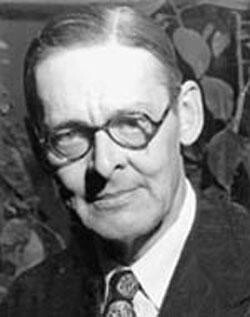
As we own up to ontology, we might might recall that it was on this date in 1950 that T.S. Eliot, then 62, observed that “the years between 50 and 70 are the hardest. You are always being asked to do things, and yet are not decrepit enough to turn them down.” Among those nagging tasks: picking up his Nobel Prize for literature two years earlier.
Signs are taken for wonders. “We would see a sign!”
The word within a word, unable to speak a word,
Swaddled with darkness.
– “Gerontion”
“Nature uses only the longest threads to weave her patterns, so that each small piece of her fabric reveals the organization of the entire tapestry”*…
Clouds are not spheres, mountains are not cones, coastlines are not circles, and bark is not smooth, nor does lightning travel in a straight line.
—Benoit Mandelbrot, The Fractal Geometry of Nature
Benoit Mandelbrot, Sterling Professor of Mathematics at Yale and the father of fractal geometry, died last Thursday at age 85. As Heinz-Otto Peitgen, professor of mathematics and biomedical sciences at the University of Bremen, observed, “if we talk about impact inside mathematics, and applications in the sciences, he is one of the most important figures of the last 50 years.”
“I decided to go into fields where mathematicians would never go because the problems were badly stated,” Dr. Mandelbrot once said. “I have played a strange role…” Indeed, one hopes that Mandelbrot had the consolation of his own fascination as he contemplated the diffusion pattern of the pancreatic cancer that killed him.
At TED2010, mathematics legend Benoit Mandelbrot develops a theme he first discussed at TED in 1984 — the extreme complexity of roughness, and the way that fractal math can find order within patterns that seem unknowably complicated.
* Richard Feynman
In other sad news, Barbara Billingsley, the avatar of American motherhood in her role as Mrs. Cleaver on Leave it to Beaver, passed away on Saturday.

As we marvel at patterns nested within themselves, we might recall that it was on this date in in 1962 that In 1962, Dr. James D. Watson, Dr. Francis Crick, and Dr. Maurice Wilkins won the Nobel Prize for Medicine and Physiology for their work in determining the double-helix molecular structure of DNA (deoxyribonucleic acid).

All together now!…
The good folks at All Sorts have taken on the issue of collective nouns– or as Drew Neil calls them, Venereal Terms— that is, the names we give bunches of things. All Sorts invited designers to submit illustrations of their favorites for inclusion in the All Sorts Index. A few of the winners:

A Glass Half Full of Optimists

A Hush of Librarians

A Sofa of Dogs
For more karass, not false but funny, see here. (TotH to Jason Kottke)
As we contemplate commonalities, we might wish a Buon Compleanno to Luigi Pirandello, the dramatist and novelist best remembered for Six Characters in Search of an Author. He was born on this date in 1867, turned to writing when the family sulphur mines failed, and received the Nobel Prize for Literature in 1934.

You must be logged in to post a comment.