Posts Tagged ‘news’
“What shall we do if we take ignorance to be knowledge?”*…

A.W. Ohlheiser on a new book, Invisible Rulers— an investigation of the ways in which technology has transformed power and influence– by Renée DiResta, a leader of the late, lamented Stanford Internet Observatory…
… The book examines and contextualizes how bad information and “bespoke realities” became so powerful and prominent online. She charts how the “collision of the rumor mill and the propaganda machine” on social media helped to form a trinity of influencer, algorithm, and crowd that work symbiotically to catapult pseudo-events, Twitter Main Characters, and conspiracy theories that have captured attention and shattered consensus and trust.
DiResta’s book is part history, part analysis, and part memoir, as it spans from pre-internet examinations of the psychology of rumor and propaganda to the biggest moments of online conspiracy and harassment from the social media era. In the end, DiResta applies what she’s learned in a decade of closely researching online disinformation, manipulation, and abuse, to her personal experience of being the target of a series of baseless accusations that, despite their lack of evidence, prompted Rep. Jim Jordan, as chair of the House subcommittee on Weaponization of the Federal Government, to launch an investigation.
There’s a really understandable instinct that, I think, a lot of people have when they read about online misinformation or disinformation: They want to know why it’s happening and who is to blame, and they want that answer to be easy. Hence, meme-ified arguments about “Russian bots” causing Trump to win the presidential election in 2016. Or, perhaps, pushes to deplatform one person who went viral by saying something wrong and harmful. Or the belief that we can content-moderate our way out of online harms altogether.
DiResta’s book explains why these approaches will always fall short. Blaming the “algorithm” for a dangerous viral trend might feel satisfying, but the algorithm has never worked without human choice. As DiResta writes, “virality is a collective behavior.” Algorithms can surface and nudge and entangle, but they need user data to do it effectively…
…
…So, what would work?
DiResta’s ideas for this echo conversations that have been happening among misinformation experts for some time. There are some things platforms absolutely should be doing from a moderation standpoint, like removing automated trending topics, introducing friction to engaging with some online content, and generally giving users more control over what they see in their feeds and from their communities. DiResta also notes the importance of education and prebunking, which is a more preventative version of addressing false information that focuses on the tactics and tropes of online manipulation. Also, transparency…
Misinformation: “Why lying on the internet keeps working,” @abbyohlheiser in @voxdotcom.
DiResta on her experience of harassment while at the Internet Observatory: “My Encounter with the Fantasy-Industial Complex” (gift article)
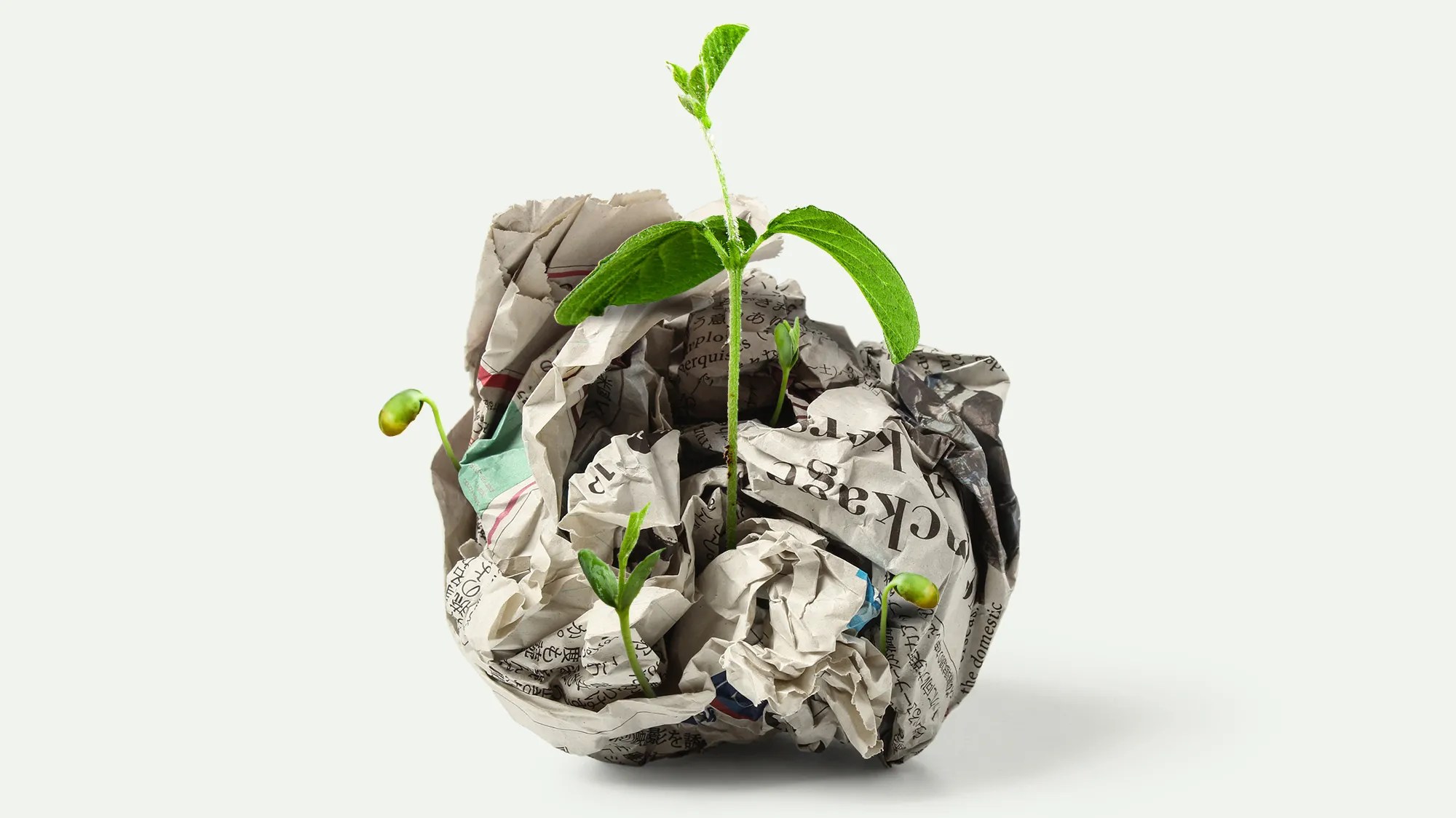
For more on prebunking, see “Fact or Fake? The role of knowledge neglect in misinformation” (source of the image above.
Also apposite: “Is social media fueling political polarization?“
On the other hand, there’s this consideration of misinformation in the larger epistemological context of all of the information available to us: “How Dangerous is Misinformation?“: “The problem with alarmism about “misinformation” is not that it is too pessimistic about the state of media and public discourse. The problem is that it is not pessimistic enough.” Caveat lector.
* Neil Postman, Amusing Ourselves to Death
###
As we steel ourselves, we might recall that it was on this date in 1947 that Kenneth Arnold reported a UFO sighting; Arnold claimed that he saw a string of nine, shiny unidentified flying objects flying past Mount Rainier (in Washington State) at speeds that he estimated at a minimum of 1,200 miles an hour.
His was the first post-World War II sighting in the United States that attracted nationwide news coverage and is credited with being the first of the modern era of UFO sightings– including numerous reported sightings over the next two to three weeks. Arnold’s description of the objects led the press quickly to coin the terms flying saucer and flying disc as popular descriptive terms for UFOs.
After the 1947 UFO sighting, Arnold became famous “practically overnight.” Arnold’s daughter would later recall the family receiving 10,000 letters and constant phone calls. In the 1960’s Arnold entered politics, running as a Republican for Lieutenant Governor of Idaho. He lost to the Democratic incumbent.

“The more wonderful the means of communication, the more trivial, tawdry, or depressing its contents seemed to be”*…

… a little harsh, perhaps– but, as Mane Kara-Yakoubian reports, all-too-consonant with the results of a major new study of news participation around the world…
A massive cross-cultural study reported a 12% decline in overall news participation—including liking, sharing, and commenting on social media, and discussing news offline—a trend spanning 46 countries between 2015 to 2022. This research was published in New Media & Society.
“I was interested in news participation because in recent years many have expressed concerns about dark forms of participation, such as the sharing of ‘fake news’. Yet, what we see on social media isn’t a representative sample of reality,” said Sacha Altay (@Sacha_Altay), a postdoctoral researcher at the University of Zürich in the department of political science. “For instance, we know that a small group of very active and vocal internet users drive most forms of dark participation online. I wanted to understand general trends in participation beyond these potentially unusual and unrepresentative cases.”
The research team used data from the Digital News Report surveys conducted by YouGov and its partners, which encompassed responses from 577,859 individuals across 46 countries over an eight-year period. These surveys were designed to be nationally representative, with quotas for age, gender, region, and, in some cases, education and political orientation…
“The main takeaway is that in many countries, news participation is declining,” explained Altay. “For example, people report sharing, commenting, or liking news on social media less. This decline is not only confined to online spaces: people also report talking less about the news in face-to-face interactions with their friends or colleagues. The only form of participation that has increased is news sharing via private messaging applications such as WhatsApp.”
Specifically, sharing news on social media dropped by 29%, commenting decreased by 26%, and offline discussions fell by 24%. Conversely, sharing news through private messaging apps increased by 20%, suggesting a preference for private communication channels.
Participants with higher education levels, younger individuals, women, and those with a keen interest in news were more likely to participate in news activities. However, over time, the decline in participation was more pronounced among women, those without a bachelor’s degree, and individuals with low trust in news. This shift resulted in men eventually participating more than women, a reversal of the trend observed in 2015. Further, political polarization within countries was linked to lower levels of news participation, suggesting that increasing societal divides may discourage news engagement…
“The decline in news participation that we document is likely a symptom of growing negative perceptions of the news: in the last seven years, trust in news has slowly but steadily declined, news avoidance has grown, and interest in news has fallen sharply,” Altay told PsyPost. “I see these trends as worrying given the role that the news plays in informing people and, among other things, holding politicians accountable.”…
If true, it’s worrying news to anyone concerned for healthy civil discourse: “Massive cross-cultural study finds participation with news is declining,” from @ManeYakoubian in @PsyPost.
The open access paper: “News participation is declining: Evidence from 46 countries between 2015 and 2022”, by Sacha Altay, Richard Fletcher, and Rasmus Kleis Nielsen.
* Arthur C. Clarke, 2001: A Space Odyssey
###
As we investigate engagement, we might spare a thought for a journalist from a brighter time for the field and a champion of an educated, informed populace, Norman MacKenzie; he died on this date in 2013. After graduating for the LSE, MacKenzie worked for two decades at the New Statesman magazine. But in 1962, Asa Briggs recruited him to teach sociology at the University of Sussex (where he also set up the Centre for Educational Technology). In the mid-1960s he worked with Richmond Postgate of the BBC and the then education minister Jennie Lee on ideas for getting more people into university. He subsequently instrumental in creating the Open University.

“Look on every exit as being an entrance somewhere else”*…
It’s all too clear that the fourth estate in the U.S. is in trouble. Indeed, the wrenching contraction of the field has become one of journalism’s most covered stories. Here, for example, Alex Weprin on the sorry state of things…
It wasn’t all that long ago that a billionaire buying a storied news publication was a sign of hope and optimism. After all, they had money to lose, and they earned their fortunes by creating something new. Maybe they could figure out how to make media work?
And what about private equity? It’s an industry premised on turnarounds: acquiring underperforming companies, reimagining them and making them succeed.
Or the classic family-owned publication: Keeping a business in the family with no goal of excessive profits, just a certain amount of stability to keep the legacy alive.
Unfortunately, it seems, no category of owner appears able to salvage a media business in decline, with business models still stuck in the past (programmatic, anyone?) and editorial models built for a world before Facebook, TikTok and artificial intelligence.
The media sector is facing a crisis unlike anything seen since the 2008 financial mess, with layoffs and cost-cutting at every turn. The cuts have all occurred in the backdrop of declining web readership at many major publishers over the past year, as tech giants like Meta (Instagram, Facebook) and Google try to keep consumers on their own platforms while old standby referrers like Twitter/X no longer deliver as many readers and the social media landscape fractures.
The Washington Post, Los Angeles Times, Time, Condé Nast, Sports Illustrated, Business Insider, New York Daily News, National Geographic and The Baltimore Sun have all been in the news just this month for layoffs, cost-cutting, labor walkouts or bleak prognosticating…
“The Media Is Melting Down, and Neither Billionaires Nor Journalists Can Seem to Stop It” Hollywood Reporter
There are other– so many other– examples of this kind of grim survey I might have cited, e.g. here or here…
But as Monika Bauerlein, CEO of Mother Jones + Reveal, explains, news– like democracy– can be saved. After recounting several of the same examples, she stipulates to the issue, and then offers a way forward:
… What is—to use a word smart men love to toss out—the gamechanger for the news business?
There isn’t one. Period. End of story.
That’s not a doom prediction. It’s just a reality check. Because the news “business” is over. Dead. No smart guy or better mousetrap is going to get us to a world where quality journalism makes enough money to survive as a for-profit business.
And the truth is, it never did. There was a period when publishers and broadcasters raked in the dough because they were the only ones who could get ads in front of eyeballs. But even then, what made the money was not the shoeleather accountability work. It was the sports section, the real estate supplement, the bar ads.
That model did start creaking in the late 20th century. And then, sometime later, it stopped creaking. Because it was dead.
Sure, there are zombies walking around: hedge fund–owned newspapers, digital startups trying to party like it’s 2009, magazines run by Anna Wintour. But they are getting shakier with each year, sometimes each week. The Messenger, which launched last year with a promise to assemble a giant audience with viral stories and softball Donald Trump interviews, was still publishing when I started writing this column. By the time I found a closing sentence eight hours later it was gone, having set on fire $50 million in startup capital—enough to run Mother Jones well into 2026.
Some news companies have managed to avoid zombification, most notably the New York Times. But that’s because the Times found a business model as a lifestyle brand for the literate, cosmopolitan, and somewhat liberal. How many news-based lifestyle brands can there be?
No doubt there will be a handful of other commercial news organizations that thrive as for-profit companies. But a handful is nowhere near enough. We need thousands of robust newsrooms to serve the many different audiences that make up our democracy. And to get there, we need to stop pretending journalism can make anyone rich, and instead try like hell to serve the public interest… while breaking even.
That’s it. No fancy mousetrap, no shiny object for investors or funders. No billionaire owners who might push out the editor-in-chief because they’re upset with coverage of their friend’s dog. No faux centrist news from conservative heavyweights. Just a hard slog of putting together the money, one dollar at a time, to give people the information they need to change the world, one heart and mind at a time.
That’s what Mother Jones has been trying to do for the past (nearly) half-century. It’s the toughest model to make work. Except for all the others.
Here’s a proposition to all those funders, donors, and investors looking for the Next Big Thing. It’s not quite “one weird trick,” as the internet used to say, but there is a pretty simple formula for survival in the news business. The Next Big Thing, it turns out, might be the Big Thing That Was There All Along:
- Create solid journalism that earns the trust of a community—geographic, identity-based, or interest-based (for example, Mother Jones’ community is one of people who want to see the world change for the better).
- Give folks a chance to support that journalism with their money, attention, and input
- To that foundation of trust and support, add an honest, smart business operation that brings in whatever other forms of revenue are available so long as they don’t undermine #1.
That’s it! No white papers, no pitch decks, no BS…
“It’s Not Just the End for Journalism. It’s a Beginning.” from @MonikaBauerlein and @MotherJones. Eminently worth reading in full (and supporting MJ‘s important work).
* Tom Stoppard, Rosencrantz and Guildenstern Are Dead
###
As we contribute to clear-sighted civil discourse, we might recall that it was on this date in 1981 that Walter Cronkite, who had anchored the CBS Evening News for 19 years, signed off for the final time. A journalist since 1935, Cronkite had joined CBS in 1950 (though he’d been offered, but refused a chance to join the “Murrow Boys” team of war correspondents in 1943). He did reportage, anchored political convention coverage, hosted You Are There and CBS’s Morning Show (its answer to NBC’s Today), and was the lead broadcaster of the network’s coverage of the 1960 Winter Olympics, the first-ever time such an event was televised in the United States (replacing Jim McKay, who had suffered a mental breakdown).
Then, on April 16, 1962, Cronkite succeeded Douglas Edwards as anchorman of the CBS’s nightly feature newscast; in September of 1963, that 15 minute show was expanded to a half hour. Cronkite also hosted the network’s special coverage– perhaps most notably, of the Kennedy assassination and of NASA missions. He became “the most trusted man in America” and received numerous honors including two Peabody Awards, a George Polk Award, an Emmy Award, and in 1981 was awarded the Presidential Medal of Freedom by President Jimmy Carter.
Except on nights when he closed with opinion (as, famously, his observations on the Vietnam War), he ended every newscast with the words “… and that’s the way it is,” followed by the date of the broadcast.

“The more wonderful the means of communication, the more trivial, tawdry, or depressing its contents seemed to be.”*…

Social media could have been a boon to journalism and the fourth estate; it hasn’t turned out that way. Charlie Warzel‘s thoughts on why that is and where things might go…
Over the past decade, Silicon Valley has learned that news is a messy, expensive, low-margin business—the kind that, if you’re not careful, can turn a milquetoast CEO into an international villain and get you dragged in front of Congress.
No surprise, then, that Big Tech has decided it’s done with the enterprise altogether. After the 2016 election, news became a bug rather than a feature, a burdensome responsibility of truth arbitration that no executive particularly wanted to deal with. Slowly, and then not so slowly, companies divested from news. Facebook reduced its visibility in users’ feeds. Both Meta and Google restricted the distribution of news content in Canada. Meta’s head of Instagram, Adam Mosseri, noted that its newest social network, Threads, wouldn’t go out of its way to amplify news content. Elon Musk destroyed Twitter, apparently as part of a reactionary political project against the press, and made a number of decisions that resulted in its replacement, X, being flooded with garbage. As The New York Times declared recently, “The major online platforms are breaking up with news.”
This is correct, but the narrative is missing something. Journalists tend to fixate on how our work is or isn’t distributed. Doing so allows us to believe that algorithms and shortsighted, mercurial tech executives are fully to blame when our work isn’t consumed. Fair enough: Platforms, especially Facebook, have encouraged news organizations to redefine their publishing strategies in the past, including through disastrous pivots to video, only to change directions with an algorithm update or the falsification of key metrics. They’ve also allowed their platforms to be used for dangerous propaganda that crowds out legitimate information. But there is also a less convenient and perhaps more existential side to tech’s divestiture of news. It’s not just the platforms: Readers are breaking up with traditional news, too.
Last week, the Pew Research Center published a new study showing that fewer adults on average said they regularly followed the news in 2021 or 2022 than in any other year surveyed. (Pew started asking the question in 2016.) There’s some shakiness when you break down the demographics, but overall, 38 percent of American adults are following the news closely, versus a high of 52 percent in 2018. This tracks: In 2022, Axios compiled data from different web-traffic-monitoring companies that showed news consumption took a “nosedive” after 2020 and, despite January 6, the war in Ukraine, and other major events, engagement across all news media—news sites, news apps, cable news, and social media—was in decline.
The struggles of legacy news organizations have no simple explanation. Trust in the media has fallen sharply in the past two decades, and especially the past several years, though much more so among Republicans. Some of this is self-inflicted, the result of news organizations getting stories wrong and the fact that these mistakes are more visible, and therefore subject to both legitimate and bad-faith criticism, than ever before. A great deal of the blame also comes from efforts on the right to delegitimize mainstream media. Local-news outlets have died a slow death at the hands of hedge funds. A generational shift is at play as well: Millions of younger people look to influencers and creators on Instagram and especially TikTok, along with podcast hosts, as trusted sources of news. In these contexts, consumer trust is not necessarily based on the quality of reporting or the prestige and history of the brand, but on strong parasocial relationships.
You can see how public opinion has shifted in surveys covering the 2010s. In 2014—squarely in the halcyon days of social news—75 percent of adults surveyed by Pew said that the internet and social media helped them feel more informed about national news. But by 2020, the conventional wisdom had shifted. That year, a Pew survey of more than 10,000 people found that “U.S. adults who mainly get their political news through social media tend to be less engaged with news” and, notably, less knowledgeable about current events and politics…
[Warzel traces the history of news and its relatioship to social media from 2013…]
It would be wrong to suggest that news—and especially commentary about the news— will vanish. But the future might very well look like slivers of the present, where individual influencers command large audiences, and social networking and text-based media take a back seat to video platforms with recommendation-forward algorithms, like TikTok’s. This seems likely to coincide with news organizations’ continued loss of cultural power and influence.
In a recent New York essay, John Herrman suggested that the 2024 presidential campaign might be “the first modern election in the United States without a minimum viable media” to shape broad political narratives. This might not be a bad development, but it’s likely to be, at the very least, disorienting and powered by ever more opaque algorithms. And although it is obviously self-serving of me to suggest that a decline in traditional media might have corrosive effects on journalism, our understanding of the world, and public discourse, it is worth noting that a creator-economy approach to news shifts trust from organizations with standards and practices to individuals with their own sets of incentives and influences.
Should this era of informational free-for-all come about, there will be an element of tragedy—or at the very least irony—to its birth. The frictionless access and prodigious distribution of social media should have been a perfect partner for news, the very type of relationship that might bolster trust in institutions and cultivate a durable shared reality. None of that came to pass. Social media brought out the worst in the news business, and news, in turn, brought out the worst in a lot of social media…
Speaking as a scenario planner (an explorer of plausible futures), your correspondent would suggest that while there are other potential futures, Warzel’s is entirely possible.
One facet of the kind of Warzel’s future that he doesn’t explore is worth mentioning. Stewart Brand is famously remembered for suggesting that “information wants to be free.” What he actually said (to paraphrase slightly) is that “information wants to be free or very expensive.” In a future like the one Warzel describes, journalism of the “what’s actually going on and what might it entail” variety– information that has a very real economic and political value– will surely survive… for those who can afford to pay for it. In a future like this, that kind of “insider info” becomes (yet another) force leading to an oligopolist landscape and the kind of social, economic, and political inequality that entails.
Lest we passively conspire in that future, we should all support the public media institutions that remain dedicated to democratizing “real news.”
Big Tech’s relationship with journalism is much more complicated than it appears: “The Great Social Media–News Collapse,” (gift article) from @cwarzel in @TheAtlantic.
* Arthur C. Clarke, 2001: A Space Odyssey
###
As we get informed, we might recall that on this date in 1918 newspapers around the world carried the headline that the armistice signed by Allies and Germany ending World War I had come into effect.
At the eleventh hour of the eleventh day of the eleventh month, 1918, the First World War came to an end. The armistice… meant total victory for the Allies and the collapse of Germany. The armistice was not a formal surrender – this would come later with the Treaty of Versailles – but it ended all the active fighting. Celebrations occurred across the world after its announcement as the “war to end all wars” had finally come to an end…
source

“Every time a newspaper dies, even a bad one, the country moves a little closer to authoritarianism”*…

The state of local journalism in the U.S. is an altogether justified topic of concern.
Since 2005, the country has lost more than a fourth of its newspapers (2,500) and is on track to lose a third by 2025. Even though the pandemic was not the catastrophic “extinction-level event” some feared, the country lost more than 360 newspapers between the waning pre-pandemic months of late 2019 and the end of May 2022. All but 24 of those papers were weeklies, serving communities ranging in size from a few hundred people to tens of thousands. Most communities that lose a newspaper do not get a digital or print replacement. The country has 6,380 surviving papers: 1,230 dailies and 5,150 weeklies…
The State of Local News 2022
Research suggests that when newspapers disappear from communities, civic engagement declines (as do voting rates), partisan divides worsen, economic development suffers, and (absent oversight) the costs of local government rise… very sound reasons for concern.
But, as Rachel Matthews suggests, there is another reason to worry. Her focus is on the U.K., but sadly, her point is only too relevant to the U.S….
While we might take issue with the idea that there is less local news, it is undeniable that there is a decline in the legacy local newspaper with which we associate its delivery. This decline is in the numbers of titles and also, significantly, in their visibility. The move to digital has put papers online and also removed the surrounding trappings, such as town centre offices or newspaper sellers, from our streets. Financial pressures mean fewer staff, who are reliant on remote methods of communication rather than being visible in communities.
This loss of the physical newspaper is significant to the historian because the local newspaper’s physical legacy is that most often accessed by both professional and amateur historians…
How will we study the local past when we can’t read all about it? “What do historians lose with the decline of local news?“, from @ProvNewsHistory in @HistoryToday.
[Image above: source]
###
As we read all about it, we might send informative birthday greetings to Robert Conley; he was born on this date in 1928. A newspaper, television, and radio reporter, he served a foreign correspondent for The New York Times and NBC News.
But Conley is probably best remembered as the founding host of NPR’s news and cultural program All Things Considered. His (and the show’s) first episode was inducted into the National Recording Registry of the Library of Congress in 2016.

You must be logged in to post a comment.