Posts Tagged ‘movies’
“To me, the ideal artist-to-audience relationship is a one-to-zero relationship. The artist should be granted anonymity.”*…
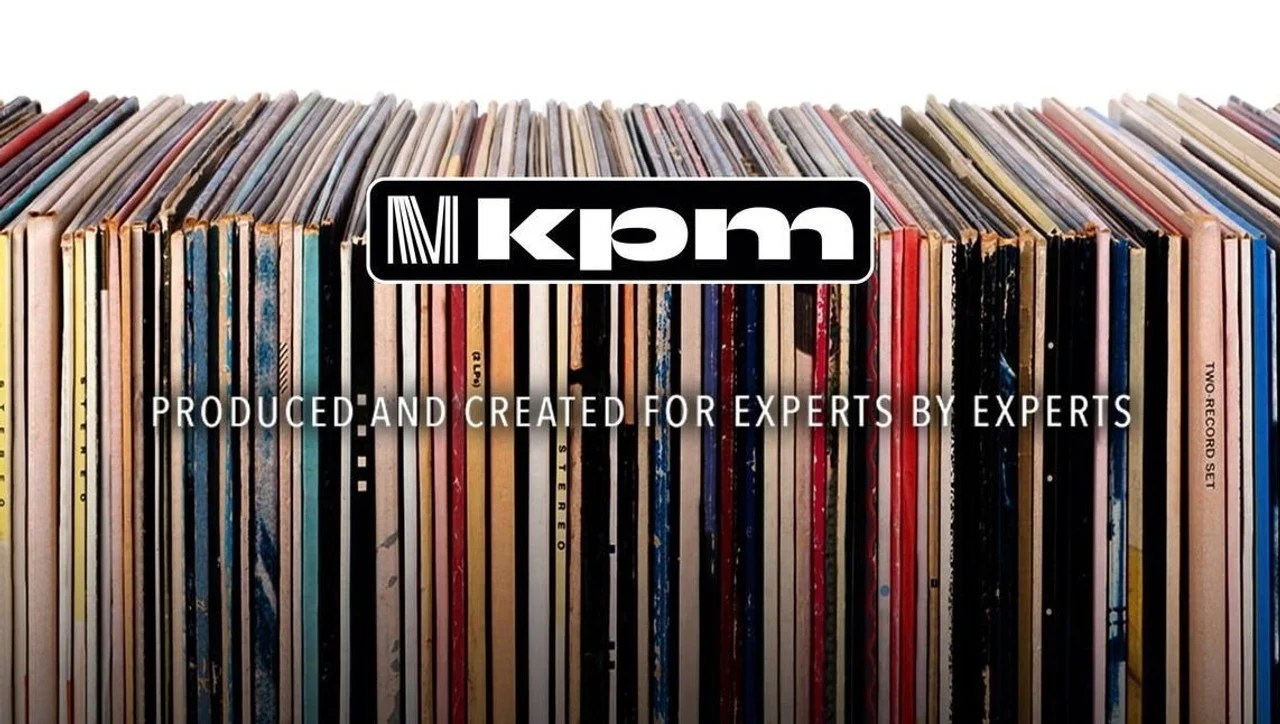
Wish granted…
Earlier this month a little piece of music history was restored. The news was easy to overlook. Sony Music Publishing announced that one of its outermost divisions would be rebranding: what had been EMI Production Music since 2011 would become KPM Music once again. The change may seem trivial, but it restores a name that has wielded a wide and surprising influence over popular culture.
The chances are you haven’t heard of KPM, despite its roots stretching back to 1780, when Robert Keith (the K of the name) set up a music shop in London. But you have almost certainly heard its music. Since 1956 KPM had been a producer of library music, which is not music to be played quietly for the benefit of readers, but music composed to a brief, kept on catalogue, and then used—in return for payment—to accompany something else.
You have probably encountered the work of KPM’s composers and musicians on television. In America the credits of “Monday Night Football” unfold to the sound of “Heavy Action” by Johnny Pearson; the melody for Channel 9’s cricket show in Australia was produced by KPM, though it was written with a news broadcast in mind. In Britain several shows have drawn on KPM’s library, including “All Creatures Great and Small”, “Mastermind”, “Grange Hill”, “The Two Ronnies” and the BBC’s coverage of Wimbledon.
Even if you never watch TV, though, you will know fragments of this music, especially if you like hip-hop. kpm recordings have been a rich source of samples (a segment of sound used in another composition). Of KPM’s star composers, Brian Bennett has been sampled 114 times, by Drake, Nas, Kanye West and more. Les Baxter has been sampled 79 times by the Beastie Boys, Ghostface Killah and MF Doom, among others. Rap’s founding text, “Rapper’s Delight” by the Sugarhill Gang, sampled KPM stalwart Alan Hawkshaw—specifically the song “Here Comes That Sound Again”. “Library music is sought after by producers, collectors and writers because it was played by people, not manufactured by [a] machine,” Mr Hawkshaw once [said]…
One of the most sampled songs in pop history came from kpm musicians playing together for fun in 1968. “Champ” by The Mohawks has a distinctive organ hook—played by Mr Hawkshaw—that was sampled by Eric B and Rakim and Afrika Bambaataa in the 1980s and is still being remixed by Frank Ocean, Janelle Monáe and Nicki Minaj today. “People think that’s a black group from Detroit [playing the tune], but it was hashed together by session musicians in Yorkshire,” Mr Hawkshaw said.
Library music is not the rich trove of unexpected wonder it used to be. These days budgets are tighter and there is less inclination to hire whole orchestras for an afternoon, so there isn’t so much scope for the moments of brilliance a room full of musicians might create. Artificial-intelligence firms are also trying to muscle in on the market, offering computer-generated compositions to accompany video content for a fraction of the cost of real musicians. But there is still magic in the thought of those shelves, full of music composed and recorded for who knows what, sitting there waiting to be used for something else entirely…
Its artists aren’t famous and you can’t buy the records in shops; but its work can be heard everywhere: “KPM Music is one of the most important record labels in history,” from @TheEconomist.
* Glenn Gould
###
As we honor the unnamed, we might send suspiciously on-key birthday greetings to Faheem Rasheed Najm; he was born on this date in 1984. Better know by his stage name T-Pain, he is a rapper, singer-songwriter, and record producer. But he’ll surely be best remembered as the person who popularized Auto-Tune pitch-correction technology. Indeed, T-Pain became so associated with Auto-Tune that an iPhone app that simulated the effect was named after him.
Developed in 1997, Auto-Tune was used in 1998 in Cher’s “Believe” to create vocal effects (though the producers attributed the result to a pedal, treating Auto-Tune as a trade secret). Years later, T-Pain popularized the tool… which has become a controversial staple in the recording industry (as it allows recording engineers to turn the tuneless into accomplished singers).
Time magazine quoted an unnamed Grammy-winning recording engineer as saying, “Let’s just say I’ve had Auto-Tune save vocals on everything from Britney Spears to Bollywood cast albums. And every singer now presumes that you’ll just run their voice through the box.” The same article expressed “hope that pop’s fetish for uniform perfect pitch will fade”, speculating that pop-music songs have become harder to differentiate from one another, as “track after track has perfect pitch.” According to Tom Lord-Alge, the device is used on nearly every record these days…

“It’s like you watching a home movie of you watching TV”*…

Feeling fractal…
Welcome to Nestflix
The platform for your favorite nested films and shows.
Fictional movies within movies? Got ‘em. Fake shows within shows? You bet. Browse our selection of over 400 stories within stories…
* Homer: Wait a minute. You’re telling Moe’s story in Burns’ story in your story?
Lisa: Yes, dad. It’s like a play inside of a play, like Hamlet. [Homer is puzzled.] Fine, it’s like you watching a home movie of you watching TV.
Homer: [understanding] Oh yeah.
“The Seemingly Never-Ending Story”, The Simpsons
###
As we put the “mmm” in “meta,” we might recall that it was on this date in 1975 that The Rocky Horror Picture Show opened at the Rialto Theatre in London (it premiered in the U.S, at the UA Westwood in Los Angeles, on September 26). Still in limited release forty-six years after its opening, it is the longest-running theatrical release in film history.

“Something can always go wrong”*…

When what’s old is new again…
When Dennis Lehane joked in 2011 that the only real difference between Greek tragedy and noir was that in the former characters fall from great heights and in the latter they drop from the curb, he was pinpointing something simultaneously mythic and fatalistic about the American crime fiction tradition: the idea of cautionary tales being told at street level. “Whichever way you turn,” broods the antihero of Edgar G. Ulmer’s axiomatic Detour (1945), “fate sticks out a foot to trip you.” The same anxious malaise inflecting detective stories of Depression-era novelists like Dashiell Hammett and Raymond Chandler—whose twisty plots doubled as picaresque guided tours through a newfangled urban wilderness—would manifest in the flow of postwar thrillers that either literally adapted their contents or else reconfigured their themes for a visual medium. Stories set in moral grey zones and gritty environments were transformed into cinematic shadow plays by filmmakers who recognized and exploited the material’s expressionist potential. A movie like Fritz Lang’s wonderfully wicked The Woman in the Window (1944) sutures the seams between the elegant, sinister poeticism of Weimar-era horror and the hard-driving, irrepressible energy of pre-Code American crime pictures, an unholy matrimony yielding plenty of significant offspring. In 1946, writing about a group of American movies previously banned in France during the Nazi occupation—mostly signed by European émigrés like Lang who’d fled for the Hollywood Hills—critic Nino Frank evocatively referred to them as “dark films,” a coinage whose actual originality has been debated but proved lingeringly evocative. The description was taken as a workable industrial template for decades by Hollywood studios and insurgent independents alike.
Though noir was and remains an amorphous concept, it does have a few instantly identifiable features: like any genuinely red-blooded and pleasurable entertainment, you know it when you see it. The commercial appeal of noir lay primarily in its natural conduciveness to sex and violence, both always lurking and often intertwined in defiance of everyday moralism and official censorship, while its critical viability owed to its existential dimension, a spectrum broad enough to accommodate a muckraker like James M. Cain alongside Albert Camus. The latter famously said that Cain’s 1934 novel The Postman Always Rings Twice was a deep influence on his own 1942 L’étranger; in both books, outwardly mild-mannered protagonists momentarily get away with murder, imagining themselves privy in the act’s aftermath to some secret knowledge about what Camus’s narrator calls “benign indifference of the world.” Or, as a pair of noir addicts put it in The Man Who Wasn’t There (2001), a movie branded with the mark of Cain: “it’s hard to explain, but seeing it whole gives you some peace.”…
“The Same Old Song: A Guide to Neonoir” Adam Nayman (@brofromanother) leads us from Point Blank and Chinatown through Blood Simple and Night Moves to The Last Seduction and Momento.
* “Visser” (M. Emmet Walsh), Blood Simple
###
As we get dark, we might send thrilling birthday greetings to Arthur Zwerling; he was born on this date in 1914. Better known by his professional name, Jeff Corey, he was a stage and screen actor and director (whose work included noirs like The Man Who Wouldn’t Die and the radio series The Adventures of Philip Marlowe).
Corey’s career was interrupted when he was blackilisted in the early 1950s, so he turned to teaching– and became one of the most influential acting coaches in Hollywood. His students, at various times, included Robert Blake, James Coburn, Richard Chamberlain, James Dean, Jane Fonda, Peter Fonda, Michael Forest, James Hong, Luana Anders, Sally Kellerman, Shirley Knight, Bruce Lee, Penny Marshall, Jack Nicholson, Roger Corman, Darrell M. Smith, Diane Varsi, Sharon Tate, Rita Moreno, Leonard Nimoy, Sally Forrest, Anthony Perkins, Rob Reiner, Robert Towne, Barbra Streisand, and Robin Williams. He resumed his acting career in the the 60s.
“English is flexible: you can jam it into a Cuisinart for an hour, remove it, and meaning will still emerge”*…

To be honest, it is a mess…
English spelling is ridiculous. Sew and new don’t rhyme. Kernel and colonel do. When you see an ough, you might need to read it out as ‘aw’ (thought), ‘ow’ (drought), ‘uff’ (tough), ‘off’ (cough), ‘oo’ (through), or ‘oh’ (though). The ea vowel is usually pronounced ‘ee’ (weak, please, seal, beam) but can also be ‘eh’ (bread, head, wealth, feather). Those two options cover most of it – except for a handful of cases, where it’s ‘ay’ (break, steak, great). Oh wait, one more… there’s earth. No wait, there’s also heart.
The English spelling system, if you can even call it a system, is full of this kind of thing. Yet not only do most people raised with English learn to read and write it; millions of people who weren’t raised with English learn to use it too, to a very high level of accuracy.
Admittedly, for a non-native speaker, such mastery usually involves a great deal of confusion and frustration. Part of the problem is that English spelling looks deceptively similar to other languages that use the same alphabet but in a much more consistent way. You can spend an afternoon familiarising yourself with the pronunciation rules of Italian, Spanish, German, Swedish, Hungarian, Lithuanian, Polish and many others, and credibly read out a text in that language, even if you don’t understand it. Your pronunciation might be terrible, and the pace, stress and rhythm would be completely off, and no one would mistake you for a native speaker – but you could do it. Even French, notorious for the spelling challenges it presents learners, is consistent enough to meet the bar. There are lots of silent letters, but they’re in predictable places. French has plenty of rules, and exceptions to those rules, but they can all be listed on a reasonable number of pages.
English is in a different league of complexity. The most comprehensive description of its spelling – the Dictionary of the British English Spelling System by Greg Brooks (2015) – runs to more than 450 pages as it enumerates all the ways particular sounds can be represented by letters or combinations of letters, and all the ways particular letters or letter combinations can be read out as sounds.
From the early Middle Ages, various European languages adopted and adapted the Latin alphabet. So why did English end up with a far more inconsistent orthography than any other? The basic outline of the messy history of English is widely known: the Anglo-Saxon tribes bringing Old English in the 5th century, the Viking invasions beginning in the 8th century adding Old Norse to the mix, followed by the Norman Conquest of the 11th century and the French linguistic takeover. The moving and mixing of populations, the growth of London and the merchant class in the 13th and 14th centuries. The contact with the Continent and the balance among Germanic, Romance and Celtic cultural forces. No language Academy was established, no authority for oversight or intervention in the direction of the written form. English travelled and wandered and haphazardly tied pieces together. As the blogger James Nicoll put it in 1990, English ‘pursued other languages down alleyways to beat them unconscious and rifle their pockets for new vocabulary’.
But just how does spelling factor into all this? It wasn’t as if the rest of Europe didn’t also contend with a mix of tribes and languages. The remnants of the Roman Empire comprised Germanic, Celtic and Slavic communities spread over a huge area. Various conquests installed a ruling-class language in control of a population that spoke a different language: there was the Nordic conquest of Normandy in the 10th century (where they now write French with a pretty regular system); the Ottoman Turkish rule over Hungary in the 16th and 17th centuries (which now has very consistent spelling rules for Hungarian); Moorish rule in Spain in the 8th to 15th centuries (which also has very consistent spelling). True, other languages did have official academies and other government attempts at standardisation – but those interventions have largely only ever succeeded at implementing minor changes to existing systems in very specific areas. English wasn’t the only language to pick the pockets of others for useful words.
The answer to the weirdness of English has to do with the timing of technology. The rise of printing caught English at a moment when the norms linking spoken and written language were up for grabs, and so could be hijacked by diverse forces and imperatives that didn’t coordinate with each other, or cohere, or even have any distinct goals at all. If the printing press has arrived earlier in the life of English, or later, after some of the upheaval had settled, things might have ended up differently…
Why is English spelling so weird and unpredictable? Don’t blame the mix of languages; look to quirks of timing and technology: “Typos, tricks, and misprints,” from Arika Okrent (@arikaokrent).
* Douglas Coupland
###
As we muse on the mother tongue, we might spare a thought for a man who used it to wonderful effect: Seymour Wilson “Budd” Schulberg. The son of B. P. Schulberg (head production at Paramount Pictures in it’s 1930s-30s heyday) and Adeline Jaffe Schulberg (who founded one of Hollywood’s most successful talent/literary agencies), Budd went into the family business, finding success as a screenwriter, television producer, novelist, and sports writer. He is probably best remembered for his novels What Makes Sammy Run? and The Harder They Fall, his Academy Award-winning screenplay for On the Waterfront, and his (painfully prescient) screenplay for A Face in the Crowd.

“There are some secrets which do not permit themselves to be told”*…

… and some that do:
Edgar A. Poe landed in Philadelphia in 1838. He had been raised among the elite of Richmond, Virginia, but in Philadelphia he was an impoverished outsider seeking recognition and stability as a professional writer. Strikingly, Poe’s first publication in Philadelphia—and the one that sold the most in his lifetime—was a scientific textbook…
Poe’s best-selling book during his lifetime was a guide to seashells, and The Conchologist’s First Book was good enough to elevate the entire field: the fascinating story in this excerpt from John Tresch’s The Reason for the Darkness of the Night: Edgar Allan Poe and the Forging of American Science (available June 15).
* Edgar Allan Poe
###
As we comb the beach, we might recall that it was on this date in 1933 that motorists lined up for the opening of America’s first drive-in theater, in Camden, NJ.
Park-In Theaters–the term “drive-in” came to be widely used only later–was the brainchild of Richard Hollingshead, a movie fan and a sales manager at his father’s company, Whiz Auto Products, in Camden. Reportedly inspired by his mother’s struggle to sit comfortably in traditional movie theater seats, Hollingshead came up with the idea of an open-air theater where patrons watched movies in the comfort of their own automobiles. He then experimented in the driveway of his own house with different projection and sound techniques, mounting a 1928 Kodak projector on the hood of his car, pinning a screen to some trees, and placing a radio behind the screen for sound. He also tested ways to guard against rain and other inclement weather, and devised the ideal spacing arrangement for a number of cars so that all would have a view of the screen. [The first feature was a 1932 film, Wives Beware]
The young entrepreneur received a patent for the concept in May of 1933 and opened Park-In Theaters, Inc. less than a month later, with an initial investment of $30,000. Advertising it as entertainment for the whole family, Hollingshead charged 25 cents per car and 25 cents per person, with no group paying more than one dollar…
source
[For a more contemporary photographic update on the phenomenon, see here.]

You must be logged in to post a comment.