Posts Tagged ‘Gramsci’
“It turns out that we’re actually capable of something other than neoliberalism and actually we’re really capable of enjoying ourselves more than we do under neoliberalism”*…

… but the path from here to there, the estimable Brad DeLong warns, could be overcast. In notes for his lectures to his Econ 135 class at Berkeley (“The History of Economic Growth,” shared in his terrific newsletter, Grasping Reality) he begins with an explanation of neoliberalism [also explained here– source of the image above], then considers what might be next…
So what is coming after neoliberalism?
First, one thing that is coming, at least here in America, is renewed or perhaps novel attention to places. Places have never been important in American identity. American identity has, instead, long been defined by a focus on mobility and opportunity. Americans are people who have moved to new places—undertaken errands unto the Wilderness—precisely because of the mistakes being made in and the limitations circumscribing their choices where they were. Americans are people who have abandoned some Old World because of its mistakes, and have moved to a New World to remake themselves and make a new society that will at least make different mistakes. The promise of more abundant resources and the chance to build a better life has driven this pattern of migration and reinvention. Thus the advice given to those who find their birth-region constraining or insufficiently prosperous has always been “go west!”: move to opportunity.
My Richardson ancestors were farmers in the hilly, rocky terrain of New England in the 1840s. Farming the land was difficult. To say that New England soil is “stony” is to greatly understate the case, as you can see even today from the ubiquitous stone walls found throughout New England all built from rocks that had to be removed from the fields before farming could even begin.
The Richardson family decided to leave New Hampshire and traveled down the Ohio River to St. Louis, where they established a pharmaceutical company: the Richardson Drug Company. The family story is that they specialized in cocaine—legal at the time, and their cocaine products were very low concentration, nothing like lines or crack. But, still, my ancestors became the very first cocaine pushers west of the Mississippi in St. Louis. The company was quite successful for two generations. Then, one New Year’s Day, a catastrophic fire destroyed their chemical plant. The fire department was, the story goes, slow to respond, as they were recovering from New Year’s Eve. And how does a catastrophic fire start when the plant is entirely shut down for the holiday. I am suspicious of my ancestors.
Rather than rebuild the plant, the Richardsons opted to take the large insurance settlement and shift their focus to banking. The course of the Richardsons is thus a very American story: change who you are and what you are doing and where you are doing several times over the course of even a few generations.
The Neoliberal Order was about capitalism but it was also about freedom. And one aspect of this freedom was freedom to successfully organize to resist being dominated by the behemoths of the New Deal Order: Big Government, Big Business, Big Labor, and also Big Cultural Expectations. The assumption that your husband should get a job with a large corporation and commute by car as you moved to suburbia and that you alone should raise the children was an essential part of the New Deal Order. And it called forth a middle-class feminist rebellion. The assumption that Blacks should largely stay in their place and be happy with slow advances toward equal rights and a small share of the benefits from social-insurance programs was an essential part of the bargains in the 1930s that formed the New Deal Order. The Black Civil Rights movement was not in itself neoliberal, but was an expression of the underlying anti-system anti-bureaucracy current. And with respect to land-use planning—Big Government bureaucrats should not be able to assist Big Finance money and Big Business bulldozers to order you around and bulldoze and “renew” your community. It was individual unbureaucratic enterpreneurship that was supposed to be beautiful. Hence NIMBYism (Not In My Backyard-ism) as we know it today is an important piece of the Neoliberal Order, as it actually was on the ground.
Consider San Francisco’s Embarcadero Freeway, an 8-story, 90-foot high structure that blocked views of the ocean and bay. Residents preferred to maintain the open views rather than prioritize faster commutes for drivers from Marin County. This was seen as a victory for rational, people-centered development at the time. And the post-1989 earthquake removal of the initial parts of the Embarcadero Freeway was a huge win—it resulted in a much more pleasant and open waterfront area for residents and visitors to enjoy.
But in the long run NIMBYism has been a disaster. Berkeley houses no more people now than it did fifty years ago. So housing prices have skyrocketed, and the guy who runs the Little Farm Children’s Center in Tilden Park has to commute from beyond the Altamont Pass.
NIMBYism killed America’s tradition of moving to opportunity stone dead. This has been a very powerful if indirect cause of rage against The Neoliberal Order Machine. Thus the growing call for place-based policies to make opportunity move to where people are, instead of assuming people will move to opportunity. The Polanyian right to the land—to keep Schumpeterian creative-destruction from destroying your community as a side-effect of its pursuit of profit—is and will take a more prominent role in whatever comes after the Neoliberal Order.
Second, the “after” will include explicit industrial policies. The Neoliberal Order was about hyperglobalization. Under the Neoliberal Order it was assumed that free trade and laissez-faire policies were beneficial for all. They were beneficial for the Global North as they heightened the concentration of high-value and high-externality activities like science, engineering, and worthwhile manufacturing within itself. And they were beneficial for the Global South because only the threat that economic activity and talented people would leave could curb the predatory instincts of Global South governments. The concerns of economists like W. Arthur Lewis that trade in a globalized market on terms increasingly tilted against primary products actually developed the fact of underdevelopment were pushed to one side.
But now the assumption that free trade works to concentrate high-value and high-externality activities like science, engineering, and worthwhile manufacturing in the United States is very much in doubt. The CHIPS Act of the Biden administration signals the end of the belief that the global market was working in America’s favor. The CHIPS Act represents a shift away from the implicit acceptance of the global market’s inequities now that they no longer seem to be working so strongly in America’s favor. Instead, there is now a demand for more explicit industrial policies as an alternative..
Third, the “after” will include a strong demand for champions of the people. There is growing recognition that neoliberalism has led to an unfair domestic plutocracy. The 2008 Republican presidential and vice-presidential ticket was almost composed of individuals who collectively owned 20 houses—John McCain owned 12 houses, and Mitt Romney owned 8. Political advisors felt that that foreclosed choosing Romney as likely to make the ticket look ridiculous, and so they prevailed on McCain to choose the very odd Alaska Governor Sarah Palin insted.
What to do about plutocracy, where there is a growing belief that the system is working not for the people but for the super-rich and for their rootless cosmopolite allies and clients? Power requires countervailing power. Hence what is needed is someone powerful to vindicate the interests of the common people, rather than of some privileged élite: a strongman to disrupt the status quo and the inertia of “business as usual”.
It has never been the case that the “strongman” has to come from the people. Indeed, often in history a plutocrat, oligarch, or aristocrat has been preferred—a “class traitor” as other members of Harvard’s Porcellian Society whispered about their fellow member, New Deal President Franklin Delano Roosevelt. The idea is that only someone who has thoroughly benefitted from being in the system and knows it inside and out will know enough about its vulnerability to be able to disrupt it.
Analogously, consider Andrew Jackson. He positioned himself as a defender of the common people against the system—land speculators, Philadelphia financiers, and corrupt politicians who together made sure that the people could not prosper as America grew.vJackson presented himself as an outsider who would protect the interests of the “Kentucky frontiersmen” against the domestic élite, even though he himself was no true frontiersman.
Indeed, the earliest examples of strongman politicians overthrowing existing oligarchic systems to vindicate at least the short-run interests of a broader “people” come from the early days of Classical Hellenic civilization. Peisistratos, Tyrant of Athens in the -500s, is the prime historical example. The Tyrants abolished debt slavery, canceled the debts of the overindebted, and redistributed land more equitably—paving the way for the establishment of Hellenic democracy, which was a very attractive civilization as far as the societies of domination of those days went.
Unfortunately for us, the champions of the people being chosen today appear more fascist than populist—more interested in telling people what to do to make them followers to burnish the glory of the leader than in lifting the burdens from the people by cancelling the debts and redistributing the land—and more kleptocrat than plutocrat, with the leader’s skills more in running a con game than in understanding the workings of the system.
Fourth, what is coming after the Neoliberal Order appears to be a politics of fear: fear of the diverse, fear of the woke, fear of the other—whatever the other is, people who seem strange and weird—and fear of the rootless cosmopolite.
In the last analysis, the Neoliberal Order fell because it did not deliver the goods. Free markets and largely ineffectual gestures at freeing-up individual autonomy from bureaucracy were not enough to create a society where people felt at home, even if there was a great expansion of individual freedom to choose elsewise than commanded by formerly-dominant social norms. But the failure of the past Order did not in itself bring a new one into existence. In this sense we are in a similar period of uncertainty to that of the late 1920s and early 1930s. Back then, before he died in Mussolini’s jail, the Marxist thinker Antonio Gramsci observed: “The Old Order is dying, and the New Order appears perhaps to be stillborn: now is a time of monsters”…
Oh, to be able to go back to school… Eminently worth reading in full: “Neoliberalism & After,” from @delong.bsky.social. See also the notes from a proximate lecture: “Post-2010 “Polycrisis”: Culture, Communications, Politics, & War.”
* “It turns out that we’re actually capable of something other than neoliberalism and actually we’re really capable of enjoying ourselves more than we do under neoliberalism. It feels that if neoliberalism is first about privatizing desire and imagination before the economy, then we’re in this process of publicizing it again.” – Rebecca Solnit
###
As we fumble with the future, we might recall that it was on this date in 1968 that 60 Minutes, which had premiered two months earlier, introduced its trademark “ticking stopwatch” opening logo/transition. 60 Minutes is, of course, the most-watched television news show in history.

Since near the show’s inception in 1968, the opening of 60 Minutes features a stopwatch. The Aristo (Heuer) design first appeared in 1978. On October 29, 2006, the background changed to red, the title text color changed to white, and the stopwatch was shifted to the upright position. This version was used from 1992 to 2006 (the Square 721 type was changed in 1998). Source
“The crisis consists precisely in the fact that the old is dying and the new cannot be born; in this interregnum a great variety of morbid symptoms appear.”*…
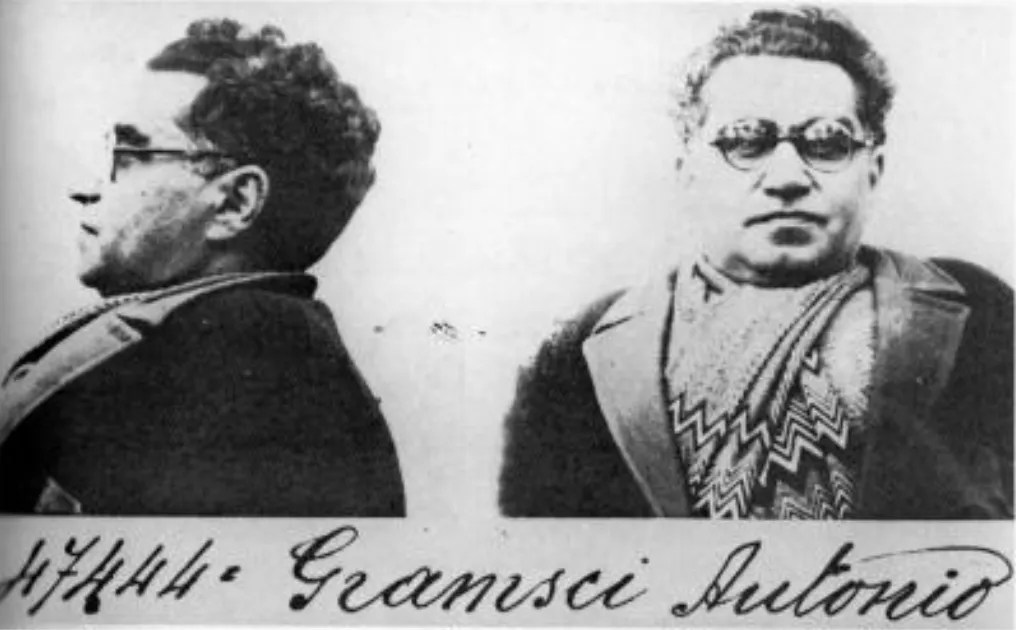
… for many, this phrase from Italian Marxist Antonio Gramsci sums up the current crisis of world politics and world power. Adam Tooze unpacks the oddity– and potential danger– of these lines becoming one of the soundbites of the early 21st-century…
… I want to put this conceptualization of our current crisis in question. Gramsci’s notion of interregnum may have served him to illuminate his immediate context. But, it transmits to our era a philosophy of history that actually obscures how we got from his moment of writing to our present day. It thus stands in the way of thinking hard about the challenges and opportunities of our current moment.
The currency of Gramsci’s lines today today should give us pause. After all, if we take Antonio Gramsci seriously as a historical thinker, as we absolutely must, we should also acknowledge the huge gulf that separates him from the present. He was a Communist who paid with his life for his commitment to the cause of world revolution. His lines on interregnum, now the stock in trade of after dinner speeches and think tank meetings, were composed in November 1930 in a fascist jail. Gramsci was thirty-nine. He would die at 46, his fragile health irrevocably broken by harsh imprisonment.
With morbid symptoms Gramsci may have been referring to fascism. Alternatively, he may have been criticizing the turn to the ultraleft of the Italian Communist party under pressure from Moscow. His medical language evokes Lenin’s famous denunciation of left communism as an “infantile disorder”.
Wondering about the popularity of Gramsci’s lines today, I’ve come to think that it may have something to do with the way in which they combine drama – crisis, birth, death, interregnum – with an undertone of reassurance. If this is true, it is a deep historic irony. Gramsci derived his fortitude and belief from his Marxist understanding of world history. Today his words serve very different purposes.
First of all, Gramsci’s quote implies a definite direction of historical travel. We know what is old. We know what is new. We may currently be in crisis, but it is only a matter of time before “the new” will eventually be delivered.
A transition from old to new might imply significant change, which could open us up to thinking about radically different futures. That might be good news. But it might also be disturbing. Once again reassurance is provided by Gramsci’s definition of the crisis as interregnum. The present is an inter-regnum, because it a period between two orders. It may be messy now, but a new era is on the way.
This kind of historical thinking is not confined to Gramsci. It is nicely illustrated, for example, in this conventional chronology of modern economic history.

Once cast in terms of the sequence of regnum-interregnum-regnum our current disorder becomes merely a passing moment. Given this sequence, who could doubt that a new white bar lies ahead of us. In this graphic, the grey phase of interregnum that began in 2008 already has a right-hand demarcation, even if no date is, as yet, attached to the endpoint.
A further point of certainty amidst Gramsci’s interregnum, is that we can confidently distinguish what is morbid from what is healthy. This again implies a superior vantage point, something that one might think would be in jeopardy in a true moment of crisis.
The obvious question is: what is the basis for Gramsci’s judgement? This troubling question is especially pressing if Gramsci was, in fact, applying the label morbid not to fascism but to those he disagreed with in the ranks of the international communist movement. Was this a medico-technical diagnosis? Or, was his judgement, like Lenin’s, a political act, an act of polemic, stigmatizing disagreement? In which case the naturalized conception of crisis is, in fact, disguising a political clash.
Finally, and most fundamentally, Gramsci’s diagnosis locates the current crisis within history imagined as a natural cycle of life, of birth and death…
…
… Models of this kind gesture to the confusion and terror of interregnum, all the while reducing that phase of disorder to something temporary, recurring and predictable. The model gestures to historical development – the upward step of phase after phase – but actually reduces radical change to repetition. After one hegemony what we look forward to, is simply another.
This line of thinking is not just simplistic. In the current moment it is dangerously so. To the drama of America’s evidently waning hegemony it adds the intensity of the follow-on question: who comes next? This question – far from necessary – is framed by the assumption of historical repetition – hegemon-interregnum-hegemony. In the current moment there can only be one possible answer: CCP-led China. That in turns eggs the flailing American elite on to a more intense rearguard action. But why assume that in the 21st century there will be a successor to America’s 20th century power?
Any serious examination of the foundations of modern power actually suggests that this kind of cyclical or sequential view of history is misplaced.
Take GDP as a proxy for power resources and think about the kind of intellectual gymnastics which are necessary to turn history as depicted by GDP below into [a cyclical] sequence…

As for the long-run continuity, global GDP prior to the 19th century is so low that it can not be sensibly depicted on the same graph extending into the 20th century. This is also true for economic heft and destructive power. Of course, there were highly destructive wars, in the 17th century for instance, but their violence unfolded according to a very different logic from that in the 20th century.
And as for the pattern of change, what we see is not a neat sequence of substitutions in which one hegemon displaces another, but rather something more akin to “piling on”. This is history not as repetition, but in Mark Blyth’s wonderful phrase as a “one-way trip into the unknown”…
…
… I see the construction of global hegemony in the 20th century not as a repetition of something familiar, but as itself a venture into the unknown. To put it simply, I see global hegemony as a 20th-century problem…
Of course, the distinctive 20th-century visions of global power had precursors. They had preconditions. Something had first to constitute our modern conception of globality. This happened through the global system of power, communication, transport and commerce created by the British Empire in the 19th century. This constituted for the first time what Michael Geyer and Charles Bright called the “global condition”. All too often this encourages thinking in terms of an Anglo-American sequence. But again this underestimates the power of accumulation and overlay. Compared to US power in its mid 20th-century pomp, the British empire was a thin mesh of networks. The British empire maintained its grip with extremely limited resources in large part as a result of the weakness of its rivals…
…
… But by 1916 it was clear that only the United States had the power to manage the new configuration of global forces. The weird architecture of global mobilization in the first phase of WWI could not be sustained without at least the approval of the government of the USA. This is the story of my book, Deluge.
The economy, as measured by novel statistics of national income, would be America’s trump card. But that in itself is not an obvious fact. It was an effect of particular circumstances. 1916 is a pivotal moment because with the inconclusive battles of materiel at Verdun and the Somme, following the “hunger winter” of 1915/1916, it became clear that purely military operations were at an impasse and this meant that war production and home front stability would take on a new and central role in determining the course of the war. War became a new kind of totalizing war. It was also an election year in the USA, arguably the first formal democratic event (as opposed to a revolution) to matter on a global scale. Certainly, it was the first US election that was watched with baited breath by political classes around the world.
It was out of the historically specific, financial and economic urgencies of World War I, that a new American-centered network of power emerged. This was something new, something architected and built to meet the urgency of the moment. There was no womb of hegemonic logic from which the US power was born to replace a dying British global order. It was not the inevitable sequence of monetary logic that ground through its inevitable development to make the dollar replace the pound sterling. It was war and war finance. The dollar in the 20th century would play a role quite different from sterling under the 19th century gold standard. Furthermore, America’s global power did not substitute for British power. It overlayed Britain’s own efforts, first in World War I, then in the interwar period and finally during World War II, to master the new hegemonic problem. In crucial areas, notably the oil fields of the Middle East, it was not until the late 1960s that the US finally took over…
…
… America’s age of hegemony was not an answer to an interregnum. It truly was new. It was thus not the latest iteration of some familiar form of power. It did not replace the British empire. The British empire was reinventing itself too in response to the new challenges of the early 20th century. It was overtaken by the US and nested itself under the wings of that power. It was not something born. It was built.
And if that is true for the early 20th century the question of how 21st century global power will be organized should be considered no less open. Certainly, our problem right now is not that the old is simply dying. Things are far from that simple. In certain crucial respects “the old” is hanging around and indeed seeking to mobilize new strength. At the same time the principal challenger may be “new” in the sense of unfamiliar. But the CCP-regime draws inspiration from a first successful century of ascent, evokes ancient Chinese history. And what its underlying drivers are, is a matter of contentious debate.
What is old and what is new, what morbid and what vigorous, what the underlying generative logic of history actually is, these are all questions that are at this moment up for debate. We are, therefore, experiencing a crisis of confidence and a period of uncertainty, that is far deeper than talk of an interregnum à la Gramsci implies. To be clear this does not necessarily mean more lethal or more tragic than the epoch that cut short Gramsci’s life. Our normality, however catastrophic, may be manageable. The environmental clock is ticking, but the majority of us are no longer poor. We live longer. Today, Gramsci’s life could probably have been saved. There are gigantic technological resources that democratic and progressive crisis-management could draw on. What we must let go of, is the false mantle of confidence and historical clarity that evoking the concepts of an earlier epoch entails. Abandoning talk of an interregnum may rob us of certainty. But rather than a council of despair this is simply a demand of realism. What that promises, is the chance to trade historic phantoms for new projects and the exploration of the actual possibilities of the present…
Eminently worth reading in full: “Built not Born – against “interregnum”-talk,” from @adam_tooze.
And what might we build? For a reminder that our options are perhaps broader than we might think: “The Gap at the End of the World,” from Cynthia Cruz in @LAReviewofBooks.
* Gramsci, Prison Notebooks
###
As we keep our eyes up, we might recall that it was on this date last year that a new kind of cultural phenomenon burst onto the scene, surrounding the simultaneous theatrical release of two films, Warner Bros. Pictures’ Barbie and Universal Pictures’ Oppenheimer— Barbenheimer, as it came to be called.
The simultaneous release was an instance of counterprogramming. As the release date approached, discussion from rivalry to the prospect of watching the films as a double feature. Cast members of both responded by encouraging audiences to watch the films on the same day. Celebrity participants included actor Tom Cruise, who purchased tickets to watch both while his latest film, Mission: Impossible – Dead Reckoning Part One, was still playing in theaters.
In the event, both Barbie and Oppenheimer received critical acclaim and exceeded box-office expectations. Their joint opening weekend was the fourth-largest at the American box office, and both rank among the highest-grossing films of 2023. The phenomenon also extended to the year’s awards season, in which both films emerged as leading contenders, earning a combined 21 nominations at the 96th Academy Awards. Both films were nominated for the Academy Award for Best Picture, which Oppenheimer won.

You must be logged in to post a comment.