Posts Tagged ‘canned food’
“Invention, my dear friends, is 93% perspiration, 6% electricity, 4% evaporation, and 2% butterscotch ripple”*…
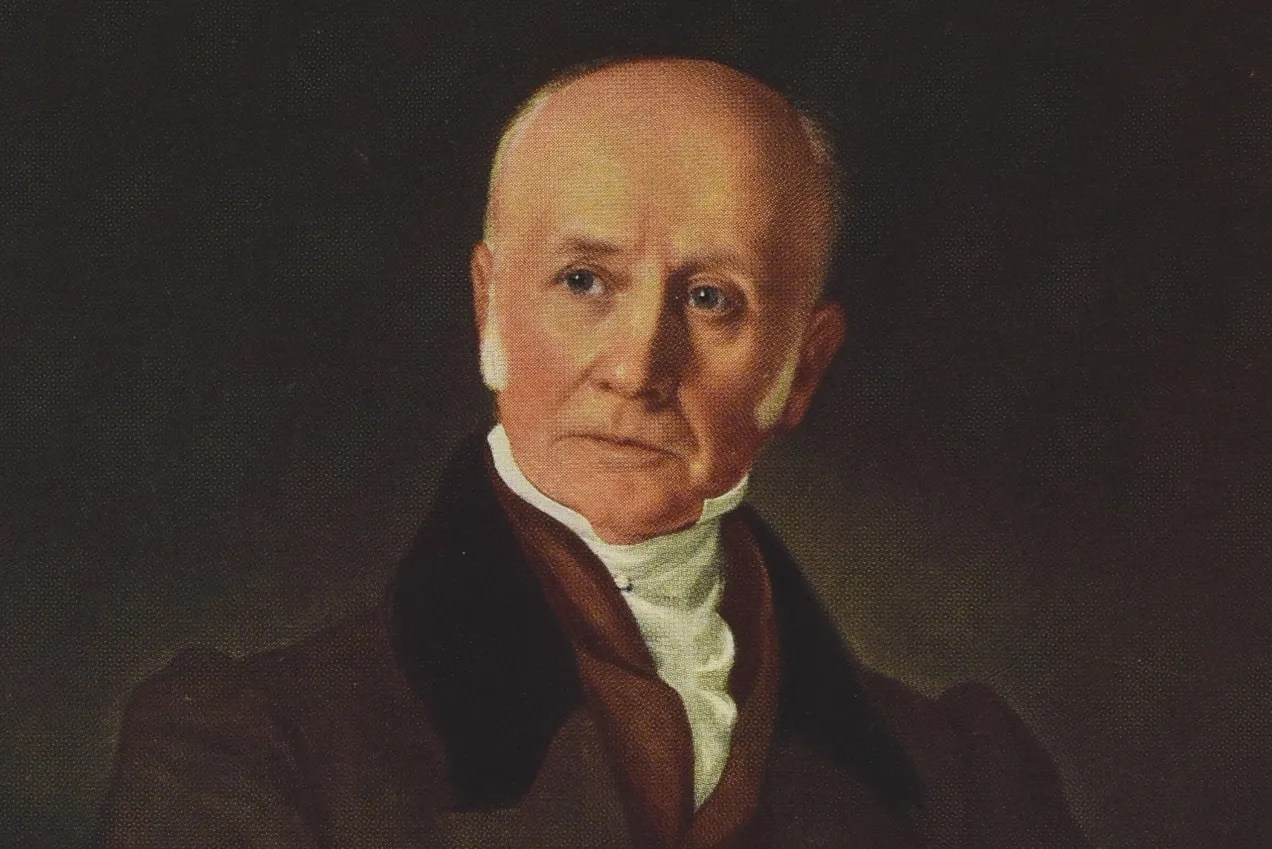
Jason Toon on a man whose applied creativity birthed not one, but two major industries…
Global canned food sales are now more than $210 billion annually. The average American eats about 200 pounds of canned food every year. Meanwhile the worldwide paper industry has seen steep falls in the production of newsprint, printing paper, and writing paper since 2010, but the rise in paper and cardboard packaging has more than made up for it. The paper industry is bigger than ever, with revenue of $485 billion in 2025.
For better or worse, our world would simply not look the same today without these two industries. And one person was the key figure in starting both of them. Bryan Donkin can legitimately claim to be the “father” of the canned-food industry and the paper industry as we know them. So who was he, besides one of the very few guys named Bryan in the 18th century?
Born in northeastern England in 1768, Bryan Donkin went into the same business as his father: real estate. But it didn’t speak to him. So in 1792, at the rather ripe age of 24, he became an apprentice to John Hall at Dartford Iron Works to pursue his true calling as an engineer.
At the time, all paper was made by hand, more or less the same way it had been done since the Middle Ages. Cotton and linen rags were soaked in water and beaten into a pulp. A shallow, rectangular mold with a screen bottom would be dipped into the liquid slurry and shaken. A thin layer of the macerated fibers would settle on the screen; when dry, you’d have yourself a single sheet of paper.
Donkin started his post-apprenticeship career making these molds. But around 1801, he got connected to the Fourdrinier brothers, who produced stationery in London. They’d made a deal with a French inventor, Louis-Nicolas Robert, to bring a new paper-making machine to Britain. At the time, between the post-revolutionary turmoil in France and England’s more advanced industrial base, the latter seemed to hold more lucrative prospects for the new invention.
Unlike the laborious single-sheet, mold-based method, this new “Fourdrinier machine” used a cylinder to continuously produce rolls of paper. A mechanism called the “shake” agitated the conveyor belt at a high speed, to spread the wet pulp fibers in an even layer. Unfortunately, this rapid movement put a lot of strain on the mostly wooden machine. One of Donkin’s improvements was to use metal parts instead, for improved stability and precision.
Another refinement of his was adjusting the rollers that squeezed the water out of the paper, to maximize contact between them and the paper, to dry the paper more quickly and thoroughly. This and other improvements turned the Fourdrinier machine from an interesting prototype to a viable technical advancement.
It quickly became the industry standard, and remains so over 200 years later. The publishing boom of the late 19th and early 20th century wouldn’t have been possible without it. Those big machines you see today producing rolls of paper are most likely Fourdrinier machines. Donkin also made some key advancements in printing technology, so the Pulitzers and Murdochs of the world owe him double gratitude.
His fortune secured, now the head of a company bearing his name that still exists (these days they make gas valves), Donkin’s restless mind turned to another puzzle: the preservation of food. Like too many technological quests, this one was spurred by military needs. Best frenemies England and France were both spreading their empires around the planet, frequently clashing, and looking for ways to keep their troops fed. In such wide-ranging conflicts as the Seven Years’ War (1756-1763), far more sailors died of malnutrition than in combat.
It seems yet another French inventor had visions of pounds sterling dancing in his eyes. Philippe de Girard had come up with a method of preserving food by putting in inside a sealed tin container, then boiling the container in water to sterilize it. Or maybe he swiped the method from another French inventor, Nicolas Appert [see here]. Or maybe they were in cahoots. What we do know is that in 1810, de Girard went to London and engaged a merchant named Peter Durand to be his frontman for getting a British patent, which de Girard would not have been eligible for since Britain and France were at war.
Durand was duly awarded the patent in his name. Ever since, he’s been often called the inventor of the tin can, despite having nothing to do with inventing it, and doing nothing with it except selling the patent for £1,000 in 1812. The buyer? Bryan Donkin’s old apprenticeship master, John Hall.
Now on equal terms as budding titans of industry, Hall put up the money and Donkin provided the brains along with a third partner, John Gamble, to bring tin canning to an industrial scale. Again, it took a couple of years, but Donkin and Gamble steadily refined the process. One of their major innovations was to use iron coated in a thin layer of tin, combining the strength of the former with the non-reactive properties of the latter for an imperturbable can that could survive the longest, roughest ocean voyages.
For the second time, a French invention plus Donkin’s enhancements equaled le jackpot. After getting the likes of Queen Charlotte and the Duke of Wellington hooked with some free samples of canned beef, the firm of Donkin, Hall and Gamble received an order for 156 pounds of canned food from the Admiralty in 1813. That grew to 2,939 pounds the following year, increasing annually to 9,000 pounds by 1821.
Having bested the canning challenge, Donkin again wandered off in search of other worlds to conquer: helping Charles Babbage with the “difference engine” that would eventually become the computer, consulting on bridge and canal projects, inventing the first metal pen and a screw-cutting machine, being a founding member of both the Institution of Civil Engineers and the Royal Astronomical Society.
He died in 1855, an esteemed eminence in Victorian scientific and engineering circles. Today Bryan Donkin’s impact is out of all proportion to his memory. On a visit to his grave in London, the BBC found, [there was] no mention of his achievements. Cemetery staff didn’t know who he was.
I can sense the question from some quarters of the audience: are Bryan Donkin’s achievements worth celebrating? Not only did canned food help enable imperial conquest and war, it also led eventually to the mass industrialization of food production, with its attendant crises of public health and monocultural farming, and our psychological distance from our food supply. And one look at any municipal dump will show you how much paper and cardboard waste still goes into landfill, even in a supposedly “paperless world”.
Those points are well taken. But it’s easier to dismiss these advancements when you live in a world that’s always known them. Over the last century or two, large-scale paper production enabled the rise of mass literacy, from only 10% of the world’s population being literate in 1820 to 90% today.
And it’s not just British seamen who eat better because of canned food. A 2011-2013 National Institutes of Health study found that people who eat six or more canned items a week “consume more nutrient-dense food groups such as fruits, vegetables, dairy products, and protein-rich foods, and also have higher intakes of 17 essential nutrients” including potassium, calcium, and fiber. Canned food has helped overcome the tyrannies of distance and time to get more nutrition to more people.
From the perspective of people in 1810, both food canning and mass paper production were immense steps forward. We can’t lay our subsequent inability to maintain some equilibrium at their feet. It’s true that Bryan Donkin didn’t invent the machines he perfected. Both industries probably would have happened, in some form, eventually, without him. But in being the first to perfect them for large-scale use, and granting all the downsides they’ve brought along with them, he hastened the coming of a less hungry, more educated world. Not bad for a guy named Bryan…
How one genius fathered both the canning and paper industries: “The Lives of Bryan,” from @jasontoon.bsky.social.
* Willy Wonka (in Roald Dahl’s Charlie and the Chocolate Factory)
###
As we devise, we might send carefully-calculated birthday greetings to Dan Bricklin; he was born on this date in 1951. An engineer, he was the co-creator, with Bob Frankston, of VisiCalc, the first spreadsheet program. Known as “the father of the Spreadsheet,” he was awarded the Grace Murray Hopper Award in 1981 for VisiCalc and was one of six people spotlighted when “the Computer” was named “Machine of the Year” by Time magazine in 1982.
Neither Bricklin nor Frankston reaped huge financial profits from their spreadsheet program, though it sold over a half-million copies by 1983. At the time, copyright protection was not generally sought for software; their company was subsequently acquired by Lotus 1-2-3, which became the new spreadsheet standard (until, of course, Excel).

The benefits of aging…

Readers will recall recent reassurance that food past its expiration date is probably still good. Turns out that there’s more to the story: some canned food actually improves with aging. Harold McGee of Lucky Peach reports, via Slate…
European connoisseurship in canned goods goes back about a hundred years. It was well established by 1924, when James H. Collins compiled The Story of Canned Foods. Collins noted that while the American industry—which started in the 1820s and took off during the Civil War—focused on mechanization and making locally and seasonally abundant seafood and vegetables more widely available, the European industry continued to rely on handwork and produced luxury goods for the well-off, who would age their canned sardines for several years like wine. Today, Rödel and Connetable, both more than 150 years old, are among the sardine makers that mark select cans with the fishing year and note that the contents “are already very good, but like grand cru wines, improve with age” for up to 10 years.
But the appreciation of can-aged foods wasn’t unknown in the United States. Collins recounts an informal taste test conducted by a New York grocer who rounded up old cans from a number of warehouses, put on a luncheon in which he served their contents side by side with those from new cans, and asked his guests to choose which version they preferred. Among the test foods were fourteen-year-old pea soup and beef stew, and twelve-year-old corned beef and pigs’ feet. The guests preferred the old cans “by an overwhelming majority”…
The trouble with aging canned goods is that it takes years to get results. However, we can take a hint from manufacturers, who often accelerate shelf-life tests by storing foods at high temperatures. A general rule of thumb is that the rate of chemical reactions approximately doubles with each 20-degree rise in temperature. Store foods at 40 degrees above normal—around 100 degrees—and you can get an idea of a year’s change in just three months.
But it’s possible to go further. At 120 degrees, you get a year’s worth of change in six weeks; at 140 degrees, three weeks; at 180 degrees, five days.
Of course temperatures that high are cooking temperatures, and their heat energy drives reactions that would never occur in normal storage. But if we’re interested in the evolution of canned foods, which have already been extremely cooked, then why not treat them to a little additional simmering and see what happens? (It’s safest to stay a little below the boil, to avoid building up steam pressure in the can.)
I’ve found that braising cans change the flavors and textures within, but unpredictably so. It doesn’t seem to do much for sardines, but tuna in water loses its beefiness and becomes more pleasantly fishy and also a little bitter, while tuna in oil somehow gets more meaty and less fishy. Like its aged version, can-braised Spam takes on a softness that’s especially nice when you fry the surface to a crunchy crust.
I don’t recommend cooking foods in the can as a routine thing. Cans have various linings that may gradually release unwanted chemicals into foods, and this process will also accelerate at high temperatures. But it’s a way to explore how canned foods are capable of developing…
Read the tale in its tasty totality at “Age Your Canned Goods- Why I now think of best-by dates as maybe-getting-interesting-by dates.”
###
As we turn up the heat, we might send soft and fluffy birthday greetings to “Poppin’ Fresh,” the Pillsbury Doughboy; he premiered on this date in 1965. Created a couple of years earlier by Leo Burnett copywriter Rudy Perz, PF was first rendered by Martin Nodell. Inspired by the opening credits for The Dinah Shore Show, they created him not as a traditionally-animated mascot, but as a stop-motion character. The three-dimensional Doughboy clay doll cost $16,000 to create. He had 15 different heads (each with different mouth positions to allow the animation of speech) and 5 bodies to give him different looks and positions. The stop motion method required 24 still shots to create a single second of animation.
But it was worth the effort: within 3 years, 87% of Americans recognized him by name.
Poppin’ Fresh was voiced by Paul Frees (the voice of Boris in Rocky and Bullwinkle) until Frees’ death in 1986, when Jeff Bergmen took over (Bergman also stepped in to replace Mel Blanc in Warner Bros. cartoons); he’s currently voiced– in what is now a computer-generated version– by JoBe Cerney.

You must be logged in to post a comment.