Posts Tagged ‘ramen’
“You all got only three friends in this world: The Lord God Almighty, the Sears Roebuck catalog, and Eugene Talmadge”*…
Our consumer era, born in the mid-19th century, had many parents (e.g., John Wanamaker, who pioneered the department store and helped define the “consumer” and the advertising aimed at him/her). The impetus of the department store– to offer “everything”– has found its modern instantiation in brick and mortar operations like WalMart and Target Superstores, and of course, in the on-line behemoth Amazon, which makes an extraordinary range of goods available to shoppers regardless of their proximity to a physical store.
Leo DeLuca reminds us that, over a century before Amazon, the Sears Catalog played that same role. It reigned supreme for over a century… and offered some odd products…
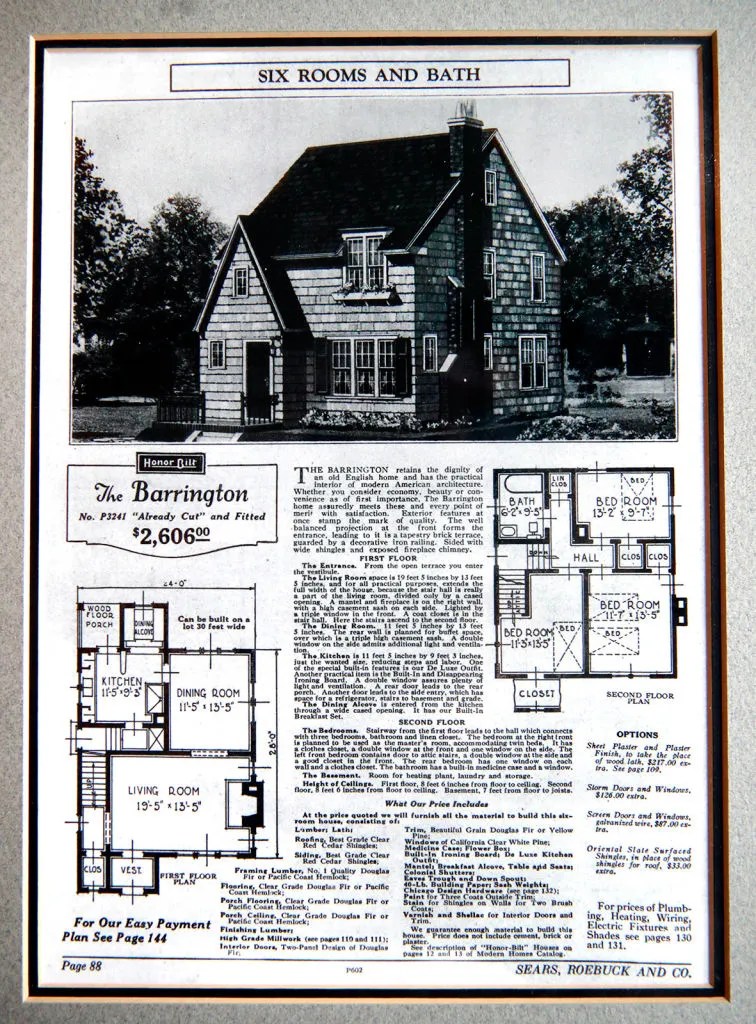
From heroin to houses, Sears had it all. But before the Chicago business became America’s largest retailer—and affixed its name to the world’s tallest building—Sears started by selling time.
In 1886, a 22-year-old station agent on the Minneapolis and St. Louis Railway purchased a shipment of unwanted gold watches from a local jeweler. Wristwatches had just hit the market, and since station agents needed to track train schedules, the young man thought he might hawk the watches to his fellow railway workers. The plan worked. Richard W. Sears turned a handsome profit, then moved to Minneapolis to establish the R.W. Sears Watch Company.
The following year, Sears moved to Chicago and partnered with Alvah C. Roebuck, a self-taught Hammond, Indiana, watchmaker he found through a Chicago Daily News classified ad. Roebuck soon asked Sears to buy him out, but not before lending his name to the company marquee: “Sears, Roebuck and Co.”
In 1888, Sears issued his first catalog, a thin mailer that featured only watches and jewelry. According to his apocryphal ad copy, which he always wrote himself, Sears claimed “THE LOWEST PRICES ON EARTH.” A consummate huckster, he soon started selling sundry items: buggies, bicycles, firearms, baby carriages and more.
Sears’s mail-order catalog, or “Big Book” as it was later known, became the Amazon of the Victorian era (and beyond). Like Amazon, Sears was a crucial cog in the American wheel, a giant of its time. Over its century-plus span, the Big Book grew to well over 1,000 pages and sold more than 100,000 items, including tools, hardware, apparel, appliances, furniture, sporting goods, auto supplies, farm equipment and entertainment centers. After opening its first brick-and-mortar store in 1925, Sears rose as the nation’s largest retail chain, introducing in-house brands like DieHard, Kenmore and Craftsman. In 1973, the company’s headquarters, the Sears Tower, became the tallest building in the world.
But as the 20th century faded, so did Sears—its brick-and-mortar businesses were replaced, ironically, by companies like Amazon, a convenient mail-order enterprise. On January 25, 1993, Sears ceased production of its famous Big Book catalog. In 2009, its famous Chicago skyscraper was renamed the Willis Tower. And in 2018, the company declared bankruptcy.
Over its 105-year run, the catalog was a fixture in Americans’ homes…
Read on for heroin, homes, virility aids, brain pills, “blood builder,” arsenic complexion wafers, tombstones, guns… “Before Folding 30 Years Ago, the Sears Catalog Sold Some Surprising Products,” from @smithsonianmag.bsky.social.
See also: “The Rise and Fall of Sears.”
* Georgia politician Eugene Talmadge, elected Governor four times in the 1930s and 40s
###
As we reflect on retailing, we might recall that it was on this date in 1958 that The world’s first publicly marketed instant noodles, Chikin Ramen, are introduced by Taiwanese-Japanese businessman Momofuku Ando.

“There’s nothing more political than food”*…

Zongyuan Zoe Liu on the growing issue of food security in China, and on what it might mean for geopolitics and geoeconomics…
…every day, China’s 1.4 billion people consume a staggering 700,000 tons of grain, 98,000 tons of edible oil, 1.92 million tons of vegetables, and 230,000 tons of meat. The leaders of the Chinese Communist Party (CCP) understand that “to the emperor, the people is heaven; to the people, food is heaven,” as the traditional saying goes, and they have prioritized food security as a prerequisite to maintaining power, especially after the calamitous famines of the Maoist era. For decades, coupons were necessary to buy any food—a system not fully ended until 1995, although largely dead in the cities by the mid-1980s. Despite China’s emergence as the world’s factory, the country’s No. 1 central document, the first policy statement issued by the top authorities each year, has centered on food security and the three issues of agriculture, the countryside, and farmers since 2004.
This year is no exception, as the Central Committee of the CCP and the State Council jointly released the highly anticipated No. 1 document for 2023 on Feb. 13. The document, which carries enormous weight, sets forth two critical priorities: safeguarding national food security and protecting farmland. While previous No.1 documents touched on these issues between 2004 and 2012, it was not until 2013, when Xi Jinping assumed leadership, that the annual No. 1 document established a consistent and resolute focus on food security and farmland preservation…
Xi is correct to recognize that preserving farmland is an indispensable factor in the quest to achieve food self-sufficiency. China has experienced alarming levels of farmland loss and deterioration in recent years. The most recent land use survey showed that China’s total arable land decreased from 334 million acres in 2013 to 316 million acres in 2019, a loss of more than 5 percent in just six years. Shockingly, more than one-third of China’s remaining arable land (660 million mu, a traditional unit of land measurement in China and equal to roughly 109 million acres, slightly larger than Montana) suffers from problems of degradation, acidification, and salinization.
The land has been eroding faster in recent years. The annual net decrease of arable land has risen from about 6 million mu (about 988,421 acres) from 1957 to 1996 to more than 11 million mu (about 1.8 million acres) from 2009 to 2019. This means that between 2009 and 2019, China lost farmland equal to about the size of South Carolina. China’s diminishing farmland is also losing productivity due to over-cultivation and excess use of fertilizers. China’s fertilizer usage in 2018 was 6.4 times that of 1978, but grain yield in 2018 was only 2.2 times that of 1978.
As in many other countries, such as the United States and India, a major cause for China’s farmland deterioration has been its land-intensive industrialization and urbanization over the past three decades. Farmland has been expropriated to meet the strong demand for land to support the expansion of manufacturing, infrastructure, and urban development. Competing interests for land use have resulted in arable land being expropriated for more lucrative development projects. In the contest for land use among food growers, cash-crop planters, and property developers, profit maximization often trumps the needs of food farmers, especially when imported foods are much cheaper than locally grown options.
…
Over the past two years, Chinese private property developers such as Evergrande and Vanke have pulled back from aggressive land purchasing due to stringent restrictions. [See here.] While this reduced demand from private property developers should have helped alleviate the temptation to appropriate farmland for property development, much of the demand void has been filled by state-owned enterprises and government-backed developers or companies, such as local government financing vehicles (LGFVs)… Boosting land sales through government-owned or government-controlled entities when demand from private developers is low provides a politically convenient channel for local governments to raise revenue at limited costs.
Investing limited fiscal resources in farmland protection, in contrast, does not generate immediate political and financial returns, making it a tough sell for local officials who are under pressure to deliver a rapid economic recovery. While safeguarding farmland is an important cause in the long term, and one backed from the top in Beijing in theory, it costs money from the pockets of local governments and subsidies from the central authorities. For local officials, the more pressing challenge consuming their attention and resources is to restore economic growth…
Limited domestic farmland availability combined with the pursuit of food security dictates that China would expand its overseas farmland investment and advance its strategy of farming out. The 2007 No. 1 document set farming and agriculture “going out” into the rest of the world as a national strategy for the first time, but the focus back then was exports. The 2016 No.1 document updated guidelines on international agriculture cooperation, focusing on agricultural investment and supporting Chinese companies’ overseas operations.
According to Land Matrix, a European land-monitoring organization, Chinese companies have gained control of 6.48 million hectares (16 million acres) in foreign territories, which is nearly the size of Ireland. This number dwarfs the combined 1.56 million hectares controlled by British companies, the 860,000 hectares held by U.S. companies, and the 420,000 hectares owned by Japanese companies. Chinese investment in U.S. farmland has already triggered concerns in Washington, even though China currently only holds less than 1 percent of foreign-owned U.S. farmland. Republican lawmakers have already drafted a bill to ban Chinese purchases of American farmland, while in states like Texas measures are even more advanced. China not only owns farmland in the United States but also in U.S. allies’ territory, such as the United Kingdom, France, and Australia.
If China’s economic recovery and its continued growth are fueled by land sales and its property market, Xi’s prioritization of food security means Chinese entities will have to embark on more aggressive overseas land purchases. While the current theater of U.S.-China competition has been centered on the chips and semiconductors industry, a new front may emerge in the form of competition over farmland and agriculture technology. The party can survive setbacks in the chip war, but the stakes are much higher in the fight for food security. Failure on the food security front will threaten the survival of the regime…
The need to feed: “China’s Farmland Is in Serious Trouble,” from @ZongyuanZoeLiu in @ForeignPolicy.
* Anthony Bourdain
###
As we contemplate comestibles, we might send tasty birthday greetings to Momofuku Ando; he was born on this date in 1910. A very successful businessman, he founded Nissin Food Products Co., Ltd., for which he invented instant noodles (ramen noodles) and created the Top Ramen and Cup Noodles brands.
Visit the Cup Noodles Museum.

“Hell, when I was growing up, I could make a meal out of a package of Top Ramen and a bottle of Windex”*…

In 1958, Momofuku Ando, the founder of Nissin Food Products, invented Chicken Ramen, the first instant ramen product. In 1971, he created Cup Noodles, introducing the world to instant ramen in the form that’s become its avatar… Ando continued to create many variations on the theme, culminating, in 2005 (two years before his death at age 96) with Space Ramen (ramen packaged consumption during for space travel).
Ando’s personal fortune was dedicated at his death to the formation of the Ando Foundation, which has created the CupNoodles Museum.

Dig in at “CupNoodles Museum.”
* Coolio
###
As we add the flavor packet, we might send well-preserved birthday greetings to Nicolas Appert; he was born on this date in 1752 (though the year is listed in various sources as 1749, 1750 and 1752; month also varies between October and November). Inventor of the canning process, preserving food by sealing it in sterilized containers, he published the results of 14 years of research in 1810 and received 12,000 franc award from the French government. Napoleon, who famously understood that an army travels on its stomach, had offered the award.
Interestingly, that same year (1810), Appert’s friend and agent, Peter Durand, took the invention to the other side. He switched the medium from glass to metal and presented it to Napoleon’s enemies, the British– scoring a patent (No. 3372) from King George for the preservation of food in metal (and glass and pottery) containers– the tin can.

One of Appert’s/Durand’s first cans
You must be logged in to post a comment.