Posts Tagged ‘public health’
“Talk to the animals”*…

Deep in the Pacific Ocean, six-foot-long Humboldt squid are known for being aggressive, cannibalistic and, according to new research, good communicators.
Known as “red devils,” the squid can rapidly change the color of their skin, making different patterns to communicate, something other squid species are known to do.
But Humboldt squid live in almost total darkness more than 1,000 feet below the surface, so their patterns aren’t very visible. Instead, according to a new study, they create backlighting for the patterns by making their bodies glow, like the screen of an e-reader…
How squid talk with each other in the dark depths: “Deep Sea Squid Communicate by Glowing Like E-Readers.”
* from a Leslie Bricusse song sung by Rex Harrison in Dr. Doolittle
###
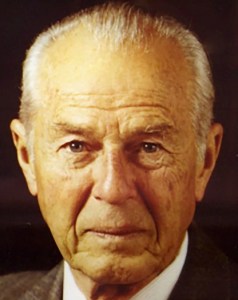
As we contemplate conversation, we might send carefully-deduced birthday greetings to William Ian Beardmore (WIB) Beveridge; he was born on this date in 1908. A veterinarian who served as director of the Institute of Animal Pathology at Cambridge, he identified the origin– a strain of swine flu– of the Great Influenza (the Spanish Flu pandemic, 1918-19).
“I was always a sucker for anything in miniature”*…

Seattle-based photographer Derrick Lin constructs miniature worlds that serve as a direct contrast to the stacks of books and other office staples like paperclips and pencils they’re surrounded by. Often showing life’s more relaxing and sublime moments, each scene is complete with tiny figures and their possessions as they pass along a sidewalk lined with cherry blossom trees, occupy a packed airport terminal, and sit on the floor of a messy living room. Because Lin assembles his little scenarios on his tabletop, some of his shots even feature a coffee mug in the background…
“In addition to humor and whimsy, I started to pay more attention to topics around loneliness, mental health, and kindness. I strive to depict and spotlight on the kind of thoughts we typically reserve for ourselves. My photography loosely reflects what I personally experience and what I see around me. What continues to amaze me is the messages I receive from my followers about how my little project resonates with them and brings them joy and calmness.”…

More at : “Derrick Lin’s Dioramas Contrast the Bustle of Agency Life with Peaceful Office-Supply Scenes.” To keep up with Lin’s dioramas, follow him on Instagram,
* Lionel Shriver
###
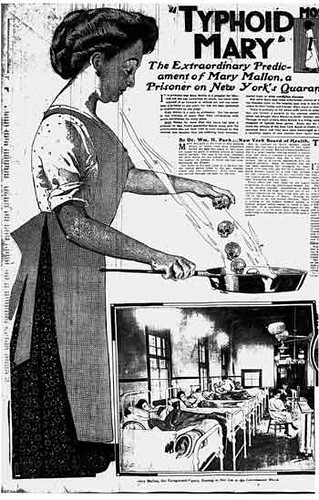
As we get small, we might recall that it was on this date in 1915 that Mary Mallon, “Typhoid Mary,” was put in quarantine on North Brother Island, in New York City, where she was isolated until she died in 1938. She was the first person in the United States identified as an asymptomatic carrier of the pathogen associated with typhoid fever… before which, she inadvertently spread typhus for years while working as a cook in the New York area.
“There’s one area though where the world isn’t making much progress, and that’s pandemic preparedness”*…

Soldiers from Fort Riley, Kansas, ill with Spanish flu at a hospital ward at Camp Funston, 1918
As we wonder at the ultimate impacts of the novel coronavirus, we might look to history and the lessons of earlier contagions, as University of Michigan law professor Nicholas Bagley did in 2016…
A couple of weeks ago, my wife (also a law professor) and I wrapped up the final session of a seminar that we co-taught called Contagion. We wanted to offer an introduction to the outbreaks of infectious disease that have reshaped American life and law.
The class was one of Michigan Law’s “at home mini-seminars,” which meant we hosted a dozen students at our home over the course of six evening sessions. Really more of a book club than a formal class, we focused on a different disease each time we met: cholera, Spanish flu, polio, AIDS, SARS, and Ebola.
We also drank beer, which makes death and disease more tolerable.
The class was a hoot. And it had a surprising coherence. Every disease provokes its own unique dread and its own complex public reaction, but themes recurred across outbreaks.
- Governments are typically unprepared, disorganized, and resistant to taking steps necessary to contain infectious diseases, especially in their early phases.
- Local, state, federal, and global governing bodies are apt to point fingers at one another over who’s responsible for taking action. Clear lines of authority are lacking.
- Calibrating the right governmental response is devilishly hard. Do too much and you squander public trust (Swine flu), do too little and people die unnecessarily (AIDS).
- Public officials are reluctant to publicize infections for fear of devastating the economy.
- Doctors rarely have good treatment options. Nursing care is often what’s needed most. Medical professionals of all kinds work themselves to the bone in the face of extraordinary danger.
- In the absence of an effective treatment, the public will reach for unscientific remedies.
- No matter what the route of transmission or the effectiveness of quarantine, there’s a desire to physically separate infected people.
- Victims of the disease are often thought to deserve the affliction, especially when those victims are mainly from marginalized groups.
- We plan, to the extent we plan at all, for the last pandemic. We don’t do enough to plan for the next one.
- Historical memory is short. When diseases fall from the headlines, the public forgets and preparation falters.
Not every one of those themes was present for every disease; the doughboys who died of the Spanish flu, for example, were not thought to deserve their fate. But the themes were persistent enough over time to establish a pattern…
For a list of the books that Bagley and the group considered, visit the post quoted above: “Contagion.”
For a measured (but still deeply concerning) assessment of the potential impact of the coronavirus, see The Economist‘s leader. But lest we leap to the assumption that the stock market is an augur (of either depth or duration of impact) see “How to Think About the Plummeting Stock Market.” For a much deeper dive into the historical antecedents of our current quandary, see “Pandemics and Markets” at Jamie Catherwood‘s Investor Amnesia (“We’ve been here before”).
Finally, there’s been much written about the ways in which Xi’s handling of the crisis in China might provoke a backlash against him and the Party, both within China and around the world. But one might also keep an eye on Iran, where the government’s handling of the coronavirus is leading observers to wonder if this (coming as it does in the midst of severe internal tensions, aggravated by the economic pressure of sanctions) could be a “Chernobyl moment” for the regime; see “How Iran Became a New Epicenter in the Coronavirus Outbreak.” And then, of course, there’s the potential political fallout in the United States. See also the always-insightful Bruce Mehlman‘s “Washington in the Time of Corona.”
* Bill Gates, at a 2018 conference on epidemics hosted by the Massachusetts Medical Society and the New England Journal of Medicine (Here are Gate’s more current– but consistent– thoughts on “How to respond to COVID-19.”
###
As we take precautions, we might spare a thought for Robert Hooke; he died on this date in 1703. A natural philosopher and polymath, Hooke was a virtuoso scientist whose scope of research ranged widely, including physics, astronomy, chemistry, biology, geology, architecture, and naval technology. He discovered the law of elasticity, known as Hooke’s law, and invented the balance spring for clocks. He served as the Curator of Experiments at the Royal Society, London; and after the Great Fire of London (1666), he served as Chief Surveyor and helped rebuild the city. He also invented or improved meteorological instruments such as the barometer, anemometer, and hygrometer.
But relevantly to the item above, Hooke was a pioneer in microscopy. His Micrographia, (1665) was a book describing observations made with microscopes (and telescopes), as well as some original work in biology. Indeed, Hooke coined the term cell for describing biological organisms, a term suggested to him by the resemblance of plant cells to cells of a honeycomb.

Hooke’s microscope, from an engraving in Micrographia [source]
“Alcohol is the anesthesia by which we endure the operation of life”*…

Alcohol consumption in the U.S has been trending down for several years; in 2018, alcohol consumption in the United States dropped for the third-straight year. Nevertheless…
America is in the middle of an alcohol epidemic.
That’s one takeaway from a new study published this month in Alcoholism, which found the number of alcohol-related deaths more than doubled between 1999 and 2017 from nearly 36,000 to nearly 73,000, and the rate of alcohol-related deaths rose by more than 50 percent from 16.9 per 100,000 people to 25.5.
To put that in perspective, there were roughly 70,000 drug overdose deaths in the US in 2017. Based on the Alcoholism study, alcohol was linked to more deaths than all overdoses — even at the height of America’s opioid epidemic. Alcohol accounted for 2.6 percent of all deaths among people 16 and older in 2017, up from 1.5 percent in 1999…
The study speaks to a problem in American public health and drug policy: While crises like the opioid epidemic (deservedly) get a lot of attention, even deadlier drug crises are often neglected by the public, policymakers, and media…
Alcohol isn’t even the deadliest drug. The Centers for Disease Control and Prevention previously estimated that tobacco smoking is linked to 480,000 deaths each year, or roughly 1 in 5 deaths. In other words, preventing just 30 percent of smoking deaths would prevent more deaths than preventing all drug overdose deaths and alcohol-related deaths combined.
Yet alcohol and tobacco haven’t filled a big part of public discussions about drugs in the past few years, especially compared to the opioid epidemic…
More at “The number of US alcohol deaths per year has doubled since 1999.”
* George Bernard Shaw
###
As we contemplate cocktails, we might recall that it was on this date in 1912, during the First International Opium Conference at The Hague, that the first international drug control treaty, the International Opium Convention, was signed.

Opium article from The Daily Picayune, February 24, 1912, New Orleans
“Here’s to alcohol: the cause of, and solution to, all of life’s problems”*…

Of all the substances people intoxicate themselves with, alcohol is the least restricted and causes the most harm. Many illegal drugs are more dangerous to those who use them, but are relatively hard to obtain, which limits their impact. In contrast, alcohol is omnipresent, so far more people suffer from its adverse effects. In 2010 a group of drug experts scored the total harm in Britain caused by 20 common intoxicants and concluded that alcohol inflicted the greatest cost, mostly because of the damage it does to non-consumers such as the victims of drunk drivers…
No Western country has banned alcohol since America repealed Prohibition in 1933. It is popular and easy to produce. Making it illegal enriches criminals and starts turf wars. In recent years governments have begun legalising other drugs. Instead, to limit the harm caused by alcohol, states have tried to dissuade people from drinking, using taxes, awareness campaigns and limits on where, when and to whom booze is sold.
The alcohol industry has pitched itself as part of the solution. In Britain more than 100 producers and retailers have signed a “responsibility deal” and promised to “help people to drink within guidelines”, mostly by buying ads promoting moderation. However, if these campaigns were effective, they would ruin their sponsors’ finances. According to researchers from the Institute of Alcohol Studies, a think-tank, and the University of Sheffield, some two-fifths of alcohol consumed in Britain is in excess of the recommended weekly maximum of 14 units (about one glass of wine per day). Industry executives say they want the public to “drink less, but drink better”, meaning fewer, fancier tipples. But people would need to pay 22-98% more per drink to make up for the revenue loss that such a steep drop in consumption would cause.
Health officials have taken note of such arithmetic. Some now wonder if Big Booze is sincere in its efforts to discourage boozing. In 2018 America’s National Institutes of Health stopped a $100m study of moderate drinking, which was partly funded by alcohol firms, because its design was biased in their products’ favour. And this year the World Health Organisation and England’s public-health authority banned their staff from working with the industry…

Governments are growing more suspicious of Big Booze: “Alcohol firms promote moderate drinking, but it would ruin them.”
See also “How much beer does your state drink? In the thirstiest, about 40 gallons a year per person,” source of the image at top.
* Homer Simpson
###
As we muse on moderation, we might recall that it was on this date in 1944 that Harvey, a play by Mary Chase, opened on Broadway. It ran for 1,775 performances and won the (1945) Pulitzer prize for Drama. The story of a care-free dipsomaniac named Elwood P. Dowd, whose best friend was a “pooka” (an imaginary rabbit named Harvey), it was directed by Antoinette Perry– the actress, director, and co-founder of the American Theater Wing, for whom the Tony Awards are named. It’s been regularly revived on-stage, and was adapted into an Oscar-winning film that starred Jimmy Stewart as Elwood.

You must be logged in to post a comment.