Posts Tagged ‘government data’
“Without data, you’re just another person with an opinion”*…
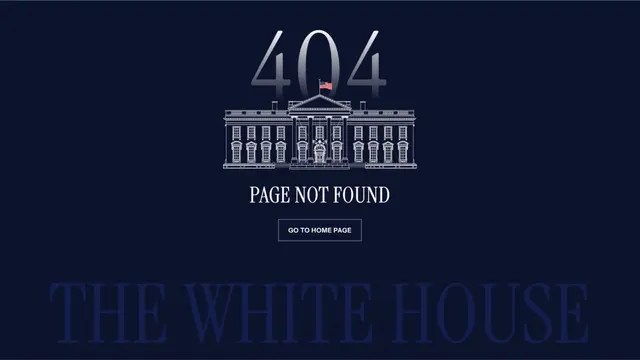
Further, in a fashion, to a post ten days ago...
Arguing for the collection of detailed data in the first U.S. census, James Madison argued that comprehensive information was necessary to ensure legislative decisions were based on, in his words, “facts, instead of assertions and conjectures.” Since then, the importance of data has become obvious across a broader array of government activities (e.g., regulatory and judicial) and has proved a crucial service both to research and commerce. Our government, our economy, our education and research, our agriculture, and so much more depend on government-collected data.
But since the early days of his current term, NOTUS reports, President Trump and his appointees have been systematically eliminating much of that data…
Joy Binion worked for the federal government collecting data on emerging substance abuse trends in emergency rooms across the country. Her work was part of the Drug Abuse Warning Network, which President Donald Trump’s first administration funded at the recommendation of his commission on the opioid crisis.
Six months into Trump’s second term, his administration axed the data collection effort entirely, laying off Binion and her division.
“They flat out eliminated DAWN, which was actually surprising to me, because DAWN was kind of the Trump administration’s baby in 2016 as they really looked toward fighting the opioid epidemic,” Binion told NOTUS, adding that healthcare providers no longer have a comprehensive resource to learn about the new drugs that could require emergency medical responses.
Since retaking office, the Trump administration has transformed how the government collects data, cut access to previously-public data and stopped collecting some data altogether. This overhaul has left significant holes in data on everything from substance useto maternal mortality.
NOTUS spoke to 18 data experts and researchers who rely on federal data who said the breadth of information no longer being collected or distributed by the federal government has been nearly impossible to track. Researchers estimate that well over 3,000 data sets have been removed from public access.
The current reality is that the federal government is no longer a reliable source of widespread data collection… [Here] is only a small sample of the data collection the Trump administration has made changes to:
- The Department of Agriculture terminated a report on household food security in September, claiming it was “redundant, costly, politicized, and extraneous.” Feeding America said it relied on this survey to guide its programs.
- The Centers for Disease Control and Prevention stopped releasing data on maternal and infant mortality in April 2025 after the administration placed all of the agency staff managing the Pregnancy Risk Assessment Monitoring System on administrative leave. The data collection resumed in at least some states in July 2025, but recent data contains gaps.
- Trump directed the Justice Department last year to suspend a Biden-era database tracking misconduct by federal law enforcement officers.
- The administration removed questions on gender identity from the National Crime Victimization Survey, the National Health Interview Survey and other surveys. Homeless shelters, mental health hotlines and substance use recovery programs all used this data for policymaking and planning.
- The Department of Homeland Security ended public access in October to its public safety and infrastructure dataset, called Homeland Infrastructure Foundation-Level Data.
- The National Center for Education Statistics missed a mandated deadline to release its annual report on the condition of the American education system, and the materials released were lacking in data compared to previous years.
- The Health and Human Services Department’s 2024 National Survey on Drug Use and Health omitted information about drug use based on race and ethnicity. HHS laid off the team that collected the data, though the agency is reportedly working with a contractor to resume its collection.
- The Internal Revenue Service, the Department of Education and the Substance Abuse and Mental Health Services Administration no longer allow researchers to apply to access and study their data.
- The Bureau of Labor Statistics produces fewer calculations for its producer price index program and has cut down where it collects data from.
Some of these cuts were made without any public fanfare, like the administration’s decision to end DAWN. In other cases, agencies slipped the news into routine announcements. And occasionally, like when the White House mandated that questions about gender identity be removed from federal surveys, the administration touted the deletions as quelling “gender ideology extremism.” [See also here and here.]
Researchers told NOTUS that the federal government’s reasoning for terminating data collection is flawed. And in some cases, the Trump administration has run afoul of congressional mandates to produce data, including by failing to publish required reports on time and removing reports required by law…
More at: “Federal Data Is Disappearing” from @notus.com.
Several not-for-profits (the Internet Archive, libraries, and academic groups) are valiently trying to preserve data sets that have been removed. But they cannot of course preserve data that is never collected…
[Image above: source]
###
As we drive with our windshields painted over, we might recall that on this date in 2020 ice fisherman Thomas Knight caught a 40 inch, 37.7 pound lake trout on Big Diamond Pond in West Stewartstown, New Hampshire. It is the largest lake trout on record in New England.

“It is a capital mistake to theorize before one has data”*…

The estimable Claudia Sahm on what the elimination of an obscure advisory committee on economic data says about the administration’s commitment to relevance and accuracy…
In a time of great economic uncertainty, President Donald Trump’s administration quietly took a step last week that could create even more: Secretary of Commerce Howard Lutnick disbanded the Federal Economic Statistics Advisory Committee.
I realize that the shuttering of an obscure statistical advisory committee may not strike anyone as a scandal, much less an outrage. But as an economist who has presented to the committee, known as FESAC, I know how it improved the information used by both the federal government and private enterprise to make economic decisions. Most Americans do not realize how many aspects of their lives rely on timely and accurate government data.
One of FESAC’s official responsibilities was “exploring ways to enhance the agencies’ economic indicators to make them timelier, more accurate, and more specific to meeting changing demands and future data needs.” In the complex and highly dynamic US economy, this is an ongoing effort — not a one-time task that has been “fulfilled,” which was the Commerce Department’s stated reason for terminating the committee.
The 15 members of the advisory committee, who were unpaid, brought deep technical expertise on economic measurement from the private sector, academia and the non-profit world. They were a sounding board for the Census Bureau, Bureau of Labor Statistics, and Bureau of Economic Analysis, which produce much of the nation’s official statistics.
If statistics fail to keep up with the changing economy, they lose their usefulness. When the committee last met in December, one focus was on measuring the use and production of artificial intelligence. Staff from the agencies shared existing findings on AI, such as from the Business Trends and Outlook Survey that began in 2022, and outlined new data collection efforts. AI’s current use among businesses has nearly doubled since late 2023, and even more businesses expect to adopt AI in the next six months.
The committee was asked what data products would be most useful. Expert feedback, including a request to harmonize the definitions of AI across surveys and align with cutting-edge research, is especially valuable at the early stages of data collection. The growth and employment effects of AI are among the most pressing questions facing the economy, and external experts are crucial to supporting the creation of high-quality data.
Enhancing official economic statistics under budget constraints often requires creative approaches. At its meeting last June, the committee discussed using private-sector data to create statistics on regional employment and other outcomes. There is considerable demand among businesses and local governments to have timely geographic detail, but it is cost-prohibitive with current government surveys. Members of FESAC, some of whom work at companies like Indeed and JP Morgan Chase, offered first-hand knowledge of the pros and cons of using private-sector data.
The committee contributed far more than just twice-a-year meetings. It also created relationships with the private sector that government agencies could draw on as part of their continuing effort to improve their statistics.
The National Academies of Sciences, in discussing best practices for statistical agencies, argues that external advisory committees are a good way to engage with users of the data and obtain expert advice. Moreover, external evaluation should be part of regular program reviews to ensure quality, relevance and cost-effectiveness. That’s exactly what FESAC did.
The statistical agencies need more, not fewer, resources now to meet their challenges. During the campaign, Trump repeatedly questioned the credibility of US employment statistics. In particular, he claimed that the downward revisions of monthly payrolls showed political interference. Senators Bill Cassidy and Susan Collins asked the Bureau of Labor Statistics to explain why large revisions were happening and how to avoid them. FESAC could have been a valuable resource for possible improvements.
Disbanding FESAC does not advance the administration’s goal of greater efficiency in the government. In 2024, the committee’s cost was expected to be a modest $120,000, covering travel expenses and minimal staff support. Virtual-only meetings could have reduced those costs still further, if that was a concern. Regardless, the benefits to the millions of data users from regular reviews by external experts far exceed that negligible cost.
Putting a low-cost, high-value committee on the chopping block does not bode well for other investments in the official statistics. Reductions in staff and budget would likely degrade the quality of the official statistics. Even before Trump took office, all three agencies operated in a tight budget environment.
Reduced transparency in official statistics is perhaps the most troubling aspect of disbanding FESAC. Cutting off agency staff from external advisers creates an environment where political interference could occur much more easily — and go undetected. With political officials such as Lutnick arguing publicly that GDP should exclude government spending, it is especially important to have external, independent experts.
And FESAC is not alone. By executive order, the administration is ending several advisory committees in the federal government, reducing transparency and the technical resources for agencies. It’s a short-sighted approach that could undermine essential government services…
“The War on Government Statistics Has Quietly Begun” (gift link) from @claudia-sahm.bsky.social in @bloomberg.com.
Apposite: “The True Cost of Trump’s Cuts to NOAA and NASA,” “Trump’s shocking purge of public health data, explained,” and “Trump USDA Sued for Erasing Webpages Vital to Farmers“… and so many– too many– others.
(Image above: source… note how many of the data sources cited are are precisely the sorts of government resources being targeted)
* Sherlock Holmes (Arthur Conan Doyle)
###
As we drive with our windows painted over, we might send understanding birthday greetings to Robert Heilbroner; he was born on this date in 1919. An economist and historian of economic thought, he was the author of some two dozen books, the best known of which is The Worldly Philosophers: The Lives, Times and Ideas of the Great Economic Thinkers (1953), a remarkable survey of the lives and contributions of famous economists (perhaps most notably Adam Smith, Karl Marx, and John Maynard Keynes). Your correspondent can also recommend The Future as History (1960).
Heilbroner was considered highly unconventional by those in his field; indeed, he regarded himself a social theorist and “worldly philosopher” (philosopher pre-occupied with “worldly” affairs, such as economic structures) and tended to integrate the disciplines of history, economics, and philosophy into his work. Nonetheless, Heilbroner was recognized by his peers as a prominent economist and was elected vice president of the American Economic Association in 1972.

You must be logged in to post a comment.