Posts Tagged ‘extraterrestrial intelligence’
“Pure mathematics is, in its way, the poetry of logical ideas”*…

Alexander Grothendieck is revered in the world of math; outside of it, he’s known for his unusual life, if he’s known at all. Konstantin Kakaes outlines his actual mathematical contributions…
What Albert Einstein was to 20th-century physics, Alexander Grothendieck was to 20th-century mathematics. He is much less well known because math gets technical even more quickly than physics does. But as with Einstein, Grothendieck’s impact came not just from his own results, revolutionary though they were. His work also reoriented his entire discipline in radical new directions.
Grothendieck was intense and ascetic from his early days. Starting in the early 1950s, when he was in his 20s, he produced thousands of pages of formal and informal notes that changed the course of mathematics. Then in 1970, he quit. He left his post at a prestigious research institute just outside of Paris to teach at the provincial university in Montpellier where he studied as an undergraduate. He mostly stopped talking to other mathematicians. In the early 1990s, he moved to a small village in the Pyrenees, where he lived as a hermit.
Mathematicians are still grappling with the innovations he made half a century ago. His work pushed mathematics to a new level of abstraction by focusing on the relationships between objects rather than the objects themselves. “If there is one thing in mathematics which fascinates me more than any other (and undoubtedly always has), it is neither ‘number’ nor ‘size,’ but invariably shape,” he wrote in his memoirs. “And among the thousand and one faces under which shape chooses to reveal itself to us, that which has fascinated me more than any other and continues to do so is the structure hidden in mathematical things.”
His revolutionary mathematics centered around that search for hidden structure…
Read on: “How Alexander Grothendieck Revolutionized 20th-Century Mathematics,” from @kkakaes.bsky.social in @quantamagazine.bsky.social.
For more, see the section on Grothendieck in Benjamin Labatut‘s remarkable When We Cease To Understand the World.
* Albert Einstein
###
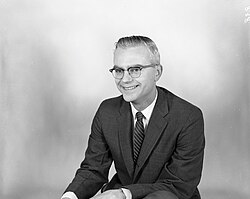
As we study shape, we might send speculative birthday greetings to a man who, while not technically a mathematician, nonetheless created a famous equation: Frank Drake; he was born this date in 1930. An astronomer and astrophysicist, he formulated the Drake Equation in 1961 to estimate the number of technological civilizations that might exist in the Milky Way galaxy, N = R* × fp × ne× fl × fi × fc × L. Using plausible guesses for the parameters, Drake concluded perhaps 10 planets in our galaxy may have life originating detectable signals. In 1960, Drake led the first search, the two-month Project Ozma to listen for patterns in radio waves with a complex, ordered pattern that might be assumed to represent messages from some extraterrestrial intelligence.
Carl Sagan and Drake designed the plaques on Pioneer 10 and Pioneer 11 for the purpose of greeting and informing any extraterrestrial life that might find the vessels after they left the solar system.
You must be logged in to post a comment.