Posts Tagged ‘art history’
“The principle of the Gothic architecture is infinity made imaginable”*…
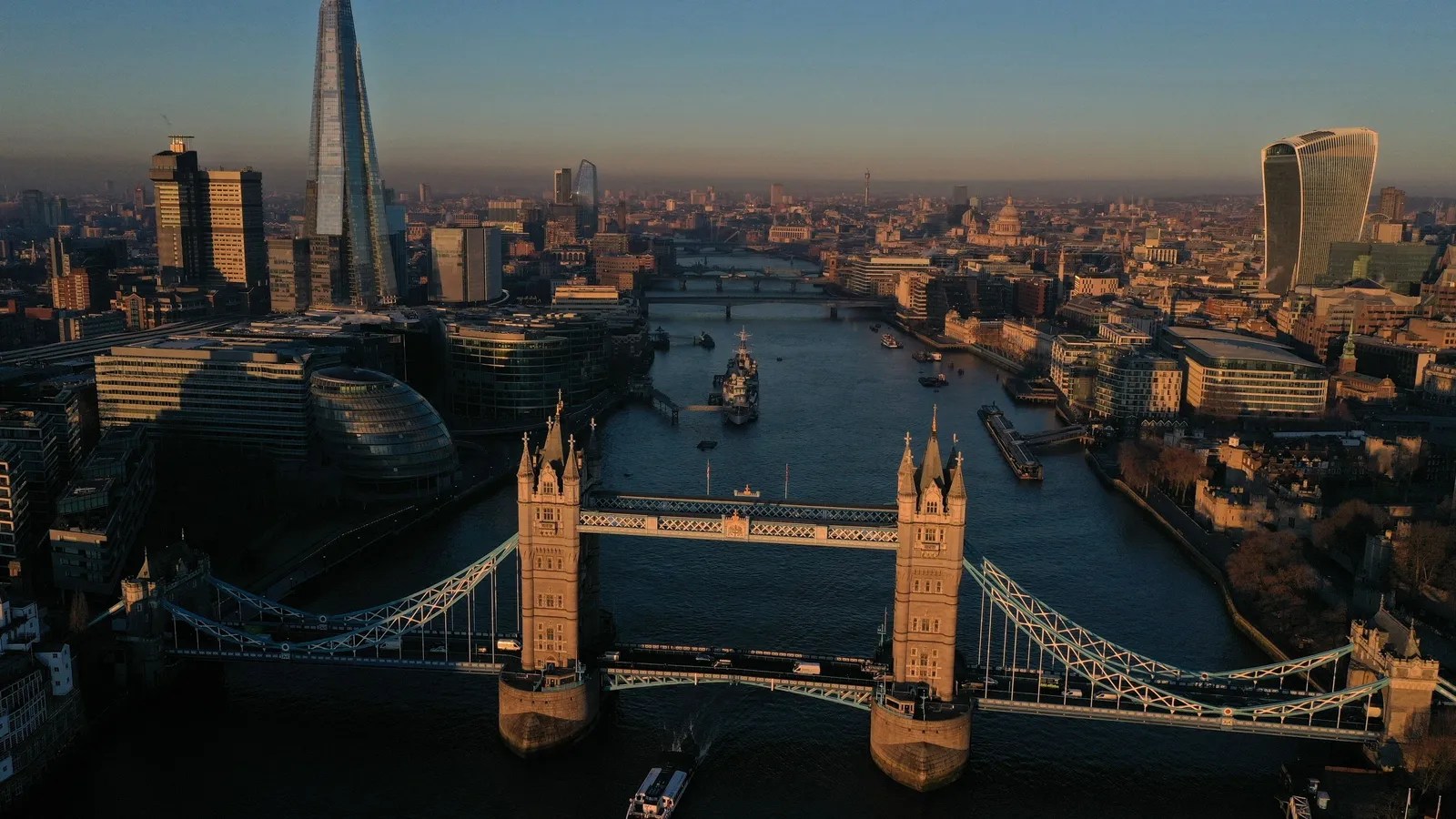
Tower Bridge in London, England, is one of the most famous structures in the Gothic Revival style. Its spires echo Islamic architecture’s minarets, pointing to the ancient exchange of cultural ideas between the West and the Middle East.
There’s more to Gothic architecture and Gothic style than we might imagine. Roger Luckhurst explains…
When fire devastated the Cathedral of Notre Dame in Paris in April 2019, the architectural historian Diana Darke noted in a Twitter post that of course everyone knew the famous twin tower and rose window of France’s finest Gothic cathedral were copied from a Syrian church in Qalb Loze, built in the fifth century. The post went viral: amplified or rebutted, triumphed or tossed.
Darke was surprised at the reaction to what historians have established as a well-known path of influence: the East-West trade in architectural ideas. It was argued centuries ago that key defining elements of the Gothic style were borrowed from the Islamic architecture of the Middle East. The soaring pinnacles of the Palace of Westminster in London, the pointed arches of St. Mark’s Basilica in Venice, and the rose windows of Notre Dame all point to the influence of Islamic design.
But from early in the 19th century, these contributions were forgotten, and Gothic became celebrated as an intrinsically Northern European style. In Britain, it was only in the revival of this medieval style of architecture that it started to be called “Gothic.” The Revivalists no longer dismissed the Gothic as a crude or barbarous form, and instead repurposed it as a national, patriotic style.
By knowing this deeper history of some of Europe’s most iconic buildings, travelers can approach these well-known attractions with new eyes and can appreciate that the “East-West divide” isn’t as deep as we are often led to think…
Hidden in the architecture of some of the world’s most famous buildings is a cultural exchange between Europe and the Middle East: “What is ‘Gothic’? It’s more complicated than you think,” from @TheProfRog in @NatGeo.
* Samuel Taylor Coleridge
###
As we esteem exchange, we might send well-designed birthday greetings to Arduino Cantafora; he was born on this date in 1945. An architect, painter, and writer, he became a postmodernist (in the mode of his teacher/mentor Aldo Rosi), creating designs and paintings that reached back to the Renaissance revival of Gothic themes.

“The commonplace is miraculous if rightly seen”*…

Art without intent…
The Found Object Show captures things that are out of control. Happenstance hijacked their original roles. Time blotted out their former significance. As the decades and centuries passed, these found objects broke from the designs of their creators to emerge today as things transfigured in form and meaning — as art without intent.
Armed with aesthetic and conceptual powers equivalent to conventional art, art without intent has no artistic motive nor objective meaning, but nevertheless lies in wait for someone to discover its latent value. The found object’s inanimate ambush succeeds only upon its chance confrontation with an open mind and perceptive eye.
Art without intent ennobles the random, celebrates the anonymous, and embraces the subjective, empowering individuals to see art where they may least expect to find it…
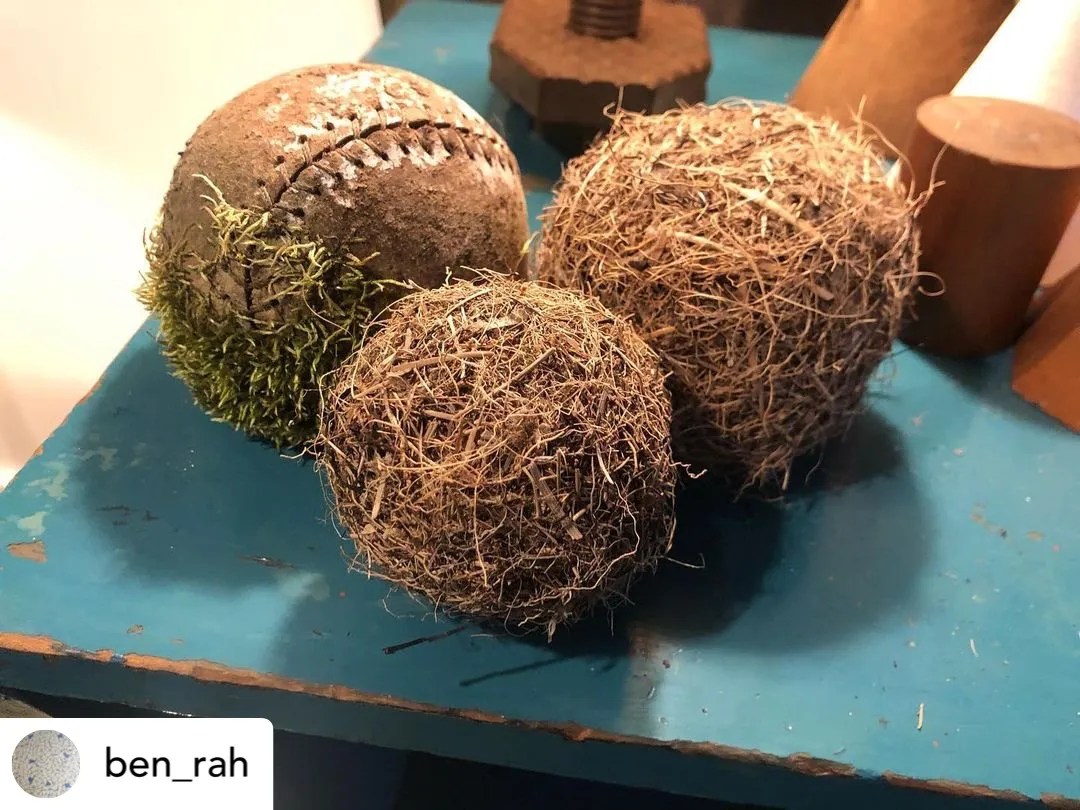
The inaugural 2022 Found Object Show was a gallery exhibition of art without intent on view from March 24-27 in the Lower East Side of NYC; it returns to New York in the Spring of 2023.
“The Found Object Show.” [ToTH to @BoingBoing]
* Charles Simic
###
As we celebrate serendipity, we might spare a thought for Wilhelm Freddie (born Christian Frederik Wilhelm Carlsen); he died on this date in 1995, A painter, sculptor, and filmmaker, he moved between abstract and surrealist approaches. Some of Freddie’s works criticized Nazism and fascism; some was considered considered pornographic at their time, resulting in confiscation of the works and his imprisonment– though his artistic merits were later recognized.
Examples of his work can be found here and here.

“I suppose illustration tends to live in the streets, rather than in the hermetically sealed atmosphere of the museum, and consequently it has come to be taken less seriously”*…
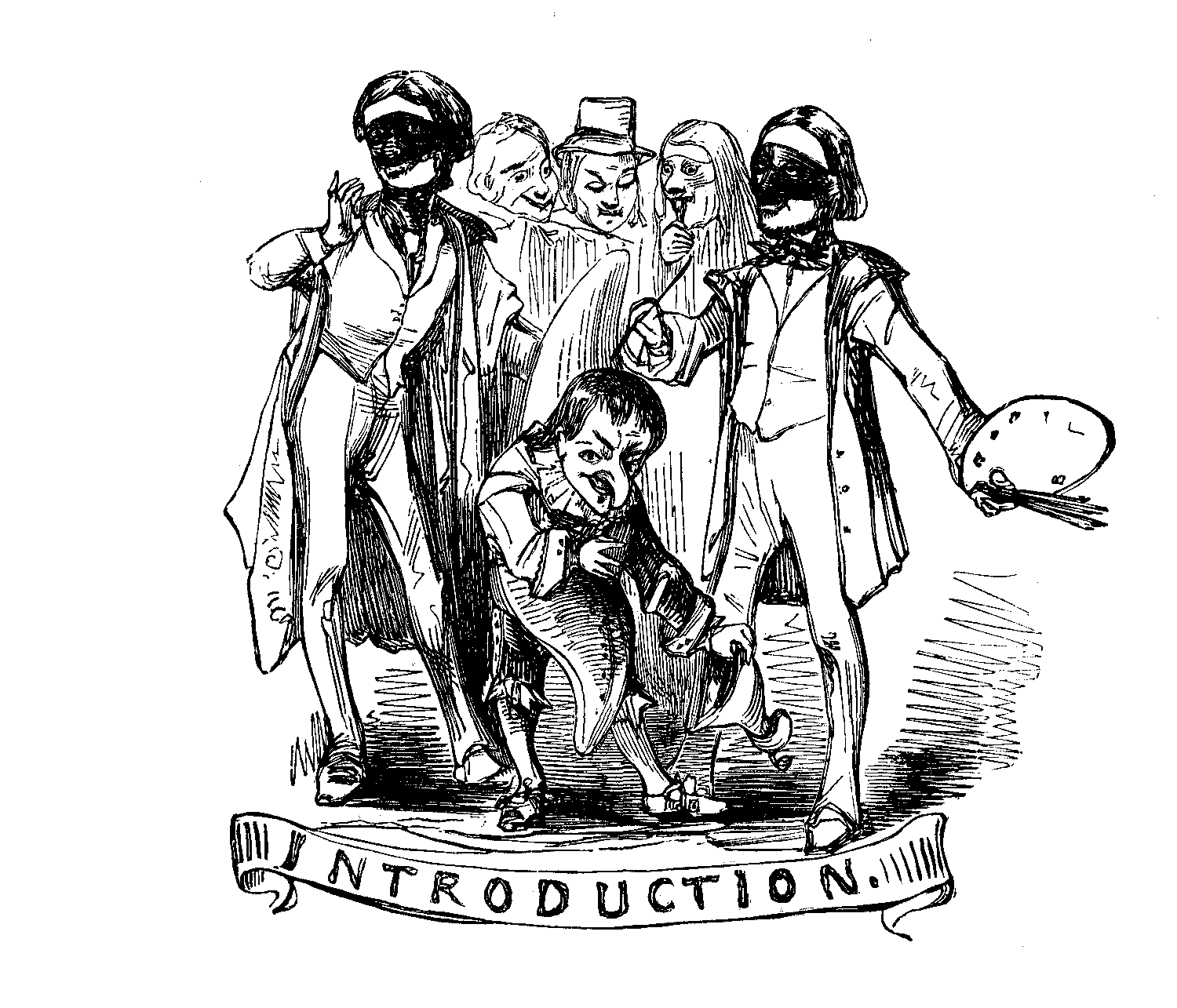
From illustrator, writer, and educator Philip Kennedy, 175 stories “illustrating” 175 years of illustration…
Illustration is a fascinating subject and yet its history is rarely told. This project aims to champion the medium and bring some inspiration, insight and knowledge to readers everywhere.
Illustration Chronicles explores a history of illustration through the images, illustrators and events of the past 175 years. Every few months the site picks a topic [e.g., Music, Animals, Satire, History] to explore. These topics inspire the types of work that get selected and once a piece has been chosen, the year it was made gets marked off the project timeline.
To learn more about Illustration Chronicles you can read a more detailed introduction here…
Take a look at the fascinating work-in-progress: “Illustration Chronicles,” from @philipkennedy.
* master illustrator Quentin Blake
###
As we delight in drawing, we might send carefully-limned birthday greetings to Barbara Cooney; she was born on this date in 1917. An illustrator and writer, primarily of children’s books, she received two Caldecott Medals for her work on Chanticleer and the Fox (1958) and Ox-Cart Man (1979), and a National Book Award for Miss Rumphius (1982). Her books have been translated into 10 languages.

“The medieval principles led up to Raphael, and the modern principles lead down from him”*…
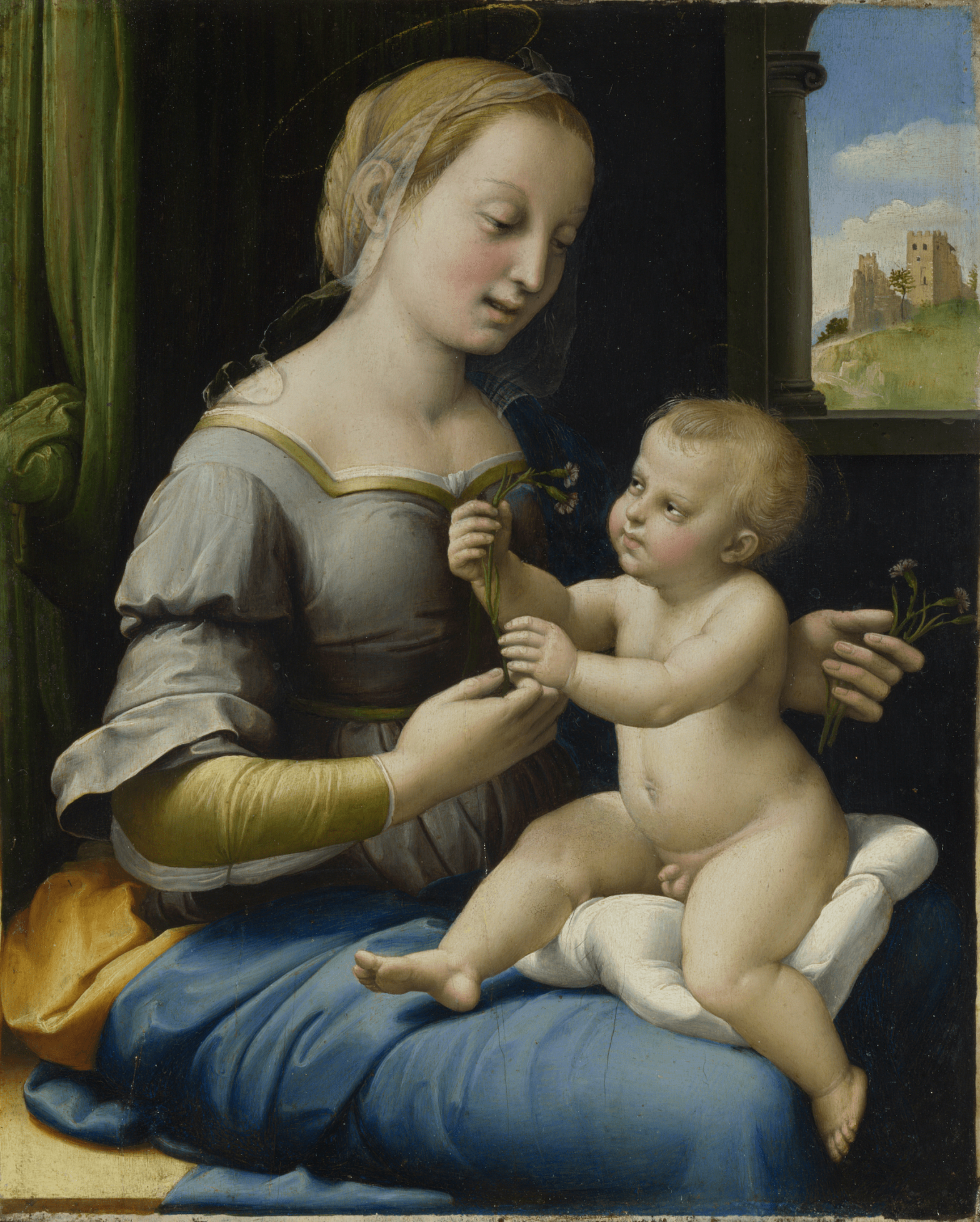
On the occasion of a major National Gallery show in London, Michael Glover on Raphael…
… he was born a mere man, a citizen of Urbino in the Marche, the son of a court painter, who was orphaned very young and raised by an uncle who also happened to be a priest. Perhaps the reverence is due to his talents, which were superabundant, and moved in so many directions at once. He was a painter, printmaker, architect, designer, sculptor, and much else. His industriousness, and the consistent quality of his output, were superhuman. That is undeniable.
Raphael painted relatively few portraits… during his short lifetime, and even fewer in which he could be said to have painted them in order to please himself, because he was always so much in demand by immensely rich and powerful male patrons for the kinds of things that they wanted him to do. They wanted him to beautify public (and private) spaces, all the greater to reflect their own power and importance — beneath the ever-watchful eye of the Christian God, their chief sponsor, in whose revered name they splashed all this cash.
Raphael was the very well remunerated servant of these rich masters, and this was entirely a matter of choice. He was boundlessly ambitious and intimidatingly energetic (he was already running a studio by the age of 17), charming, good-looking (though not to an excessive degree), diplomatic, and utterly opportunistic. Michelangelo loathed him because, though much younger, Raphael seemed to sweep all before him. What a break for the irascible, prickly Michelangelo that his young rival died, quite unexpectedly, of a fever, when he did, leaving him unchallenged for decades!
And Raphael, the name, the work, the style, has resonated and resonated across the centuries…
On the Renaissance painter described by Vasari, his first biographer, as the universal artist: “Raphael Between Heaven and Earth,” in @hyperallergic.
Raphael paints wisdom, Handel sings it, Phidias carves it, Shakespeare writes it, Wren builds it, Columbus sails it, Luther preaches it, Washington arms it, Watt mechanizes it.
Ralph Waldo Emerson
###
As we appreciate art, we might recall that it was on this date in 1890 that Vincent Van Gogh shot himself in the chest with a revolver; he died two days later. A post-impressionist painter, he was not commercially successful in his lifetime and, struggling with severe depression and poverty, committed suicide at the age of 37. But he subsequently became, with Raphael, one of the most famous and influential figures in Western art history.

“A picture is a poem without words”*…

A collection of pithy illustrations…


Many more artistic aphorisms at Visualize Value.
* Horace
###
As we picture it, we might send aesthetic birthday greetings to Rene Ricard; he was born on this date in 1946. A painter, poet, actor, and art critic, he was a seminal figure in the New York art scene of later 20th century. After dropping out of school in Boston, he moved to New York City, where he became a protégé of Andy Warhol (and appeared in the Warhol films Kitchen, Chelsea Girls, and The Andy Warhol Story). He was a founder of Theater of the Ridiculous (with John Vaccaro and Charles Ludlam). He was a regularly-published poet. And from the early 90s, he was a widely-exhibited artist. But he was perhaps ultimately most influential in his art criticism (and his contributions to gallery and exhibition catalogues)– especially a series of essays he wrote for Artforum magazine in which (among other impacts) he launched the career of painter Julian Schnabel and helped bring Jean-Michel Basquiat to fame. Andy Warhol called Ricard “the George Sanders of the Lower East Side, the Rex Reed of the art world.”

You must be logged in to post a comment.