Posts Tagged ‘British East India Company’
“The Middle East has oil, China has rare earths”*…

Often called “the seeds of technology,” rare earths are a group 17 metallic elements (the 15 lanthanides plus scandium and yttrium) with unique magnetic, optical, and catalytic properties vital for electronics, defense, chemical processing, petroleum refining, and green energy.

China’s dominance over rare earth elements creates an unprecedented vulnerability in global supply chains that extends far beyond the relatively modest $6 billion market size. The risk of disruption in supply of rare earths has become a critical concern as the nation controls 69% of worldwide mining operations, 92% of refining capacity, and a staggering 98% of permanent magnet production, according to Goldman Sachs analysis from October 2025.
This concentration represents one of the most significant single points of failure in modern industrial infrastructure. Furthermore, the rare earth reserves distribution globally shows heavy concentration in geologically limited regions, making supply diversification extremely challenging.
The economic implications of this dominance become clear when considering potential disruption scenarios. Goldman Sachs warns that even a 10% disruption in industries reliant on rare earth elements could trigger $150 billion in lost economic output, alongside inflationary pressures cascading through multiple sectors. Despite rare earth markets being 33 times smaller than copper markets, their strategic importance creates disproportionate systemic risk…
– “China’s Rare Earth Dominance Creates Global Supply Disruption Risks” [source of the image above, and worth reading in full]
Farrell Gregory explains why they figure so prominently in so much discussion of the global economy and of U.S.- China relations and what we might expect…
Over the course of the last year, we’ve seen China suspend rare earth exports twice, generating a short-lived round of public interest and short-lived “expertise” in America. Each crisis followed a similar progression: an aggrieved China introduces export licensing, effectively suspending US access to certain rare earth elements and downstream products. The American public is subjected to alternating shouts of panic and confident assertions that ‘rare’ is a misnomer and the necessary elements are actually abundant in the Earth’s crust. After a period of confrontation, and likely following concessions on both sides, access is reestablished before too much harm is done.
Examining the differences in each crisis is less important than establishing what is quickly becoming a pattern: China is increasingly willing and able to use its dominance in rare earths as leverage against the U.S. It’s worth noting what a change this is from even five years ago: during the entirety of the 2019-2020 U.S.-China trade war, Beijing never introduced export controls for rare earths, despite making threats to do so. Now China assesses its position differently — they’ve accumulated leverage and they’re willing to use it with increasing frequency.
This frequency might be in part because China’s dominant position in rare earths is a time bomb for both sides. The PRC likely wants to use its REE dominance to extract further concessions before the U.S. manages to defuse this dominance with some combination of reshoring and tech advances.
I think it’s a matter of when — not whether — China decides to activate its standing export control infrastructure. They’ve built up leverage, and over time, that leverage will dissipate. In the near-term future, throttling rare earth and magnet exports is still an effective threat to employ in trade disputes with the U.S. In the medium term, successful reshoring and reliance-decreasing efforts will diminish what concessions China can extract from the U.S.
So, expect the rare earth crisis cycle to play out again. When it does, here are a few clarifications on rare earths that may prove helpful for avoiding the most common misperceptions…
Read on: “China’s Rare Earths Chokehold: A Primer,” from @chinatalk.skystack.xyz.
See also: “Rare Earths,” from @profgalloway.com.
And also this: “China Is Overplaying Its Rare-Earth Hand in Japan” from @bloomberg.com (gift article).
* attributed to Deng Xiaoping
###
As we ponder paucity, we might recall that it was on this date in 1839 that the British East India Company [see here and here] established the Assam Tea Company and began the commercial production of tea (grown from slips furtively exported from China) in the region. Beginning in the 1850s, the tea industry rapidly expanded, consuming vast tracts of land for tea plantations. By the turn of the century, Assam became the leading tea-producing region in the world. That growth and innovations in tea preparation caused the price of tea to drop and demand to grow. Soon, London became the center of the international tea trade.

“When I despair, I remember that all through history the way of truth and love have always won”*…

Aditya Narayan Sharma on how the Hindu right distorted Gandhi…
Even outside India, it can be difficult to escape the cult of Mohandas Gandhi, the lawyer, thinker, and politician who helped liberate the nation from British colonial rule in 1947. The praise ranges from the anodyne (Gandhi is a “hero not just to India but to the world,” per Barack Obama) to the ironic (“really phenomenal,” according to Burmese political prisoner turned genocide defender Aung San Suu Kyi) to the surreal (“I am Gandhi-like. I think like Gandhi. I act like Gandhi,” declared New York City Mayor Eric Adams). Seventy-six years after his death, Gandhi is not only an icon of Indian independence, but a uniquely potent international symbol of peace and nonviolence. Gandhi has been, at one point or another, as historian Vinay Lal puts it, the “patron saint” of “environmentalists, pacifists, conscientious objectors, non-violent activists, nudists, naturopaths, vegetarians, prohibitionists, social reformers, internationalists, moralists, trade union leaders, political dissidents, hunger strikers, anarchists, luddites, celibates, anti-globalisation activists, pluralists, ecumenists, walkers, and many others.” Everyone, it seems, has endorsed the honorific coined for him more than a century ago: Mahatma, Sanskrit for “great soul.”
Within India, Gandhi graces every banknote and is plastered on billboards and painted on walls alongside busy thoroughfares. His bespectacled face looms over big cities and small towns alike. Countless schools, universities, roads, and public spaces are named after him. In 2013, the government of Bihar, India’s poorest state, spent several million dollars building the world’s tallest Gandhi statue, casting him in a shimmering tower of bronze with two grateful children by his side. Public figures fight to outperform one another at Mahatma-loving, something of a national sport: in 2021, one representative viral video captured a regional party leader clinging to a bust of Gandhi and sobbing. But Gandhi’s ubiquity masks the fact that among political actors, commentators, intellectuals, and a growing swath of the general public, his reputation is far from settled.
The lead-up to a general election this spring — in which the Hindu nationalist Bharatiya Janata Party (BJP), led by Prime Minister Narendra Modi, is likely to beat out the centrist Indian National Congress Party and be reelected for a third straight term — has brought dueling visions of Gandhi to the fore. Congress, which was helmed by Gandhi himself on the road to independence, still hopes to capitalize on its historic connections to the Mahatma, but the efforts of its increasingly ossified leadership are falling flat. Meanwhile, the BJP pays lip service to Gandhi’s brand while vigorously working to counter his core values, including, most crucially, his lifelong pursuit of Hindu-Muslim unity. The far-right fringes go even further than the official party line: in some circles, Gandhi is belittled, mocked, burned in effigy. This confused state of affairs suggests that a reckoning with the competing narratives swirling around Gandhi is long overdue. Even as he has been flattened into an ill-defined figurehead by liberals and centrists, his complex legacy is being appropriated — and at times desecrated — by India’s seemingly unstoppable right…
…
It is dangerous, ultimately, to cede criticism of Gandhi to the Hindu right. Many Indians, myself included, admire our founding fathers for their grand, if imperfect and patchily implemented, vision of a secular and pluralist country. Nevertheless, the kernel of truth behind the right-wing critique of Gandhi is that the republic was founded by patrician Anglophone elites, and its core institutions do reflect the worldview of a small, affluent group who were, in many crucial ways, disconnected from the material and spiritual realities of the people they governed. Contemporary India has severe socioeconomic, caste, gender, and regional inequalities, in part as a legacy of this paternalistic cohort’s work. But that’s a starting point for politics, not a dead end. Look a little deeper, and opponents of the BJP will find not only flaws but also invaluable resources in Gandhi’s writings, particularly his distinctively Indian formulation of secularism that stands a real chance of resisting Hindutva. And in an era of rising religious violence, Gandhian pacifism itself may be more relevant than ever: it’s no longer a set of bland phrases from history books, but an urgent directive. Beyond shallow paeans to the forgotten values, Gandhi’s message could be deployed against his killer’s ideological heirs, if only someone were willing to do it. No one — politician, citizen, or intellectual — can seriously claim to inherit Gandhi’s values until they take him down from his pedestal, rescue him from both the glibness of liberal idol worship and the humiliation of Hindutva slander, and re-engage with the great thinker himself. That is surely the only fate befitting the man we once called Bapu, or Dad…
Eminently worth reading in full: “Character Assassination,” from @AdityaNSharma in @thedrift_mag.
See also: “Prime Minister Modi Is Disarming the Opposition Ahead of India’s National Elections.”
* “When I despair, I remember that all through history the way of truth and love have always won. There have been tyrants and murderers, and for a time, they can seem invincible, but in the end, they always fall. Think of it–always.” – Mahatma Gandhi
###
As we resist self-rewarding revisionism, we might recall that it was on this date in 1602 that an ur-engine of the colonialization from which Gandhi led India was born: Vereenigde Oost-Indische Compagnie (VOC, or The Dutch East India Company, as it’s known in the Anglophone world) was incorporated. It was a response to the English (later, British) East India company, on which it was modeled, up to a point.
Generally considered the world’s first trans-national corporation and the first publicly to issue stocks and bonds (and the first company to be ever actually listed on an official stock exchange), it began with a 21-year monopoly on the Dutch spice trade. The VOC also prefigured the mega-corporation of today in that it had quasi-governmental powers, including the ability to wage war, imprison and execute convicts, negotiate treaties, strike its own coins, and establish colonies. Considered by many to be the largest and most powerful corporation in history, the VOC eclipsed all of its rivals (including the British) in international trade (and many nations in power) for almost 200 years.

“It is easy to show that the fears of the early 1770s about the East India Company in America were unfounded; it is not easy to show that they were also unreasonable”*…

Last Saturday was the 250th anniversary of The Boston Tea Party, a protest against the Tea Act (“no taxation without representation”) and an accelerant of colonial support for the American Revolution. But as Deb Chachra and Robert Martello explain, there’s more to the story than we typically hear…
It’s a familiar story to many Americans. On the evening of December 16th, 1773, Massachusetts patriots, including some disguised as ‘Mohawk warriors’, boarded three vessels in Boston Harbor and dumped thousands of pounds of tea into the sea. This act of civil disobedience in protest of heavy-handed British colonial policies, including taxation and monopoly protections, is what we now know as “The Boston Tea Party.”
But behind this story lies another, of where that tea came from and why. For the American patriots, the tea itself was tangible evidence of the British government’s willingness to put profit and imperial control over the well-being, and even the lives, of its colonial subjects.
That tea was the property of the British East India Company which, in the years leading up to the American Revolution, was a massive, highly profitable corporation that held trading rights all over south and east Asia, including what is now India, Pakistan, Bangladesh, Myanmar, and China. As Nick Robins describes in his book The Corporation That Changed the World, those rights were acquired by systematically undermining local governance, and were enforced by the East India Company’s huge private army, which it used to seize and control territory. In 1757, Company soldiers fought and won the Battle of Plassey against the Nawab of Bengal and his French allies. In its wake, they installed a series of rulers who implemented a treaty in which the East India Company was granted the diwani, the right to collect taxes, while the puppet-Nawabs nominally remained responsible for political and judicial oversight, called the nizamat.
In the 18th century, Bengal was a prosperous textile hub, and its skilled workers were producing a wide array of some of the finest fabrics in the world. Selling these valuable goods had already generated enormous profits for the East India Company, and now taxation provided another revenue stream. Then, in 1768, a severe drought led to crop failures. Even as the Bengalis began to go hungry, company officers continued to collect taxes – at the point of a bayonet if necessary. The East India Company made virtually no provision for famine relief, and after decades of weakened local authority and with tax monies sent off to fill company coffers in London, there was little on-the-ground financial and administrative capacity to address the crisis. Worse, company agents saw hunger and starvation as money-making opportunities, and bought up grain in order to sell it at an enormous profit. Had the available food been redistributed, more residents would have survived. Instead, farms went unplanted, the drought was followed by flooding, disease spread through the weakened populace, and the situation went from dangerous to disastrous. Contemporary estimates put the death toll of the Great Bengal Famine of 1770 at between seven and ten million people – between a quarter and a third of the population.
The enormous human suffering that resulted from the actions of the East India Company, and the Company’s depraved indifference to it, were so horrifying that, as historian William Dalrymple describes, they created the first whistleblowers. Employees wrote to publications in London to detail the atrocities they had observed in Bengal. Their accounts prompted an enormous outcry and ongoing news coverage, with magazines and newspapers carrying cover-to-cover stories on the actions of the East India Company and the response of the British government. And the uproar was not limited to England – print publications routinely crossed the Atlantic… By the time of the Boston Tea Party, the Massachusetts colonists had been discussing, for years, this brutal demonstration of what can happen when a community lacks a voice in their own governance. They learned that even in times of direst need, a colony’s domestically produced resources can be extracted by outsiders in the name of greater profits. Diwani without nizamat is, quite literally, taxation without representation.
The colonists had also begun to experience the economic fallout of this crisis. Two years into the famine, and as a predictable consequence of the humanitarian disaster they were largely responsible for creating, the East India Company’s tax and trade revenues had collapsed. This precipitated a credit crisis in British banks that reverberated across the Empire, including the American colonies. But the East India Company did have some ready assets it could sell to raise much-needed cash: its warehouses in London were full of tea from China.
Rather than censure the East India Company, the British Parliament gave them a bailout. In addition to a government loan, the Tea Act of 1773 granted the struggling Company the monopoly right to sell their tea in the American colonies, cheaply and to a captive market, in order to quickly bring in some revenue and stabilize their finances. Parliament also took the opportunity to apply a three-pence tax on the tea to fund imperial oversight and control, including paying for customs inspectors, royally appointed governors, and occupying troops. If the New England colonists allowed this tea to leave the ships and enter the marketplace, this is what their labor would be paying for. No matter how cheap the tea was, it wasn’t worth this.
The Parliamentary response to the Bengali Famine demonstrated how the British Empire’s appetite for revenue could trump any amount of colonial suffering. What’s more, if it could happen in Bengal, what’s to say it couldn’t happen in Boston?…
Motivated by anger, outrage, and fear, the patriots took decisive steps on a moonlit December night in 1773, dumping the hated tea into the harbor while making a point of leaving the ships themselves and the other cargo untouched…
The wages of colonialism: “Tea and Famine,” @debcha
###
As we commiserate with the Irish, we might recall that the American colonist’s reaction to the East India Company was not the first. Prior to the establishment of the British behemoth in 1600, “companies” were formed and funded (in England, Holland, the Italian City-States, et al.) only for the duration of a single voyage and liquidated upon the return of the fleet– a very risky, all or nothing, proposition. The English East India Company demonstrated that pooling risk across a larger, ultimately open-ended series of voyages was a more bankable proposition.
Threatened with ruin, their Dutch competitors followed suit, forming their East India Company– United East India Company or VOC– in 1602. It was the first joint-stock company in the world; and as shares in the company could be bought by any resident of the United Provinces and then subsequently bought and sold in open-air secondary markets (one of which became the Amsterdam Stock Exchange), it is sometimes considered to have been the first multinational corporation.
Statistically, the VOC eclipsed all of its rivals in the Asia trade. Between 1602 and 1796 the VOC sent almost a million Europeans to work in the Asia trade on 4,785 ships and netted for their efforts more than 2.5 million tons of Asian trade goods and slaves. By contrast, the rest of Europe combined sent only 882,412 people from 1500 to 1795, and the fleet of the English (later British) East India Company, the VOC’s nearest competitor, was a distant second to its total traffic with 2,690 ships and a mere one-fifth the tonnage of goods carried by the VOC. The VOC enjoyed huge profits from its spice monopoly and slave trading activities through most of the 17th century. At its peak, VOC was worth almost $8 trillion dollars at current currency values.
On this date in 1603, its first fleet, under Admiral Steven van der Haghen, departed for the East-Indies.

The Groves of Academe…
It’s that time of year- graduation season. So, from our friends at Good, a look back at what college graduates will remember, and a peek forward to what those escaping high school can expect: “The Top 10 Oddest College Courses that $50,000 Can Buy.”
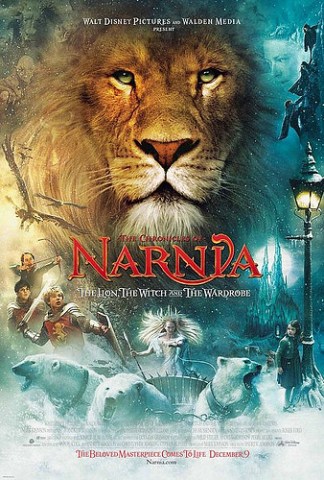 Beyond Narnia: The Political Theory and Writings of C.S. Lewis
Offered by Brown University (Providence, Rhode Island)
Annual cost of tuition and fees: $52,030
Photo (cc) by Flickr user menj
More provocative pedagogy at “The Top 10 Oddest College Courses that $50,000 Can Buy.”
As we sharpen our pencils, we might recall that it was on this date in 1839 that Chinese authorities led by Lin Zexu destroyed 1.2 million kg of opium confiscated from British merchants in Canton. Sino-British trade had been brisk since 1756. Initially the trade was an exchange of British silver for Chinese luxury goods; but this generated a trade imbalance that the British addressed by beginning, in the 1780’s to substitute opium (harvested in India) for silver. While opium had some documented medical uses, the primarily application was “recreational”– and it proved very popular indeed. Imports of the narcotic exploded. In the 1830’s the British East India Company’s monopoly on Chinese trade was ended, and Americans began to import cheaper Turkish opium to compete with the British. Use in China grew even more widespread… and the problem that it created became undeniable. In 1839, the Daoguang Emperor appointed Lin Zexu governor of Canton, charging him with ending the opium trade… and so it was that the First Opium War was begun.
The Chinese underestimated Britain’s commitment to its merchants– and its newly-strengthened military and naval power. The War ended In 1842 with the Treaty of Nanking, the first of what the Chinese called “the unequal treaties,” which granted an indemnity to Britain, opened five “treaty [free, for the British] ports,” and the ceded of Hong Kong Island to the Crown. But even these concessions failed to satisfy the British appetite for trade; the Second Opium War began in 1856.
 HMS Nemesis destroying Chinese junks during the First Opium War (source)
You must be logged in to post a comment.