Posts Tagged ‘boxing’
“Words are sacred. They deserve respect. If you get the right ones, in the right order, you can nudge the world a little.”*…
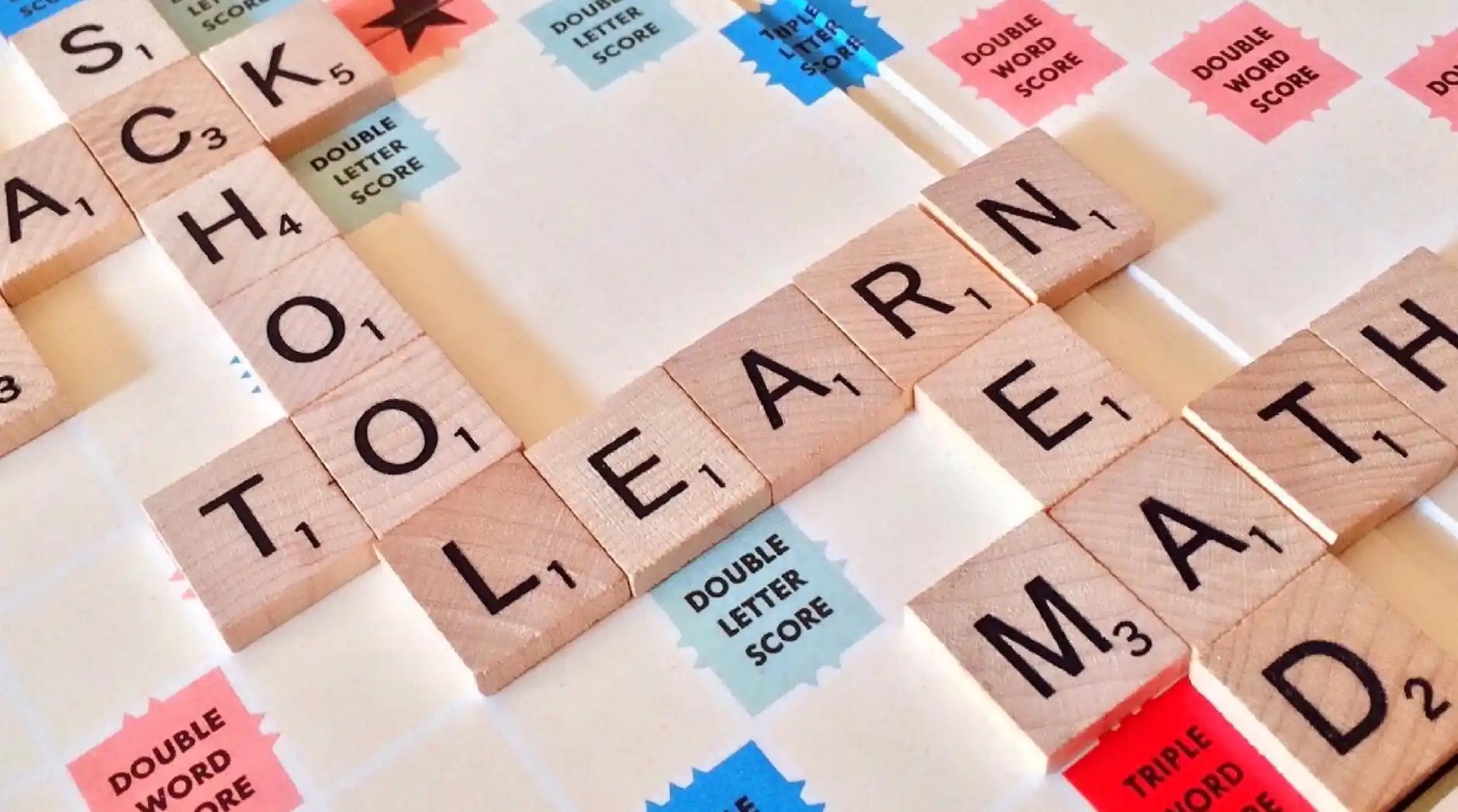
And as Gail Sherman observes, that principle operates at a pretty basic level…
There is a Royal Order of Adjectives, and you follow it without knowing what it is—a particular sequence to use when more than one adjective precedes a noun. There are exceptions, of course, because English is three languages in a trenchcoat. According to the Cambridge Dictionary, in general, the proper order is:
Opinion
Size
Physical quality
Shape
Age
Color
Origin
Material
Type
PurposeMost people couldn’t tell you this rule, but everyone follows it. If you use the wrong order, it just sounds weird. If you have a fancy new blue metal lunchbox but call it a metal new fancy blue lunchbox, people might be worried you are having a stroke…
“There is a Royal Order of Adjectives, and you follow it without knowing what it is,” from @CambridgeWords via @BoingBoing.
* Tom Stoppard
###
As we parse, we might send powerfully-phrased birthday greetings to a spare but graceful user of adjectives, Seymour Wilson “Budd” Schulberg; he was born on this date in 1914. A screenwriter, television producer, novelist, and sportswriter, Schulberg is best remembered for his novels What Makes Sammy Run? (1941) and The Harder They Fall (1947), as well as his screenplays for On the Waterfront (1954, for which he received an Academy Award) and A Face in the Crowd (1957).
As a sportswriter, Schulberg was most famously chief boxing correspondent for Sports Illustrated. He wrote some well-received books on boxing, including Sparring with Hemingway and was inducted into the International Boxing Hall of Fame (in 2002).
The son of B. P. Schulberg, head of Paramount Studios in its golden age, Budd wrote Moving Pictures: Memoirs of a Hollywood Prince, an autobiography covering his youth in Hollywood, growing up in the 1920s and 1930s among the famous.

“There are more things in heaven and Earth, Horatio, / Than are dreamt of in your philosophy”*…

Those were the days…
Ah, polo, that sport of kings, where players race down the field atop horsepowered beasts. Behold their mallets and wheels, whirling throughout the chukka; inhale the earthy scent of mown grass, leather, and gasoline; listen to those bumping bodies, as the transmission’s planetary gearset reins in speed. You’re less likely to find this game played before Pimm’s-sipping crowds, however. It is auto polo — a short-lived sport thought to have been created as an advertising stunt to sell Ford Model Ts in 1911.
Invented, or at least popularized, by the Topeka car salesman Ralph “Pappy” Hankinson, auto polo quickly spread across the United States. Five thousand people supposedly attended the first round, played between the Red Devils and Gray Ghosts on an alfalfa field in Kansas. League matches popped up in the following years, and within a decade it was possible to spectate the sport at Madison Square Garden and Coney Island. Auto polo then went international. King George V enjoyed a match in England; French teams raced around the Place de la Concorde; and touring exhibitions introduced auto polo across continental Europe…
For more background (history, rules) and more photos (from a 1912 match held at Hilltop Park, New York): “Photographs of Auto Polo (ca. 1912),” in @PublicDomainRev.
See also: Bicycle Polo.
* Shakespeare, Hamlet
###
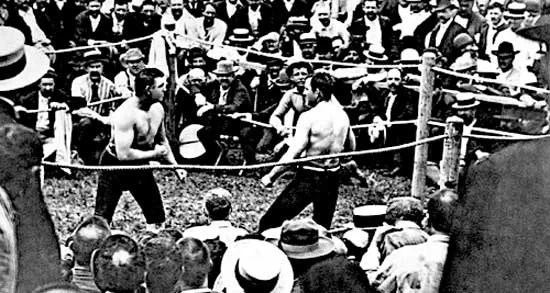
As we muse on mallets, we might recall that it was on this date in 1889 that John L. Sullivan defeated Jake Kilrain for the bare-knuckle heavyweight title at a then-undisclosed location in Richburg, Mississippi, when Kilrain’s manager threw in the towel after the 75th (1 minute) round. This was the last official bare-knuckle title fight in history as boxing adopted the Marquess of Queensberry Rules, which mandated gloves.
“To the art of working well a civilized race would add the art of playing well”*…

The results of a “play census” of Cleveland children taken on June 23, 1913, disturbed Harvard education professor George E. Johnson. “Of the 7358 children reported to have been playing,” Johnson wrote in a 1915 report on the state of children’s play in the city:
… 3171 were reported to have been playing by doing some of the following things: fighting, teasing, pitching pennies, shooting craps, stealing apples, ‘roughing a peddler,’ chasing chickens, tying cans to a dog, etc., but most of them were reported to have been ‘just fooling’ — not playing anything in particular.
We now fret over children’s overscheduled, oversupervised lives, but Johnson was convinced that what the children of Cleveland needed was more adult influence, not less. His fascinating report paints what he meant to be a dark picture of a city full of kids running wild: playing in the street, going to the movies when they pleased, and putting together loose groups for games of “scrub baseball”…
The redoubtable Rebecca Onion puts the debate over “helicopter” and “tiger” parenting into historical perspective in “Are free range kids really a good idea?”
###
As we conclude that surely there’s a middle path (and that we’ll get around to trying to find it after we finish playing), we might recall that it was on this date in 1927, in Yankee Stadium that boxers Jack Dempsey and Jack Sharkey squared off…
Dempsey’s last bout had been been a devastating decision loss to Gene Tunney in 1926 – his first competitive bout in three years and the last in which he wore the heavyweight championship belt. Feeling robbed after “the long count” and hungry to regain his championship status, Dempsey went into training to face future champion Jack Sharkey. The winner would face Tunney.
The bout did not go well for Dempsey, who by ‘27 was a shadow of his former glory. The Manassa Mauler was beaten soundly both from the outside (row 1, gif 1) and inside (row 1, gif 2 and row 2, gif 1). By the fifth round, Dempsey was sporting two cuts – one over his right eye, one under his left – and a bloody nose and mouth. Always a warrior, Dempsey refused to deviate from his game plan, locking himself into the clinch or half-clinch and delivering blows to Sharkey’s abdomen all the while Sharkey was cracking his head open.
In the sixth round, some of these blows started to go one or two inches south of the belt line – a foul that, in Dempsey’s heyday, was to be ignored (similarly, clinching is actually listed as a foul under the Marquess of Queensberry rules, but it has evolved as part of modern boxing, and fouls are very seldom called for holding). The referee warned Dempsey once in that round and again in the seventh, but when Dempsey landed another, Sharkey, who had had enough, deviated from the cardinal rule (“protect yourself at all times”) and turned his head to complain to the referee. Seeing his opponent open, Dempsey landed a short left hook to Sharkey’s jaw. Sharkey crumpled, blindsided by the unexpected punch and still suffering from Dempsey’s low blow.
The referee, who hadn’t recognized Dempsey’s body shot as low, began the count. Sharkey, clutching at his crotch, couldn’t rise in time. Dempsey had won the bout and a rematch with Tunney. Controversy abounded.
For his part, Dempsey was dismissive. “It’s all in the game,” he would later say. “What was I supposed to do, write him a letter?”
[source]

“Childhood is the sleep of reason”*…

Scene of a “crèche”– an industrial day care center– with a productive factory in the background.
The images above and below, originally printed in 1930, reflect the government’s promotion of early-childhood health and well-being in the early years of the Soviet Union. The London School of Economics Library has collected a group of these posters—half brightly-colored, half sepia-toned—in a Flickr set.
In her book about childhood in Russia during the early Soviet period, historian Lisa Kirschenbaum writes that children and childhood were ideologically important to those involved in the Bolshevik Revolution. Children had the potential to grow into ideal communists, and communal early childhood education was seen as a good way of getting all members of the rising generation to hold consistent views. (In the United States, the conservative opposition to attempts to institute government support for day care in the early 1970s often referred, obliquely or explicitly, to the communalism of Soviet child care.)
By 1930, when these images were produced, the government-supported day care (or “crèche”) was doubly politically important, since young mothers were encouraged to work. In these posters, babies that look to be about 6 months old cry “I’m bored at home!” and beg to be taken to the crèche.

L: “I’m bored at home!” R: “I’m happy in the crèche!”
More– from “how to hold a baby” to “preparation of juice from raw fruits”– at the ever-illuminating Rebecca Onion’s “Government Child Care Advice From Early Soviet Propaganda Posters.”
* Jean-Jacques Rousseau
###
As we crib up on cribs, we might recall that it was on this date in 1889 that an estimated 3,000 spectators boarded special trains for a secret location, which turned out to be Richburg, a town just south of Hattiesburg, Mississippi, to attend the Heavyweight Boxing Championship match between defender John L. Sullivan and challenger Jake Kilrain. The fight began at 10:30 p.m.; early on, it appeared that Sullivan would lose (especially after he vomited during the 44th round). But the champion got his second wind after that, and Kilrain’s manager finally threw in the towel after the 75th round. The match was the last world title bout fought under the London Prize Ring Rules— and thus, the last bare-knuckle heavyweight title bout. And it was one of the first American sporting events to receive national press coverage.

John L. Sullivan (L) and Jake Kilrain
“I’m so fast that last night I turned off the light switch in my hotel room and was in bed before the room was dark”*…

In 1978, DC Comics published an over-sized 72-page special edition entitled Superman vs. Muhammad Ali, in which the Man of Steel and The Greatest team to stave off an alien invasion.
The issue’s wraparound cover shows a host of late 1970s celebrities, including Frank Sinatra, Lucille Ball, Tony Orlando, Johnny Carson, the cast of Welcome Back Kotter, and The Jackson 5–seated amongst Wonder Woman, Batman, Green Lantern, and other DC superheroes, as well as Warner and DC employees. The original draft included Mick Jagger in the lower left corner; he was replaced by promoter Don King. See a list of those depicted here.

[TotH to Retronaut, via almaar kleiner groeien]
* Muhammad Ali, nee Cassius Marcellus Clay Jr.
###
As we float like butterflies, we might recall that is was on this date in 1948 that Joe Louis, “The Brown Bomber,” successfully defended his Heavyweight Championship against Jersey Joe Walcott. The bout between two African-American athletes was a victory over the prejudices of the time. Louis held his title for three more years before retiring; in all, Louis successfully defended his Heavyweight title 25 times from 1937 to 1948, and was a world champion for 11 years and 10 months. Both are still records in the heavyweight division, the former in any division. Walcott went on to defeat Ezzard Charles for the title on 1951, at age 37, becoming the oldest person to wear the Champion’s belt (until George Foreman won it at 45).
With Jesse Owens and Jackie Robinson, Louis is widely regarded as one of the first African American “national heroes” in the United States, and was a focal point of anti-Nazi sentiment leading up to and during World War II. He was instrumental in integrating the game of golf, breaking the sport’s color barrier in America by appearing under a sponsor’s exemption in a PGA event in 1952. Walcott went on to Hollywood (he starred with Humphrey Bogart in The Harder they Fall), then into politics– he was elected sheriff of Camden County, New Jersey in 1971– the first African-American to hold the post.

Joe Louis

Jersey Joe Walcott
You must be logged in to post a comment.