Posts Tagged ‘T.S. Eliot’
“Wear these bright jewels, belovèd Beowulf; Enjoy them”*…

The first page of the Beowulf manuscript
Beowulf, the oldest surviving epic in British literature, exists in only one manuscript– a copy that survived both the wholesale destruction of religious artifacts during the dissolution of the monasteries by Henry VIII and a disastrous fire which destroyed the library of Sir Robert Bruce Cotton (1571-1631). The 3182-line poem, now housed in the British Library, still bears the scars of the fire, visible at the upper left corner of the photograph above.
Beowulf was written in Old English (or Anglo-Saxon) between 650 and 1000 in what we now know as England. It recalls a golden age of valor and martial prowess via the adventures of a great Swedish warrior of the sixth century- Beowulf– who comes to the aid of the beleaguered Danes, saving them from the ravages of the monster Grendel and his mother. In old age, and after many years of rule in his own country, Beowulf dies in the processof heroically slaying a dragon.
A great many translations are available, in both poetry and prose. In his A Critical Companion to Beowulf, Andy Orchard lists 33 “representative” translations in his bibliography; it has been translated into at least 23 other languages. Probably the best-known (and best-loved) current version is Seamus Heaney’s verse translation. But surely the most-anticipated version is the translation completed in 1926– but never published– by J.R.R. Tolkein.
Tolkien’s academic work on the epic was second to none in its day; his 1936 paper “Beowulf: The Monsters and the Critics” is still well worth reading, not only as an introduction to the poem, but also because it decisively changed the direction and emphasis of Beowulf scholarship.
Up to that point it had been used as a quarry of linguistic, historical and archaeological detail, as it is thought to preserve the oral traditions passed down through generations by the Anglo-Saxon bards who sang in halls such as the one at Rendlesham in Suffolk, now argued to be the home of the king buried at Sutton Hoo.Beowulf gives a rich picture of life as lived by the warrior and royal classes in the Anglo-Saxon era in England and, because it is set in Sweden and Denmark, also in the period before the Angles, Saxons and Jutes arrived on these shores. And, on top of the story of Beowulf and his battles, it carries fragments of even older stories, now lost. But in order to study all these details, academics dismissed as childish nonsense the fantastical elements such as Grendel the monster of the fens, his even more monstrous mother and the dragon that fatally wounds him at the end.
Likening the poem to a tower that watched the sea, and comparing its previous critics to demolition workers interested only in the raw stone, Tolkien pushed the monsters to the forefront. He argued that they represent the impermanence of human life, the mortal enemy that can strike at the heart of everything we hold dear, the force against which we need to muster all our strength – even if ultimately we may lose the fight. Without the monsters, the peculiarly northern courage of Beowulf and his men is meaningless. Tolkien, veteran of the Somme, knew that it was not. “Even today (despite the critics) you may find men not ignorant of tragic legend and history, who have heard of heroes and indeed seen them,” he wrote in his lecture in the middle of the disenchanted 1930s…
Read more of John Garth’s appreciation– and explore the influence of Beowulf on Middle Earth– in “JRR Tolkien’s translation of Beowulf: bring on the monsters.”

And pre-order the translation (with a bonus story by Tolkein), available late next month, here.
* Beowulf
###
As we grapple with our Grendels, we might recall that it was on this date in 1958 that Ezra Pound should no longer be held at St. Elizabeth’s Hospital for the criminally insane in Washington, D.C. Pound has been imprisoned for 13 years, following his arrest in Italy during World War II on charges of treason.
Pound, a poet who was a major figure of the early modernist movement, was the developer of the “Imagist” school, and the “godfather” of a number of now-well-known contemporaries– among them, T. S. Eliot, James Joyce, Robert Frost and Ernest Hemingway. He was responsible for the 1915 publication of Eliot’s “The Love Song of J. Alfred Prufrock” and the serialization from 1918 of Joyce’s Ulysses.
Deeply troubled by the carnage of World War I, Pound moved to Paris, then to Italy, and embraced the fascism of Benito Mussolini, whose policies he vocally supported; he was arrested by American forces in Italy in 1945. While in custody in Italy, he had begun work on sections of The Cantos that became known as The Pisan Cantos (1948), for which he was awarded the Bollingen Prize in 1949 by the Library of Congress… setting off an enormous controversy.
His release in 1958 was the result of a campaign by writers including Archibald MacLeish, William Carlos Williams, and Hemingway. Pound, who was believed to be suffering dementia, returned to Italy.
The best of Pound’s writing – and it is in the Cantos – will last as long as there is any literature.
-Ernest Hemingway

Reasons to worry…

F. Scott Fitzgerald with his wife, Zelda and their daughter, "Scottie"
Having headed East with a post featuring Lists of Note, it seems only right to return with one revisiting our old friend, Letters of Note, which features this missve from F. Scott Fitzgerald to his daughter:
La Paix, Rodgers’ Forge
Towson, MarylandAugust 8, 1933
Dear Pie:
I feel very strongly about you doing duty. Would you give me a little more documentation about your reading in French? I am glad you are happy — but I never believe much in happiness. I never believe in misery either. Those are things you see on the stage or the screen or the printed pages, they never really happen to you in life.
All I believe in in life is the rewards for virtue (according to your talents) and the punishments for not fulfilling your duties, which are doubly costly. If there is such a volume in the camp library, will you ask Mrs. Tyson to let you look up a sonnet of Shakespeare’s in which the line occurs “Lillies that fester smell far worse than weeds.”
Have had no thoughts today, life seems composed of getting up aSaturday Evening Post story. I think of you, and always pleasantly; but if you call me “Pappy” again I am going to take the White Cat out and beat his bottom hard, six times for every time you are impertinent. Do you react to that?
I will arrange the camp bill.
Halfwit, I will conclude.
Things to worry about:
Worry about courage
Worry about Cleanliness
Worry about efficiency
Worry about horsemanship
Worry about. . .Things not to worry about:
Don’t worry about popular opinion
Don’t worry about dolls
Don’t worry about the past
Don’t worry about the future
Don’t worry about growing up
Don’t worry about anybody getting ahead of you
Don’t worry about triumph
Don’t worry about failure unless it comes through your own fault
Don’t worry about mosquitoes
Don’t worry about flies
Don’t worry about insects in general
Don’t worry about parents
Don’t worry about boys
Don’t worry about disappointments
Don’t worry about pleasures
Don’t worry about satisfactionsThings to think about:
What am I really aiming at?
How good am I really in comparison to my contemporaries in regard to:(a) Scholarship
(b) Do I really understand about people and am I able to get along with them?
(c) Am I trying to make my body a useful instrument or am I neglecting it?With dearest love,
Daddy
P.S. My come-back to your calling me Pappy is christening you by the word Egg, which implies that you belong to a very rudimentary state of life and that I could break you up and crack you open at my will and I think it would be a word that would hang on if I ever told it to your contemporaries. “Egg Fitzgerald.” How would you like that to go through life with — “Eggie Fitzgerald” or “Bad Egg Fitzgerald” or any form that might occur to fertile minds? Try it once more and I swear to God I will hang it on you and it will be up to you to shake it off. Why borrow trouble?
Love anyhow.
As we wonder if Fitzgerald actually used the lanyard that Scottie wove, we might recall that it was on this date in 1917 that Virginia and Leonard Woolf founded the Hogarth Press, named for their house on Richmond, where they launched the endeavor. Originally an outlet for their hobby of hand-printing books, Hogarth Press ultimately became the publisher of many fellow members of the Bloomsbury Group, and became a leading outlet for books on (then-emerging field of) psychoanalysis and for translations of foreign (especially Russian) works. It published the first U.K. edition of Eliot’s The Waste Land and Laurens van der Post’s earliest work.
 “Hogarth House,” 34 Paradise Road, Richmond, London
Inheriting the Wind*…
From DetentionSlip.com (“your daily cheat sheet for education news”), a sobering infographic on the state of education in the U.S., “Creationism vs. Darwinism in the U.S.”; an excerpt:

Click here to see the infographic in full (and then again on the image there, to enlarge).
* Inherit the Wind, the play (then movies) that fictionalized the Scopes trial, took it’s title from Proverbs 11:29, which (in the King James version) reads:
He that troubleth his own house shall inherit the wind:
and the fool shall be servant to the wise of heart.
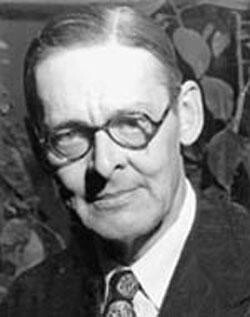
As we own up to ontology, we might might recall that it was on this date in 1950 that T.S. Eliot, then 62, observed that “the years between 50 and 70 are the hardest. You are always being asked to do things, and yet are not decrepit enough to turn them down.” Among those nagging tasks: picking up his Nobel Prize for literature two years earlier.
Signs are taken for wonders. “We would see a sign!”
The word within a word, unable to speak a word,
Swaddled with darkness.
– “Gerontion”
Making ends meet…

Most readers will know that Charlotte Bronte spent most of her daylight hours in service as a governess, and long-time (pre-blog) readers may remember that, in his capacity as Postal Surveyor, Anthony Trollope invented the iconic British “pillar box”… but did one know that T.S. Eliot toiled as a bank clerk? Or that Henry Fielding, the creator of the ribald Tom Jones, sat as a Magistrate?
Happy, Lapham’s Quarterly has provided a helpful chart: Day Jobs.
As we turn again to that unfinished screenplay, we might recall that it was on this date in 1827 that John Walker, a chemist from Stockton-on-Tees, recorded the first ever sale of friction matches; Walker had accidentally created them the prior year by mixing potassium chlorate and antimony sulfide. He recorded the first sales as “Sulphurata Hyper-Oxygenata Frict,” but by the second sale (five months later), he was getting the hang of naming: “friction lights.”

That Obscure Object of Definition…
Via friend P deV, the “obscure unit of the week: Bohr magnetons per angstrom”…
In explaining their (pretty remarkable) findings that magnetism can, in some circumstances, behave like electricity— “magnetricity” if one will– scientists from the London Centre for Nanotechnology invoked evidence denominated in what has to one of the rarer metrics around: Bohr magnetons per angstrom.
But worth understanding, as the observation suggests that it may be possible to create units of digital storage one magnetic monopole large– that’s to say, about the size of an atom. As lead investigator Steven Bramwell said (with typical British understatement), “monopoles could one day be used as a much more compact form of memory than anything available today.”
 Individual magnetic ‘charges’ – equivalent to the north and south poles of a magnet – have been observed inside a crystalline material called spin ice (Image: STFC)
See the New Scientist report here; and more on the discovery at Next Big Future, here.
As we practice our scales, we might recall that it was on this date in 1948 that the Nobel Prize in Literature was awarded to T.S. Eliot, who undermined the need for more storage when he observed that “the most important thing for poets to do is to write as little as possible.”

You must be logged in to post a comment.