Posts Tagged ‘drug industry’
“For many Americans, the cost of one drug is the difference between life and death, dignity and dependence, hope and fear”*…
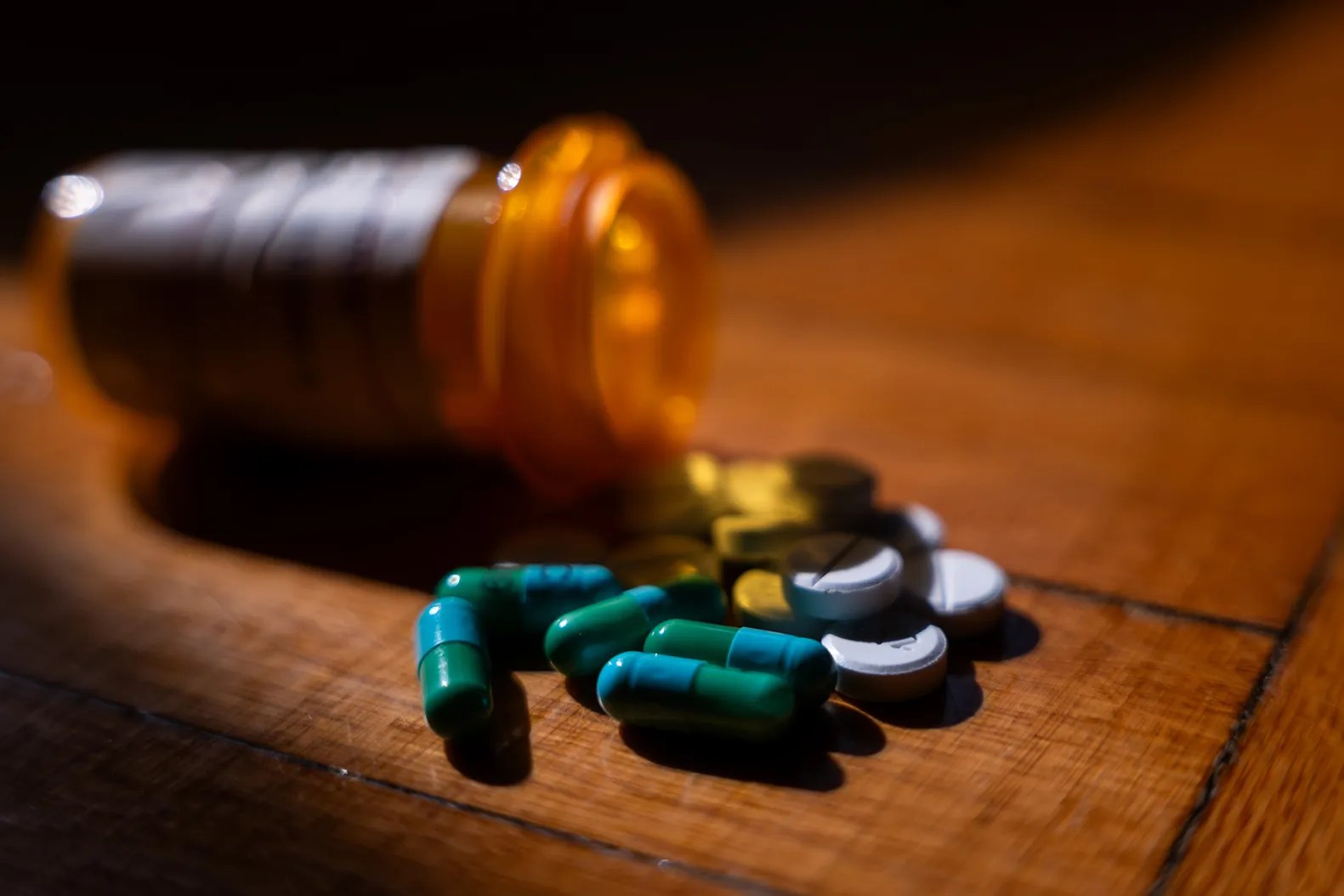
Longtime pharmaceutical executive Amal Naj laments the woeful state of the industry and calls for new leadership to win back public trust…
Some two decades ago, when I mentioned what I did for a living — manufacturing and marketing a wide range of prescription drugs — it elicited appreciative reactions from acquaintances. “I take your products every day,” a number of them would offer; others would mention how a specific medicine had made all the difference to their health and would ask whether a more advanced treatment was in the works; some simply marveled at the industry’s innovations as nothing less than miracles. Then there were some who teased: “Good business; you can charge whatever price.” I considered the quip an acknowledgment that lifesaving discoveries were worth the money. Pharma Man, they called me. It seemed to confer a certain respectability, of the sort reserved for a physician or a scientist or a teacher. There was a presumption in it, too, that I lived by certain ideals and ethics demanded of such an avocation. I was proud of being a Pharma Man.
Alas, I have now slipped precipitously in their eyes. I am seen as an avaricious man inexorably exploiting the misery of fellow human beings for profit — by inventing one new magic potion after another for which they cannot afford not to pay my price, because the only alternative would be pain and suffering, even death. My onetime champions have grudgingly tolerated this collective subjugation for years. But not anymore. Their festering anger has now broken into an open rebellion against the Pharma Man, the benevolent oppressor.
The recent murder of UnitedHealthCare CEO Brian Thompson in cold blood, a heinous and deplorable expression of this growing rebellion, cannot be condoned in any way. But the health care landscape is littered with provocations against the Pharma Man which play out daily on national television, in the newspapers, and on social media.
The Pharma Man’s reputation is only going to get worse as President-elect Donald Trump takes office and tries to fulfill his promise to bring down drug prices. And there is the specter of Robert F. Kennedy Jr. bringing his unconventional ideas to American health care in the new Trump administration; he has already publicly called for capping drug prices. Ironically, it had been the Democrats who made the industry — a financial hotbed of Republican support — a whipping boy in blaming America’s failure to deliver affordable health care to its citizens. But Mr. Trump has outshouted them all. He famously declared that pharma companies were “getting away with murder” and singled out Pfizer Inc. and publicly shamed the company and forced the CEO to roll back planned price increases.
As I watched Mr. Trump tower over the CEO at a White House appearance and later triumphantly declare the result of his disciplinary action, I was reminded of my school days when the headmaster would hoist a student by the collar to make the truant admit culpability in front of the class. It was humiliating for the Pharma Man, for I once worked at the company, proud of its pioneering history and its roster of some of the world’s most impactful medicines, a company that would go on to save millions of lives with its Covid-19 vaccine during the pandemic.
But the Pharma Man has earned this new reputation, and then some…
[Naj recounts (some of) the industry practices that have contributed to its fall from grace– familiar, but still striking…]
… It is baffling to me that we as an industry haven’t stepped out in front of the groundswell of national outrage and undertaken systemic changes to our business practices. We continue to conduct our business on the strength of our power over our customers, a power we derive from our possession of the inventions that prevent and treat and cure and which our customers cannot do without. That’s like possessing Tolkien’s One Ring, which gives the possessor unassailable power to rule over and dominate others. We set the price we want. We can cast our spell on doctors to prescribe our medicine and do our bidding. We can banish competitors who attempt to lay claim to our Ring of Power. We have institutionalized this leverage in our business, all the way from drug discovery and development to marketing and sales and distribution. This underpinning of the industry’s colossal machinery is rigged against the patient. No one in the leadership of the pharma industry has raised a voice, let alone stepped up to act, to alter this unfair state endured by their very own customers; it seems there are no hobbits in the industry ready to undertake the treacherous journey to Mount Doom in a quest to destroy the Ring.
We refuse to see how our customers see our business. In their minds, we owe our existence to their misfortunes and mishaps: the unexpected cancer, the heart that suddenly fails, the pancreas that fails to produce enough insulin. Our customers turn to us to help them deal with these events of life and living. Although they know it takes a lot of money and time to come up with a treatment, they also expect the pharma company to make it available to them at an affordable price. After all, they argue, axiomatically, the drug was specifically developed to serve their need, brought on by their unfortunate luck.
They volunteer in tens of thousands, sick and healthy, for a new drug to be tested on them so the company can prove it works and is safe; some can die from the potential side effects. They are the ones who help create the market for the drug. And to dangle it in front of them but out of their reach by charging unaffordable prices is unconscionable. It is hard to argue against that view: the symbiotic existence between our enterprise and our customers imposes a business — not to mention a moral — obligation on us to make the drug affordable to the patient who was instrumental in the development of the treatment in the first place. We also should not ignore the fact that the U.S. government helps out drug development with taxpayer dollars.
Unfortunately, our customers cannot rely on market forces for what the pharma companies won’t offer: a fair deal. Car companies, with their zillion features, battle among themselves to win over customers, and any and all of their cars, irrespective of their features, deliver the same result: transporting the buyer from one place to another. One can purchase any smartphone on the market and it will make the call, send messages, browse the web. But when it comes to drugs, the consumer doesn’t necessarily have alternative choices.
Take, for instance, the cholesterol-lowering drugs, known as statins. Among the seven or so statins developed so far, the most prescribed ones are atorvastatin (Lipitor), rosuvastatin (Crestor), and simvastatin (Zocor). Each statin has its own distinct efficacy and side effects, even though they all lower cholesterol. Physicians prescribe one statin or another based on patient condition and the desired outcome. In effect, the market of cholesterol-lowering agents gets divided into distinct segments of therapy, each offering just one single statin. Within each segment there is no competition to speak of (until the patent expires, allowing the entry of copies of the product, the so-called generics). Although the manufacturers compete with their sales and marketing campaigns to recruit patients to their respective statins, this sort of “competition” doesn’t significantly influence the price, as each product is viewed as distinct and un-substitutable, something that the manufacturers take pains to establish with their scientific papers and promotional materials.
We are known to shamelessly exploit these monopolistic powers. When we lose a patent on a drug, we pay off competitors to keep them from entering the market. (The Federal Trade Commission estimates that these anticompetitive tactics cost consumers and taxpayers $3.5 billion in higher drug costs every year.) Most commonly, we tend to extend patents with minor variations on the original drug, such as a new coating or a slight change in the formulation — this is called evergreening — which offer little or no additional benefits to the patient. (Some 78 percent of the patented drugs marketed between 2005 and 2015 are not new drugs, according to a study published in the Journal of the Law and the Biosciences in December 2018.)…
… A large truth is that our drug pricing is heavily influenced by our single-minded obsession with keeping our shareholders — not patients — happy. This is not unique to the pharma industry; delivering “shareholder value,” the appreciation of the company’s stock price, is an operational mantra of corporations across industries. Whatever earnest exercise a pharma company goes through to set drug prices based on R&D, manufacturing, marketing, and other costs, at the end of the day this is all swept aside by the pressures to achieve quarterly and annual sales and profit targets. Executives’ bonuses are tied to achieving these performance metrics, and their stock grants and options deliver additional riches when the company’s stock appreciates.
The pressures to serve the shareholder have only intensified in the past decade as the health care industry has become a sought-after vehicle for investors for the safe and steady and stellar returns it offers. Pharmaceuticals’ net profit margins are in the range of 15 to 20 percent, compared to 4 to 9 percent for large non-drug companies. A single successful drug can generate billions of dollars in sales, some as much as $15 billion or more annually. Many of our single pills, if incorporated into a company, would rank among the Fortune 500 companies.
Investors bet on our drugs long before they reach the market. They pore over scientific papers and decipher results of early-stage clinical trials of a drug with the zeal of a geologist prospecting for oil. They swarm medical and scientific conferences where the latest findings and opinions about a drug’s progress are presented. Living up to their expectations or, better yet, exceeding them becomes a high priority for companies setting their future financial performance targets. The patient is nowhere in the picture; few in executive suites agonize over whether to lower a price by 10 or 15 percent so many more patients can afford the drug.
The concept of affordability is not an operational imperative in the business, largely because top executives rarely interact with customers — the patients — to be sensitized to their needs, their plight really. In the car and smartphone industries, senior executives go around shaking hands with their customers and host regular conventions to take the pulse of their customers’ desires. In pharmaceuticals, a typical CEO’s calendar is filled with meetings with Wall Street analysts and fund managers, and the job of interacting with the customer is left to prescribing physicians, whom sales reps regularly badger with sales pitches.
But these prescribers we rely on to do our bidding with patients have lost public trust. The opioid crisis exposed a large number of doctors accepting bribes, as much as $100,000 a year, and sexual services to push sales. Although this is the most publicized example of corruption among doctors, there are many others that haven’t drawn much public attention. Nearly all Big Pharma companies have paid fines, some multiple times, to settle charges of bribing doctors. In 2013, Johnson & Johnson agreed to pay more than $2.2 billion in fines to settle charges that it had improperly promoted an antipsychotic drug; the government alleged that the company had paid “speaker fees to doctors to influence them to write prescriptions” and that its sales representatives “told these doctors that if they wanted to receive payments for speaking, they needed to increase” their prescriptions of the drug…
… n the pharmaceutical industry, influence peddling goes much deeper, to the very core of its business — the research and development — unlike in any other industry. Companies recruit leading researchers and academics to guide them during drug development, and to publicly pronounce their expert opinions in medical journals once the drug is successfully launched to the public. As critical as this alliance is to the successful development of a drug, it is now widely questioned because of these influencers’ financial ties to pharmaceutical companies.
ProPublica, a non-profit investigative journalism organization, has exposed several leading researchers and academics for accepting money from pharmaceutical companies which they didn’t disclose — or did so falsely — in connection with the scientific articles they published, some in prestigious journals like the New England Journal of Medicine and The Lancet. Among the prominent researchers ProPublica cited was the chief medical officer of Memorial Sloan Kettering Cancer Center, the nation’s leading cancer institute; he bullishly pitched to the investment community a new cancer treatment being developed by Roche without disclosing his financial ties to the company… If you want to find out if your doctor is receiving any money — how much and for what — from a company whose drug he or she is prescribing to you, you can go to the website Dollars for Docs and type in the name of the doctor. The site is the brainchild of ProPublica. It brings to mind the comparison with the U.S. Justice Department’s National Sex Offender Registry for the identity and location of known sex offenders.
In a world where doctors and researchers and medical academics all work as an army of influencers, the patient exists only as the customer to be influenced. It is a most peculiar aspect of our industry that we market our products to doctors (who help generate sales for us but don’t pay for the products) and we sell to our actual customers, the patients (who pay but have no control over the price they pay). Who decides the price? A very small group of wholesalers called pharmacy benefits managers (PBMs), owned by large insurers — CVS Health (which owns Aetna), Cigna, Humana, and UnitedHealthCare — that have been accused of padding their own profits at the cost of the patients they insure. These middlemen buy drugs on behalf of government and private employers and insurance companies. They negotiate prices with the pharma companies.
It may sound bewildering that the customers who pay for the drugs cannot negotiate directly with the manufacturers, unlike in the rest of the world. Even Medicare, the country’s largest health plan, covering 60 million Americans, can’t. In effect, the market forces of supply and demand — the backbone of all other commerce in America — are shielded from each other by the opaque wall of the middlemen. Imagine if the price of your car or a smartphone were negotiated by a handful of middlemen and you had no choice but to pay.
Today, 44 percent of Americans are either uninsured or underinsured; a 2021 national survey estimated that 46 million people couldn’t afford quality health care. Such news fails to register as profoundly worrisome in the psyches of pharmaceutical executives, largely because they are shielded from the customer by the systemic structure of the industry. Reports in the morning papers of patients unable to buy a lifesaving drug — like the news of Americans with diabetes struggling to procure high-priced insulin — might as well be the day’s weather report to them. Stories of struggles from further afield, like distant corners of Asia and Africa, where patients die because they can’t afford a blood pressure or cancer medicine, have even less of a chance of stirring the collective conscience of the industry.
I am often asked if I think drug prices are high, in the sense that they are unreasonable and exploitative. I’ve had difficulty answering the question in the past with a definitive yes or no, because many of the drugs have had such a profound impact in banishing diseases and prolonging healthy life. Their discovery didn’t come easy. I would respond that the prices reflected the cost of innovation, but that they could be lower. That conditional justification is harder to make these days.
More than 80 percent of the prescription drugs sold in the U.S. are generics, copies of patent-expired drugs. As copies, they have very low development costs. Their main costs lie in raw materials and manufacturing. And that cost is a fraction of the price the consumer currently pays for generics. I should know, because I manufacture many of them. For instance, a box of 30 five-milligram tablets of amlodipine, one of the most prescribed blood pressure medications, costs less than 30 cents to manufacture, and retails for $7 to $8.90 online and in U.S. drugstores, ostensibly discounted from $20 to $30. Simvastatin, a commonly prescribed cholesterol-lowering medication, costs less than 40 cents for a pack of 30 20-mg tablets; it sells at $7.87 to $22.28, discounted from $12 to $30. Even after adding the cost of marketing and distribution, the selling prices of these drugs are astronomical.
The consulting firm Pharmacy Benefit Consultants, which provides prescription coverage services to private and government employers, says the average wholesale prices — before the drug is sold to the patient — have been rising at “shocking rates.” Between the beginning of 2017 and March of 2018, it reports, the average wholesale prices of 450 drugs increased by between 25 and 100 percent. They included sharp increases for branded drugs that lost patents many years ago, such as 19.8 to 31 percent for Zoloft, which lost its patent in 2006, and 31.1 percent for Lipitor, which lost its patent in 2011…
… That is pathetic. Because the genesis of the modern pharma industry is anchored on the idea of delivering medicine at affordable costs. Inventors of insulin and antibiotics — the two most seminal discoveries in pharmaceuticals — refused to patent their inventions so everyone would have access to these lifesaving drugs at low costs. That mission seems not to have inspired the modern-day leaders in the slightest…
It is time for us to step up and make ourselves accountable to our customers, or else it will inevitably be done for us…
An insider calls foul: “The Pharma Man’s Negative Reputation is Fair,” from @rollingstone.com.web.brid.gy. Eminently worth reading in full.
Apposite: How the intent of a prescription drug program meant for the needy has been perverted: “How a Company Makes Millions Off a Hospital Program Meant to Help the Poor” (gift article)
###
As we heal the healers, we might send healthy birthday greetings to Charles Value Chapin; he was born on this date in 1856. A physician and epidemiologist, he was a pioneer in American public health. He co-founded in first bacteriological laboratory in the U.S. (in 1888) in Providence, were he was Superintendent of Health– a position he held for 48 years. In 1910, he established Providence City Hospital where infectious disease carriers could be isolated under aseptic nursing conditions; his success inspired similar health control measures throughout the U.S. A professor (at Brown) and prolific writer, his impact on health policy and practice was so broad that he was hailed as “the Dean of City Public Health Officials.”

You must be logged in to post a comment.