Posts Tagged ‘book shops’
“Those of us who read because we love it more than anything, feel about bookstores the way some people feel about jewelers”*…

Your correspondent is certainly among that number; bookstores– and libraries– are at the center of my mental map of civilization. So imagine my surprise when Alex Leslie delivered data demoting book shops in the literary hierarchy…
A lot of ink has been spilled over the decline of the dedicated bookstore – stores dedicated “just” or primarily to selling books – amid the rise of online retailers and e-readers in the 21st century. Yet dedicated bookstores were often not the main source of books in the U.S. historically. In fact, that market role was highly contested over the last two centuries.
In the early 20th century, a consumer could buy books from many different types of retailer. The specific focus, stock, clientele, and consumer experience of these different retailer types varied significantly and did much to shape the relationship between consumers (or readers) and books. In this richly varied market, the dedicated bookstore was outplayed on multiple fronts…
[Leslie brings the receipts…]
… Perhaps the most striking aspect of their position in the book retail market is how unstriking it is. Dedicated Bookstores represented a significant 7.5% of Lippincott’s revenue, yet they trailed behind News companies and Department Stores (Fig. 1). They carried less purchasing power at the individual level, where they fell in the middle of the pack behind less-common yet higher-volume retailer types like Foreign, Medical, and even Religious (Fig. 2). And while Bookstores were easily the second-most-common retailer of books, only 9% bought directly from Lippincott’s—meaning that they weren’t especially consistent either (Fig. 3).
Dedicated Bookstores were a major player in the book ecosystem, but they did not define it. They competed in a tight market where other retailer types beat them on affordability, breadth of location, specialized subject matter, and high-margin editions. In this context, dedicated Bookstores could all too easily become jacks of all trades and masters of none. A majority of Americans got their books from other retailers, and this was not entirely due to a lack of dedicated Bookstores in many towns: it also stemmed from a lack in dedicated Bookstores’ business model, a lack which continued to plague them into the 21st century even as they became more ubiquitous. For all our platitudes about the power of books writ large or reading as a single hobby, books seem to be less of a unifying force in their own right than the subjects they concern or the experiences they complement…
Still, I love them: “The Dedicated Bookstore Predicament,” from @azleslie.
* Anna Quindlen
###
As we browse, we might spare a thought for Count Lev Nikolayevich Tolstoy (known in English as Leo Tolstoy); he died on this date in 1910. A writer whose works adorn most bookstores, he is considered one of the greatest authors of all time. (He received nominations for the Nobel Prize in Literature every year from 1902 to 1906 and for the Nobel Peace Prize in 1901, 1902, and 1909, but never won. After one slight, August Strindberg and dozens of other authors and artists issued a proclamation shaming the Nobel Committee.)
Tolstoy is best known for War and Peace (1869) and Anna Karenina (1878), widely regarded as pinnacles of realistic fiction. In the late 1870s, after a profound moral crisis, followed by what he regarded as an equally profound spiritual awakening, he became a fervent Christian anarchist and pacifist. His ideas on nonviolent resistance, expressed in such works as The Kingdom of God Is Within You (1894), had a profound impact on such pivotal 20th-century figures as Mahatma Gandhi, Martin Luther King Jr., and Ludwig Wittgenstein.

“A good bookshop is just a genteel Black Hole that knows how to read”*…
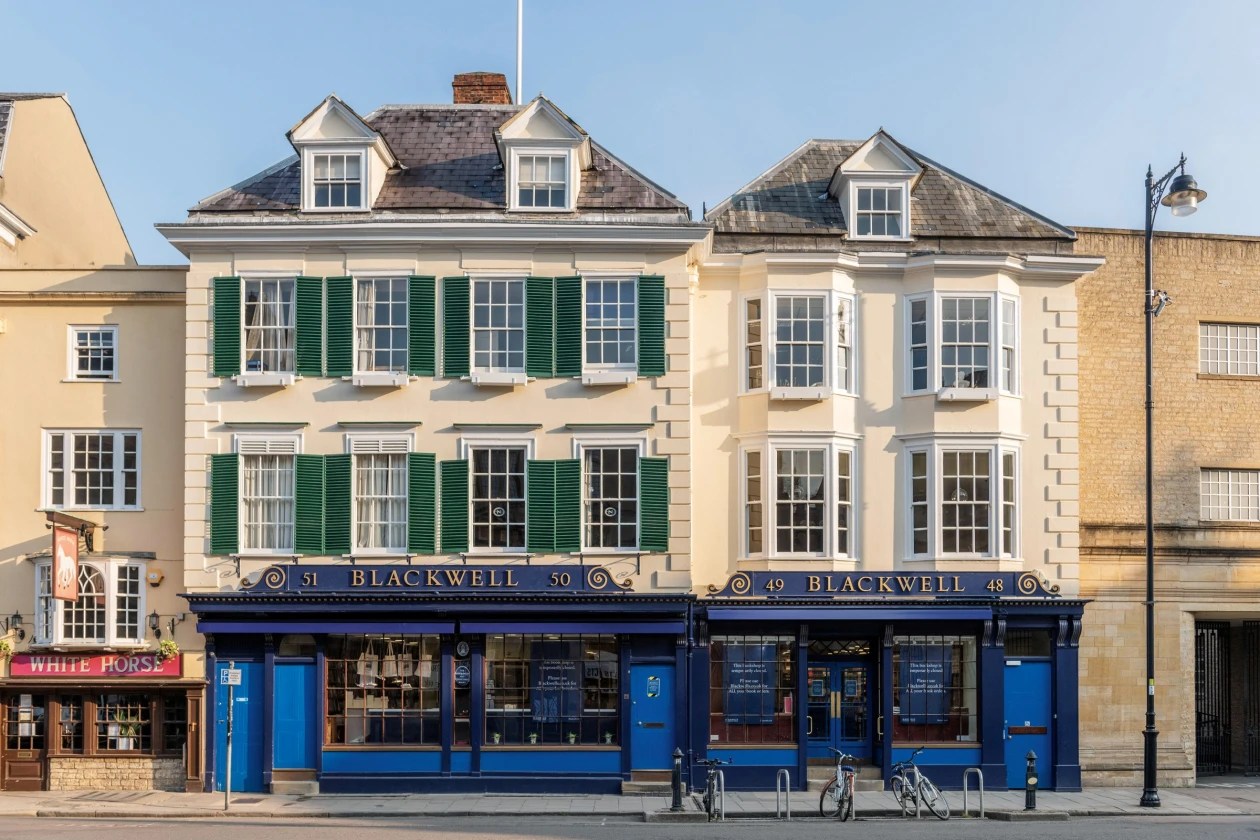
FT writers nominate awe-inspiring places to get your literary fix, from Mumbai to Buenos Aires…
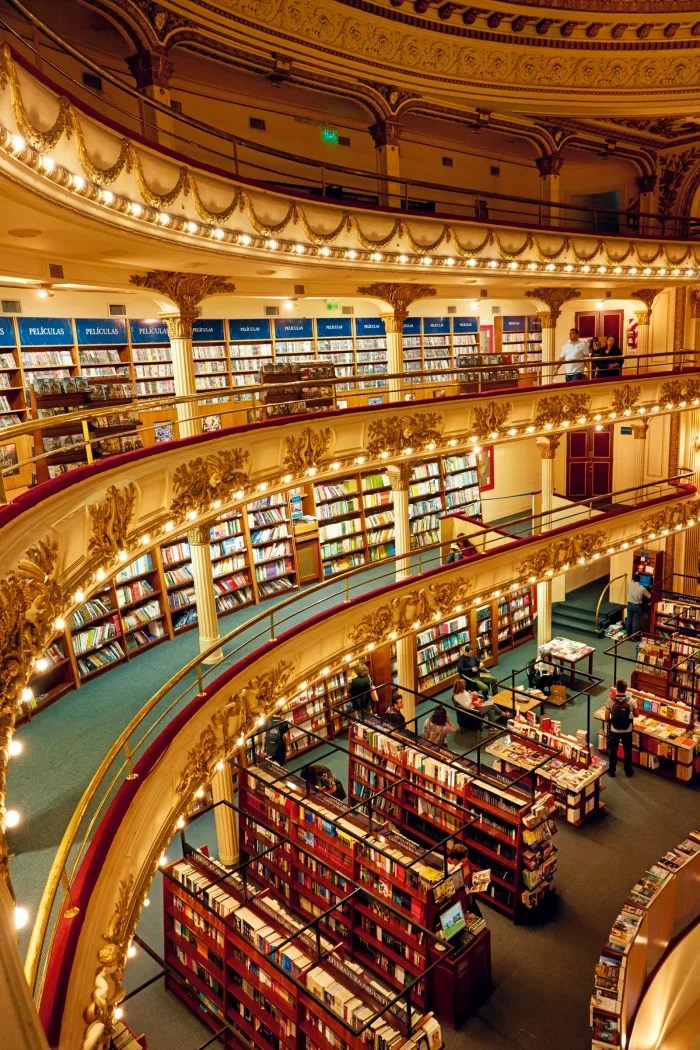
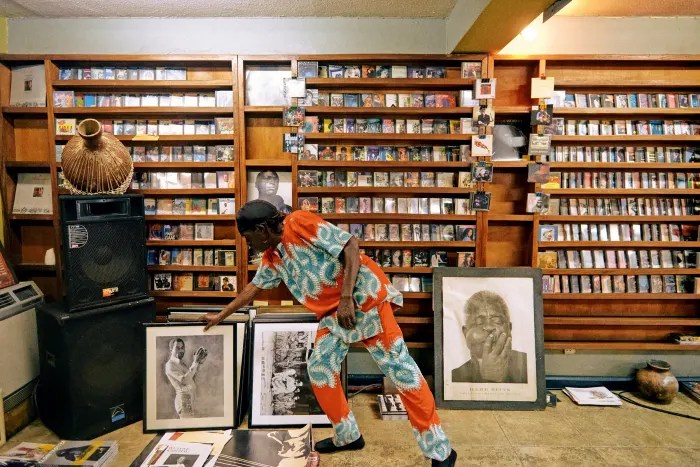
And so many more: “The most brilliant bookshops in the world.”
* Terry Pratchett
###
As we browse, we might recall that it was on this date in 1938 that the Mercury Theater broadcast the Halloween episode of their weekly series on the WABC Radio Network, Orson Welles’ adaptation of H.G. Wells’ War of the Worlds. The first two-thirds of the show (which was uninterrupted by ads) was composed of simulated news bulletins… which suggested to many listeners (a huge number of whom joined in progress, after tuning over from the Edgar Bergen show on NBC) that a real Martian invasion was underway.
While headlines like the one below suggest that there was widespread panic, research reveals that the fright was more subdued. Still there was an out-cry against the “phony-news” format… and Welles was launched into the notoriety that would characterize his career ever after.

“A bookstore is one of the only pieces of evidence we have that people are still thinking”*…

A market doubles as a bookstore in Obidos, Portugal
What makes a book town?
It can’t be too big—not a city, but a genuine town, usually in a rural setting. It has to have bookshops—not one or two, but a real concentration, where a bibliophile might spend hours, even days, browsing. Usually a book town begins with a couple of secondhand bookstores and later grows to offer new books, too.
But mostly, they have a lot of books for sale…
Tour some of the world’s best at “Book Towns Are Made for Book Lovers.”
* Jerry Seinfeld
###
As we browse in bliss, we might send a combo birthday and St Patrick’s Day greeting to Catherine “Kate” Greenaway; she was born on this date in 1846. Creator of books for children such as Mother Goose (1881), Little Ann (1883), & The Pied Piper of Hamelin (1889), she was one of the most the most accomplished illustrators of her time– and the inspiration for The Kate Greenaway Medal, awarded annually by the Chartered Institute of Library and Information Professionals in the U.K. to an illustrator of children’s books.

Greenaway’s illustration of the Pied Piper leading the children out of Hamelin; for Robert Browning’s version of the tale.

You must be logged in to post a comment.