Posts Tagged ‘cultivation’
“The duty of a good Cuisinier is to transmit to the next generation everything he has learned and experienced.”*…

Five years ago, we marked the passage of Lynn Olver, a reference librarian who pretty much single-handedly created and maintained The Food Timeline: history of human eating habits for 20,000 years. Worried that her life’s work might lie fallow and spoil, her family was searching for a new host.
Happily, one was found. Later in 2020, Virginia Tech University Libraries and the College of Liberal Arts and Human Sciences (CLAHS) offered Virginia Tech as a new home for the physical book collection and the web resource– and the site lives on…
Ever wonder how the ancient Romans fed their armies? What the pioneers cooked along the Oregon Trail? Who invented the potato chip…and why? So do we!!! Food history presents a fascinating buffet of popular lore and contradictory facts. Some experts say it’s impossible to express this topic in exact timeline format. They are correct. Most foods are not invented; they evolve…
Dive into “The Food Timeline,” courtesy of @vtliberalarts.bsky.social.
See also (the source of the almanac entry below) chef James T. Ehler‘s marvelous FoodReference.com– “on this date” history and more.
(Image above: source)
###
As we dig in, we might send healthy birthday greetings to Gilbert Blane; he was born on this date in 1749. A Scottish physician who served on the Sick and Wounded Board of the Admiralty, he instituted health reform in the Royal Navy. Perhaps most memorably, he was largely responsible for requiring citrus juice (lemons, later limes) on all naval vessel to prevent scurvy.

“Who is to say plutonium is more powerful than, say, rice?”*…
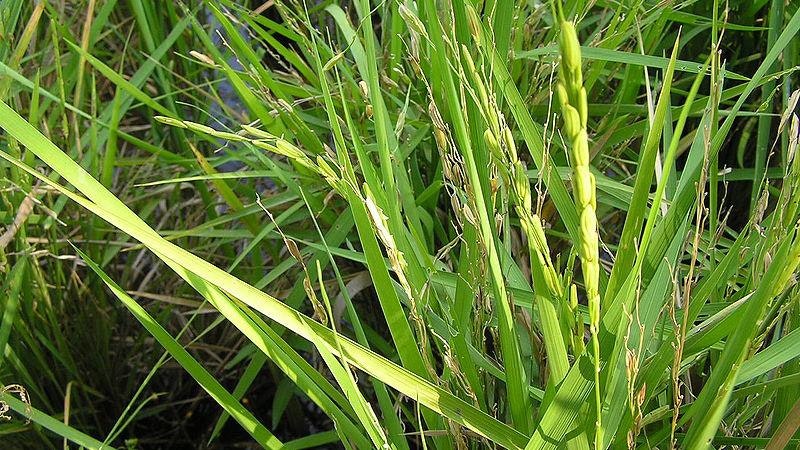
Rice is the most valuable agricultural commodity on the planet. Hundreds of millions of metric tons of it are produced every year, an amount valued at more than $300 billion every year. Billions of people around the world rely on it as a staple of their diets, and have done so for millennia all over East, Southeast, and South Asia, and beyond.
But the rice that’s so popular today has a distinct beginning as a cultivated crop, a beginning that arrived somewhere along the Yangzi River more than 10,000 years ago. (The rice traditionally grown in West Africa, and which was brought across the Atlantic by enslaved people and merchants in the early modern period, stems from a separate domestication event. It’s not as productive as its Asian cousin, and so is less widely cultivated now.)
Ten millennia in the past, rice grew a bit beyond its current range thanks to slightly warmer and wetter climatic conditions at the dawn of the Holocene. The people living around the Yangzi River, and slightly to the north of there, were quite happy to use the stands of wild rice growing in their homeland. Grasses might not seem like the most natural food source for people to exploit, because it requires a great deal of processing (grinding, cooking, etc.) to make it edible. As part of a forager’s diet, however, it offered advantages: It was plentiful, it was reliable when other food sources like wild game came up short, and if properly stored, it could last for years.
Around the Yellow River, northern China’s key waterway, rice didn’t grow. Millet, however, grew in abundant quantities. As their counterparts had done further to the south with rice, the inhabitants of northern China learned to process it. A couple of thousand years of experimentation led from simply collecting wild grasses wherever they were found to planting wild varieties in gardens and fields, then intentionally and unintentionally selecting for traits to make those grasses more productive and less likely to fall off the stalk. Farmers created their crops, the ancestors of the foods we eat today, and the increasing viability of the crops created farming as a way of life.
For a variety of reasons, successful farmers tend to have large numbers of children, who expand outward from their core areas, taking their way of life with them. This process of demic diffusion defines most centers of early agricultural innovation around the world. Farming begets more farmers, who tend to spread out. For this reason, Neolithic China – an environment home to not one but two distinct agricultural traditions – produced a stunning diversity of early farming cultures. Starting around 7000 years ago, after 5000 BC, these farming cultures exploded in numbers, scale, and complexity. They filled up new territories and built more and larger villages. Towns followed, and leaders in the form of chieftains and kings. Social hierarchies and inequality defined these new Neolithic societies, distinctions of rank that could be inherited across generations.
These were the foundations on which organized states, writing, and what we might eventually call “Chinese civilization” built, many thousands of years down the road…
Jared Diamond has argued that the advent of agriculture was “The Worst Mistake in the History of the Human Race“; in any event, it was a watershed moment. Patrick Wyman explores the dawn of agriculture and of the social complexity it spawned: “Neolithic China.”
* “Who is to say plutonium is more powerful than, say, rice? One takes away a million lives, the other saves a hundred times as many.” – N.K. Jemisin, How Long ’til Black Future Month?
###
As we contemplate cultivation, we might recall that it was on this date in 2017 that the U.N. General Assembly adopted 2019-2028 as the Decade of Family Farming. This program aims to serve as a framework for developing and promoting better public policies on family farming– an opportunity to contribute to an end to hunger and poverty as well as to achieve the Sustainable Development Goals (SDGs).
Here’s something that each of us can do to help the neediest.

You must be logged in to post a comment.