Posts Tagged ‘Carl Linnaeus’
“Trees are sanctuaries”*…

John Lewis-Stempel recounts a day in the life of an oak and the creatures that call it home…
Our friends the trees have an unremarkable life, or so it seems to us. They come into leaf, their fruit drops, or is gorged on by birds and the winds of autumn strip them of their dressing to leave them as the cold, bare sentinels of winter.
However, if we were to stand, tree-like ourselves, in a British copse and watch a single oak tree for an entire 24 hours — say when spring hatches out of winter — what would we see?…
Among their deceptively inert branches, trees shelter feathered Pavarottis, scuttling beetles, opportunistic fungi and fierce owls. A quick– and delightful– course in woodland ecology: “A day in the life of an oak tree, from mistle thrush in the morning to mice at midnight,” from @JLewisStempel in @Countrylifemag.
* Herman Hesse
###
As we deliberate on the deciduous, we might send fertile birthday greetings to John Bartram; he was born on this date in 1699. An American botanist, horticulturist, and explorer, based in Philadelphia for most of his career, he was judged by Swedish botanist and taxonomist Carl Linnaeus to be the “greatest natural botanist in the world.”
He started what is known as Bartram’s Garden in 1728 at his farm in Kingsessing (now part of Philadelphia)– considered the first botanic garden in the United States. His sons and descendants operated it until 1850; it still operates under a partnership between the city of Philadelphia and a non-profit foundation, and was designated a National Historic Landmark in 1960.

“The keeping of bees is like the direction of sunbeams”*…
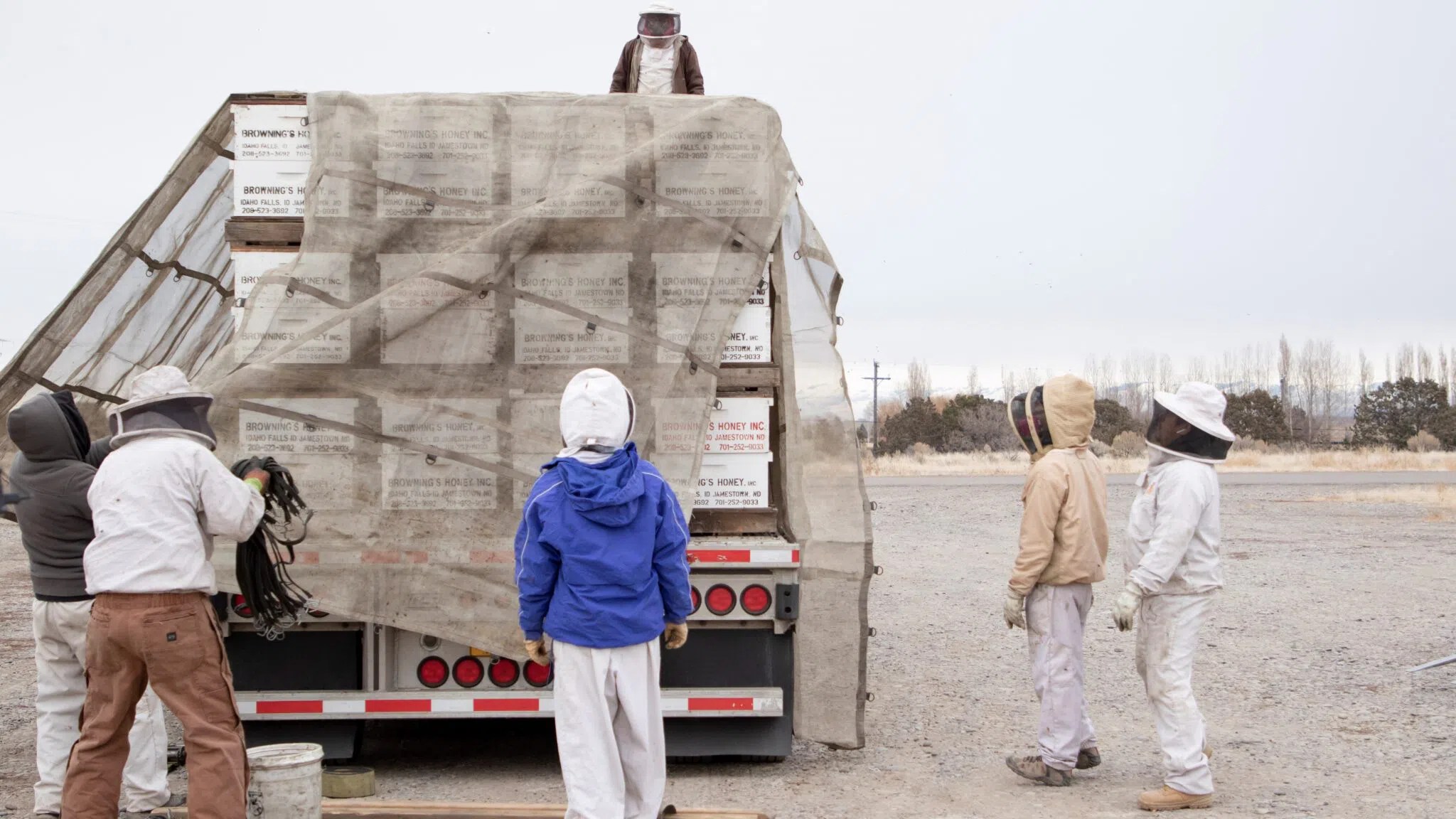
And moving those bees…
About 75% of crops and one-third of the global food supply rely on pollinators such as honeybees, according to Our World in Data. But farmers have to rely on commercially managed honeybees trucked in from other states to help pollinate certain crops, such as almonds, because there aren’t enough wild bees to do the job. And trucking bees hundreds or thousands of miles is not simple…
Honeybees are disappearing due to shrinking habitats and the growing use of pesticides. When there aren’t enough bees to pollinate fields of crops, companies pay beekeepers to transport their colonies of bees for pollination season.
“The great pollination migration” happens every year in February when the almonds bloom in California.
Pollinating the seemingly endless fields of almond trees in California requires 85% to 90% of all honeybees available to pollinate in the U.S… Bees are trucked into California from across the country…
Earl and Merle Warren are brothers, truck drivers and co-owners of Star’s Ferry Transport, based in Burley, Idaho. They started hauling bees for a local beekeeper in 1990 and moved about 50 loads of approximately 22 million bees each last year for companies such as Browning’s Honey Co.
“This is not like a load of steel or lumber. These are live creatures. This is those beekeepers’ livelihoods, so we do everything possible to keep them alive,” Earl Warren said.
Some beekeepers estimate that every time you move a truck of bees, up to 5% of the queens die… Minimizing stress for bees is critical, so beekeepers rely on experienced truck drivers to navigate difficult situations such as warm weather, few opportunities to stop during the day and inspections…
A fascinating link in the modern food chain: “A day in the life of a honeybee trucker,” from Alyssa Sporrer (@SporrerAlyssa).
* Henry David Thoreau
###
As we ponder pollination, we might spare a thought for a scientist whose very field of study was (and is) made possible by bees, Anders (Andreas) Dahl; he died on this date in 1789. A botanist and student of Carl Linnaeus, he is the inspiration for, the namesake of, the dahlia flower.


You must be logged in to post a comment.