Archive for September 2013
“The life so short, the craft so long to learn…”*

David Rees put aside a successful career as a political cartoonist to devote himself to artisanal pencil sharpening. Rees began after a stint with the 2010 Census, where he spent all day recording his findings with a No. 2 pencil.
“I thought there’s got to be a way to get paid to sharpen pencils for people,” he said.
1,804 flawlessly-sharpened (mostly) No. 2 pencils later, Rees has authored a book on his craft, collected an arsenal of different sharpeners, and taught classes on the finer points of fine points.

Rees’ website “Artisanal Pencil Sharpening” sells his book and sharpened pencils. (“Traditionally people mail in their pencils to be sharpened; however David now offers a new service: He will provide the pencil.”) The books ship quickly, the pencils ($35) take approximately six weeks to ship, and cost more than the book ($20).
Read more at Tyler Cown’s Marginal Revolution.
*Hippocrates
###
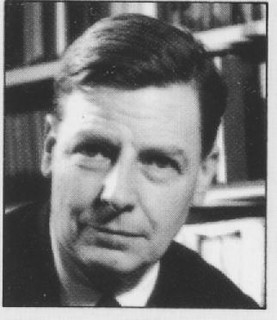
As we ponder the point, we might send mysterious birthday greetings to John Innes Mackintosh Stewart; he was born on this date in 1906. A prolific and distinguished Oxford literary scholar and an accomplished literary novelist. Stewart is more widely known by his pen name, Michael Innes, under which he wrote almost fifty crime novels and short story collections, most featuring the urbane detective John Appleby (for example, your correspondent’s favorite, Hamlet, Revenge!)
Significance is where you find it…

At CoolSerialNumbers.com, Nashville musician and currency collector Dave Undis brings together like-minded digit-heads who have little interest in the history of money or even the denomination of a given note. Instead they are after certain patterns and series that fall under the flexible heading of “fancy” serial numbers.
Low serial numbers, from 00000001 to 00000100, are sought after, as well as palindromes (23599532), solids (with a digit that repeats eight times), seven-of-a-kinds (66666665), ladders (45678901) and important dates (12071941). The criteria get even more obscure from there: Undis is seeking a pi note, with the number 31415927. But the more apparently jumbled the digits, the less likely it is that anyone with the bill in their wallet will ever notice.
Which is too bad when you consider how much these fancy numbers can sell for—quite a bit more than the bill’s face value, in some cases. Right now, on Undis’ website, you can buy a $1 bill with the serial number 00000002 for a whopping $2,500. If that sounds like chump change, consider that a $5 bill with the number 33333333 goes for $13,000.
You can also peruse the Cool Serial Numbers collection, displayed via Google+, and get a sense for how oddly soothing a row of zeros can be, although “radar repeaters” have an interesting effect of their own, and who could resist collecting the elegant numbers of the Fibonacci sequence?…

Read all about it at “A ‘fancy’ serial number can make a $1 bill worth thousands.”
###
As we comb through our currency, we might recall that it was on this date in 1920, his first season with the New York Yankees (after being traded from the Red Sox), that Babe Ruth hit a record 54th home run. While seven years later Ruth raised the record to 60– a mark only topped in 1961 by Roger Maris– it was this first year in pin stripes that changed baseball forever: at Boston, Ruth had been a starting pitcher; but the Yankees moved him to right field, making him a regular hitter. And hit he did. Ruth ushered in the “live-ball era” of the sport, as his big swing led to rising home run totals that thrilled fans, but more fundamentally helped baseball evolve from a low-scoring, speed-dominated contest to a high-scoring power game.
And, of course, he did it without the aid of modern performance enhancements… just cigars and booze.

Ruth in 1920
Every picture tells a story…
… and some tell more complicated stories than others…

This [1897] chart, digitized by the Library of Congress, depicts major battles, troop losses, skirmishes, and other events in the American Civil War. (Click on the image to arrive at a zoomable version, or visit the LOC’s website.)
The “Scaife Synoptical Method,” advertised at the top of the timeline, aimed to fit as much information as possible into a single chart. Information on Arthur Hodgkin Scaife is scant, but the Comparative Synoptical Chart Company, apparently based in Toronto, also published his “Synoptical Charts” of the “Cuban Question,” English history, and the life of William Gladstone…
Read the whole story at Vault.
###
As we concentrate on consolidation, we might recall that it was on this date in 1863 that Union Generals Alexander M. McCook and Thomas Crittenden were relieved of their commands and ordered to Indianapolis, Indiana, to face a court of inquiry following the Federal defeat at the battle of Chickamauga in Georgia (c.f., the chart above). As History. com explains…
Eight days before, the Union Army of the Cumberland, commanded by General William Rosecrans, had retreated from the Chickamauga battlefield in disarray. On the battle’s second day, Rosecrans mistakenly ordered a division to move into a gap in the Federal line that did not exist, creating a real gap through which the Confederates charged, thus splitting the Union army. One wing collapsed, and a frantic retreat back to Chattanooga,Tennessee, ensued. The other wing, led by General George Thomas, remained on the battlefield and held its position until it was nearly overrun by Confederates.
The search for scapegoats began immediately, and fingers soon pointed to McCook and Crittenden. Their corps had been part of the collapsed flank, so Rosecrans removed them from command. Crittenden’s removal stirred anger in his native Kentucky, and the state legislature sent a letter to President Abraham Lincoln demanding a reexamination of the firing. In February 1864, a military court cleared McCook and Crittenden, but their careers as field commanders were over. By quickly removing McCook and Crittenden, Rosecrans had been trying to save his own job. Within weeks after firing the generals, Rosecrans was himself replaced by Thomas.

lithograph by Kurz and Allison, 1890
Equality for all!…

This speculative map imagines a world divided into 665 territories of approximately equal population (10-11 million people each). The logic of the map does not entirely discount existing ethnic or national boundaries, but neither is it beholden to them. The particular political rationale behind these divisions is not addressed – whether these are independent nation-states or provinces of a world government is left to the imagination of the viewer. The map is rather meant to provide a visual representative of the radically unequal distribution of the world’s population. For example, one New York City and Long Island = half of Karachi = one Russian Far East = one of every Pacific Island. What does this make you think about the current distribution of the world’s resources, the movement of populations and the arbitrariness of territorial divisions?

Explore this “geography thought experiment” at World of Equal Districts.
###
As we ponder proximity, we might send hard-boiled birthday greetings to James Myers “Jim” Thompson; he was born on this date in 1906. Arguably the finest of all pulp-crime writers, Thompson began his career as a “traditional” author, publishing his first two novels, Now and on Earth and Heed the Thunder as hardbacks. After these books failed to find wide audiences, Thompson found his voice in crime fiction, grinding out hellish tales for paperback mills such as Lion Books and Gold Medal. While he was quite prolific– Thompson once produced 12 books in 2 years– his crime fiction wasn’t paying the bills; so he turned to screenwriting, working with Stanley Kubrick on The Killing and Paths of Glory, to writing for TV series (Mackenzie’s Raiders, Cain’s Hundred, and Convoy), and to penning novelizations (e.g., Ironside).
But through it all, Thompson wrote thrillers– noir nuggets that included The Killer Inside Me, Savage Night, A Hell of a Woman, and Pop. 1280. Thompson was convinced that recognition would come to him only after his death; and while two of his novels (The Killer Inside Me and The Getaway) were made into films during his lifetime, he was, sadly, largely right. Since his death in 1977, both those films have been remade (The Getaway, twice, if one counts the first half of the Rodriguez/Tarantino mash-up From Dusk ’til Dawn), and several others adapted: The Grifters (nominated for four Oscars), After Dark, My Sweet, and This World, Then the Fireworks, among others. More to the point, Thompson’s writing has increasingly been appreciated for the marvel that it is.
The guy was over the top. The guy was absolutely over the top. Big Jim didn’t know the meaning of the word stop. There are three brave lets inherent in the forgoing: he let himself see everything, he let himself write it down, then he let himself publish it.
– Stephen King
If Raymond Chandler, Dashiell Hammett & Cornell Woolrich could have joined together in some ungodly union & produced a literary offspring, Jim Thompson would be it.
– Washington Post

The Word of Muad’Dib…

What happens when you mash up Bill Watterson‘s Calvin and Hobbes with Frank Herbert’s Dune? It gets even more philosophically resonant…

Embark on the adventure at Calvin & Muad’Dib. [Muad’Dib? click here.]
###
As we chuckle contemplatively, we might recall that it was on this date in 1960 that Cuban President Fidel Castro gave his debut speech at the U.N.– at four and a half hours, the longest ever in the General Assembly. Castro had taken a friendlier tone on his first U.S. visit, a year earlier; but by 1960, he had moved firmly into the Soviet Camp, He used his maiden U.N. address to blast U.S. imperialism and to insult John F. Kennedy and Richard Nixon, the presidential candidates at the time.
Were Kennedy not a millionaire, illiterate, and ignorant, then he would obviously understand that you cannot revolt against the peasants.

You must be logged in to post a comment.