Posts Tagged ‘Andrew Jackson’
Taking tunes along on that summer outing (pre-iAge)…
 (thanks, Boing, Boing)
As we adjust our headphones, we might spare a thought for James Smithson, who died on this date in 1829, in Genoa, Italy. Smithson had been a fellow of the venerable Royal Society of London from the age of 22, and had published numerous scientific papers on mineral composition, geology, and chemistry. In 1802, he overturned popular scientific opinion by proving that zinc carbonates were true carbonate minerals; indeed, one type of zinc carbonate was later named smithsonite in his honor.
But perhaps most notably, Smithson left behind a will with a peculiar footnote: In the event that his only nephew died without heirs, Smithson decreed that the whole of his estate would go to “the United States of America, to found at Washington, under the name of the Smithsonian Institution, an Establishment for the increase and diffusion of knowledge.”
Smithson had been a fellow of the venerable Royal Society of London from the age of 22, and had published numerous scientific papers on mineral composition, geology, and chemistry. In 1802, he overturned popular scientific opinion by proving that zinc carbonates were true carbonate minerals; indeed, one type of zinc carbonate was later named smithsonite in his honor.
Six years after his death, his nephew, Henry James Hungerford, died without children; so on July 1, 1836, the U.S. Congress authorized acceptance of Smithson’s gift. President Andrew Jackson sent diplomat Richard Rush to England to negotiate for transfer of the funds, and two years later Rush set sail for home with 11 boxes containing a total of 104,960 gold sovereigns, eight shillings, and seven pence, as well as Smithson’s mineral collection, library, scientific notes, and personal effects. After the gold was melted down, it amounted to well over $500,000– a fortune in those days.
After considering a series of recommendations, including the creation of a national university, a public library, or an astronomical observatory, Congress agreed that the bequest would support the creation of a museum, a library, and “a program of research, publication, and collection in the sciences, arts, and history.” On August 10, 1846, the act establishing the Smithsonian Institution was signed into law by President James K. Polk.
John Smithson, who had never visited the United States while alive, is interred in a tomb in the Smithsonian Building (“The Castle,” as it is popularly known).

Time’s past..
From the inquisitive folks over at Reason, an amusing, and at the same time provocative, look at “The Top 10 Most Absurd Time Covers of The Past 40 Years”
Consider for example:

Oh, Just Settle Down: The crack kids myth has been extensively debunked, most recently in the January 2009 New York Times article “Crack Babies: The Epidemic That Wasn’t.” The Times quoted researchers who’ve been following the so-called crack generation of kids, and they’re finding the effects to be minor and subtle, and virtually indistinguishable from other problems that kids of crack mothers might experience, such as unstable families and poor parenting. Persistent scare stories from Time and other media outlets (including The New York Times itself) made “crack babies” a nationwide moral panic, inspiring a racially fueled push for stricter drug laws. As the Times article explains, the crack baby myth itself may now be doing harm to otherwise normal kids: “[C]ocaine-exposed children are often teased or stigmatized if others are aware of their exposure. If they develop physical symptoms or behavioral problems, doctors or teachers are sometimes too quick to blame the drug exposure and miss the real cause, like illness or abuse.”
For similar treatments of Mr. Luce’s Magazine’s hysteria over satanism, porn, crack, and Pokemon see here.
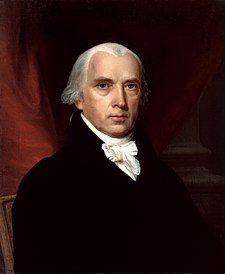
As we contemplate the substitution of hyperbole for reportage in so much– too much– of the mainstream media, we might recall that it was on this date in 1812 that President James Madison signed the declaration of war against Great Britain that formally launched the War of 1812. Three U.S. incursions into Canada launched in 1812 and 1813 were all handily turned back by the British despite the fact that the bulk of British force was tied up in an unpleasantness with the Emperor of France and his troops. But the decline of Napoleon’s strength freed the English to devote more resources to the West… leading to the 1814 burning of the White House, the Capital, and much of the rest of official Washington by British soldiers (retaliating for the U.S. burning of some official buildings in Canada. Still, by the end of 1814 a combination of naval and ground victories by the Americans had driven the British back to Canada, and on December 14, 1814 the Treaty of Ghent, ending the war, was signed… sadly for the British, word of the accord did not reach troops on the Gulf Coast in time to head off an attack (on January 8, 1815) on New Orleans– which was turned back by American forces led by Andrew Jackson. Jackson became a national hero, who rode his fame to the (rebuilt) White House; Johnny Horton got a Number One record out of it (Billboard Hot 100, 1959)… and the English had to console themselves with their victory at Waterloo later that year– on this date in 1815…
You must be logged in to post a comment.