Posts Tagged ‘Florence Hazrat’
“The art of the parenthesis is one of the great secrets of eloquence in society”*…
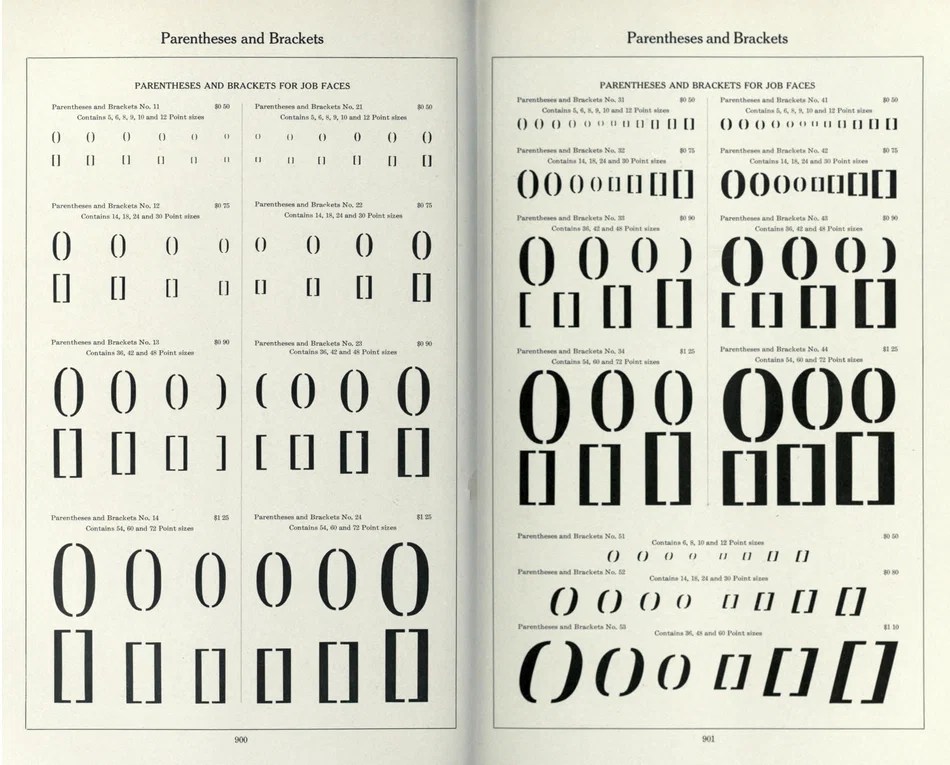
Florence Hazrat, with an adapted excerpt from her recent On the Mark- From Periods to Interrobangs, How Punctuation Remade the World…
On October 16, 1586, a young man writes a desperate letter to his friend: “My dear Weyer: Come. Come. My life is in danger and I long to see you.” Weak from the festering wound in his thigh, he scribbles those few lines in a shaky, hardly legible hand. Will the famous doctor be able to save him? When Weyer arrives the next day, the letter writer is already dead. Sir Philip Sidney [here], courtier, poet, and fervent Protestant soldier under Queen Elizabeth I, had been fighting Catholic Spain in the Netherlands when a bullet struck him, burying itself deep in the flesh of his thigh. The life of the superstar of Tudor high society was cut short, at the age of thirty-one, in a way mirrored by his own writing: Just before leaving for his holy war, Sidney interrupted the epic story about errant knights [The Countess of Pembroke’s Arcadia or simply Arcadia], which he had been working on for years, in the middle of an exciting battle. He left the action hanging on a parenthesis.
Anaxius lept away. Whereat ashamed (as having never done so much before in his life)
Readers, like the sentence and the plot, are on tenterhooks about what comes next. The work, of course, remains unfinished. Even so, Sidney was merely following a common composition practice of pausing mid-sentence or mid-matter, and using the parenthesis as a memory springboard when it was time to pick up the pen again. Yet considering how his own life was cut short at the height of his social and literary success, it’s hard not to entertain interpretations of the interrupted sentence as an eerie omen…
… When Coluccio Salutati invented the parenthesis, nearly 200 years before Sidney perfected it, he rendered visible an age-old rhetorical practice of inserting a particle of a sentence into a greater whole. The Roman rhetorician Quintilian called it interpositio, drawing attention to putting something in the middle of something else. But one suspects that there is a limit for how long the mini-digression can become without hijacking the main sentence (or story). There was no rule on the length of a parenthesis; it was up to the discretion of the writer to adjudicate appropriate delay. It makes sense, then, that Sidney’s near-contemporary, the schoolmaster John Hoskins, writes in his Directions for Speech and Style (1600) that “all parentheses are in extremities, either graces or disgraces to a speech”…
… Parentheses, turning the inside of a sentence out and the outside in, ask readers to shuttle back and forth, exercising mental agility that nurtures a flexible set of thoughts and feelings. Sidney’s brackets include qualifications of the thrust of the main sentence, comparisons, doubts, metaphors, and examples, all of which dilate the narrative into a complex, three-dimensional woven tapestry, accommodating innumerable opinions and interpretations. The parenthesis in word and deed is an ethical way of life: We pause for thought.
There’s something mysterious about the “little moons”, as Erasmus called them. The moon has represented, in various traditions, creation and destruction, rebirth, eternity, the feminine, time, marking time, mystery, the night, and secrets. And so has the parenthesis. The convex-concave curves of the open and closed parentheses cup something said by the way, whisperings, secrets mouthed into the reader’s ear, mumbled under the author’s breath. For Renaissance writers, punctuation belonged to the visual-grammatical and the spoken-rhetorical. Headmaster and pedagogical author Richard Mulcaster categorizes parentheses as “creatures to the pen and distinctions to pronounce by”. They’re amphibian in striking out a precarious existence as belonging to both the water of the spoken and the land of the seen. The (two) visual walls make meaning discrete, even as they remain permeable enough for the eye to slip in and out. You can’t overlook a bracket. Yet you can also read right through it. How does one read a bracket? How does one read it out? Mulcaster suggested that “the words enclosed by them are to be pronounced with a lower and quicker voice than the words either before or after them.” Both visually and aurally, then, what’s inside nestles safely between parenthetical palms, protecting tender expressions of intimacy.
Brackets establish a special magic between reader and writer. Perhaps that’s why Sidney used them to dedicate his work to his sister Mary, a gifted translator and accomplished poet in her own right:
Here now have you (most deare, and most worthy to be most dear Lady) this idle work of mine: which I fear (like the spider’s web) will be thought fitter to be swept away, than worn to any other purpose. For my part, in very truth (as the cruel fathers among the Greeks, were wont to do to the babes they would not foster) I could well find in my heart, to cast out in some desert of forgetfulnes this child, which I am loath to father.
Sidney is hedging his words in ever more delaying parentheses. He adds comparisons (“like the spider’s web” and “as the cruel fathers”), classical allusions to Greek myth, and appeals to the reader (“most dear Lady”). Parentheses encase words, keeping vulnerable admissions safe and visually private. An open bracket is always twinned with a closed bracket — the words inside are never left out in the cold…
The uncontested early modern king of brackets and the place of the parenthesis: “Philip Sidney and the Extreme (Dis)graces of the Parenthesis,” from @publicdomainrev.bsky.social.
###
As we interrogate interpositions, we might note that today is Ship in a Bottle Day.
Ship in a Bottle Day was first celebrated in 2013. October 4 was chosen in honor of Jack Hinkley, founder of the Ship in a Bottle Association of America, who helped promote and preserve this unusual maritime craft.
The tradition of building ships in bottles became especially popular in the 18th and 19th centuries. Sailors often made small models during long voyages, using their knowledge of ships, rigging, wood, thread, and simple tools.
The secret is not that the bottle is cut open. In traditional ship-in-a-bottle construction, the model is built so the masts and sails can fold down. The ship is carefully inserted through the neck of the bottle, and then the rigging is pulled to raise the masts into place. The process requires patience, steady hands, and careful planning. – source

You must be logged in to post a comment.