Posts Tagged ‘automotive industry’
“The future is electric”…
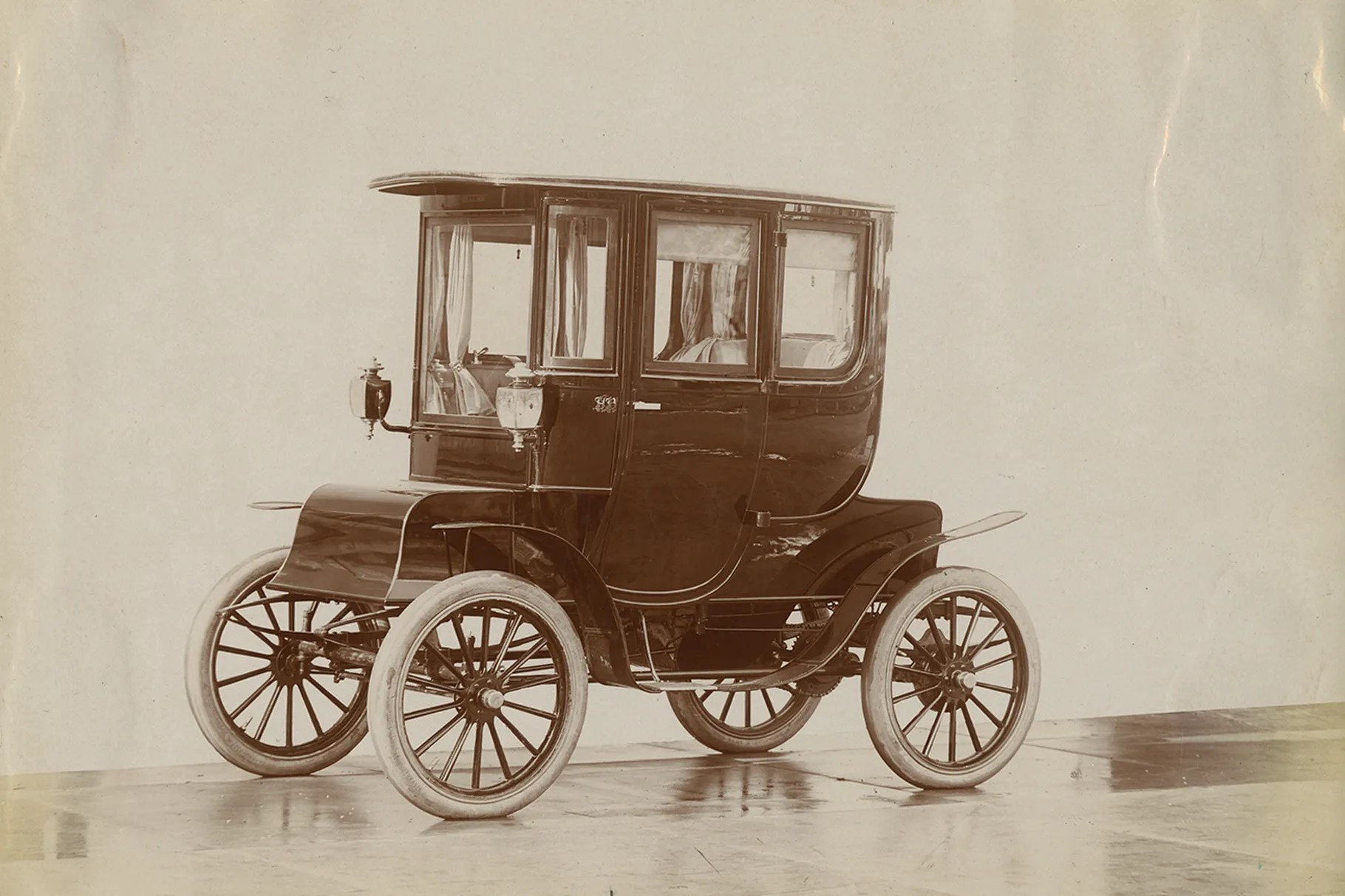
And also a thing of the past…
For a brief period in the early 20th century in the United States, the electric car was high society’s hottest commodity, sought after by socialites and businessmen alike…
During the early years of the “Automotive Age,”—from about 1896 to 1930—as many as 1,800 different car manufacturers functioned in the U.S. While innovators in Europe had been working on battery-powered vehicles since the 1830s, the first successful electric car in the U.S. made its debut in 1890 thanks to a chemist from Iowa. His six-passenger was basically an electrified wagon that hit a top speed of 14 mph.
By 1900, electric cars were so popular that New York City had a fleet of electric taxis, and electric cars accounted for a third of all vehicles on the road. People liked them because in many ways early electric cars outperformed their gas competitors. Electric cars didn’t have the smell, noise, or vibration found in steam or gasoline cars. They were easier to operate, lacked a manual crank to start, and didn’t require the same difficult-to-change gear system as gas cars.
Electric cars became extremely popular in cities, especially with upper-class women who disliked the noisy and smelly attributes of gasoline-powered cars. A New York Times article from 1911 reported, “The designers of electric passenger car-carrying vehicles have made great advances in the past few years, and these machines have retained all their early popularity and are steadily growing in favor with both men and women.”…
Like today, one of the challenges for early electric car owners was where to charge them. But by 1910 owners could install their own charging stations on their property, and an increasing number of car-repair shops popped up that allowed electric cars to charge overnight.
One of the most eccentric and interesting manufacturers of early electric cars was Oliver P. Fritchle, a chemist and electrical engineer who began as an auto repairman until he realized he could build a better electric car himself. Fritchle sold his first vehicle in 1906 and set up a production plant in Denver, Colorado, in 1908.
Fritchle made one of the best car batteries in the business, which he claimed could travel 100 miles on a single charge…
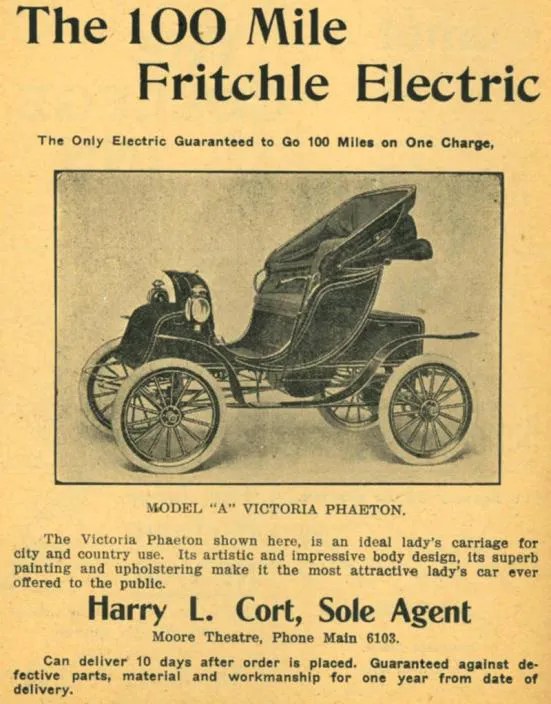
What’s old is new again: “Before Tesla: Why everyone wanted an electric car in 1905,” from Megan Barber (@megcbarber) in @Curbed.
###
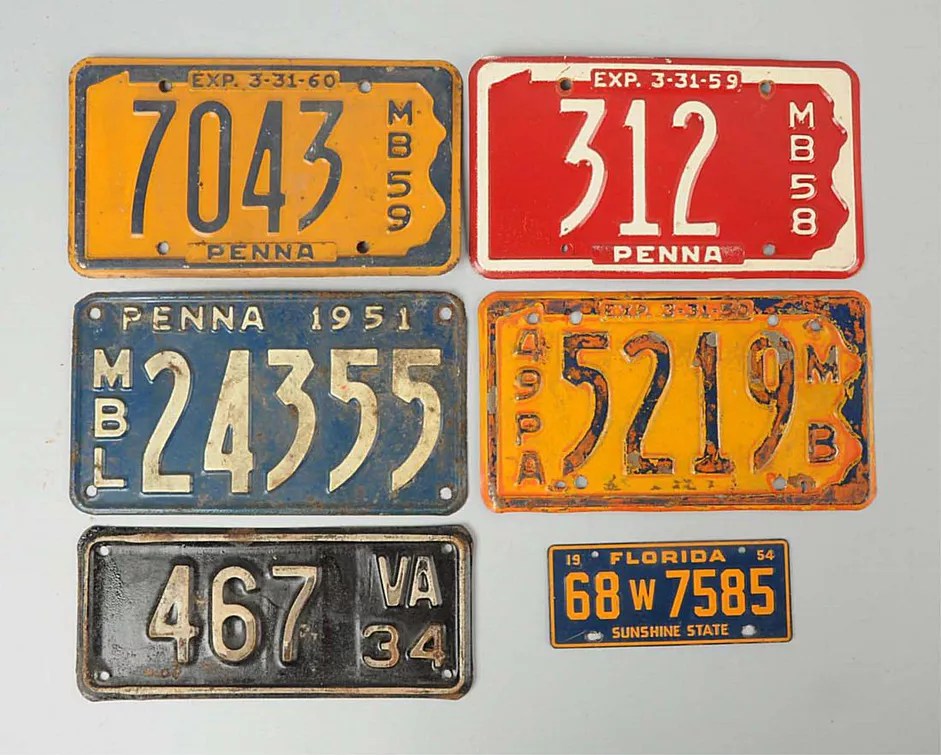
As we recharge, we might recall that it was on this date in 1955 that the U.S. Federal government standardized the size of license plates throughout the U.S. Originally, owners had been responsible for their own tags; then individual states had designed– and dimensioned– license plates, resulting in wide variations.
Five sweet seconds…

From our friends at The Selvedge Yard:
One of the greatest rivalries in all of Drag Racing history has to be the classic Wildlife Racing matchup– Don “Snake” Prudhomme vs. Tom “Mongoose” McEwen. Any red-blooded boy born of that era remembers their famous Funny Cars decked-out in bright Hot Wheels badges screaming down the 1/4 mile in a furious blur that lasted all of 5 sweet seconds. The two faced-off in match races that raged over a period of about 3 years. Don Prudhomme, being the stronger competitor, usually came out on top. Their epic West Coast battles, fueled by huge sponsorship deals (Mattel, Coca-Cola, Plymouth, and Goodyear) were a major draw, and their loyal fans never tired of seeing them go head to head.
 At the Dallas International Motor Speedway, 1971
Per the poster at the top of this post, see more at the Peterson Automotive Museum’s new exhibit, NHRA: Sixty Years of Thunder…
As we rev our engines, we might recall that it was on this date in 1982 that John Z. DeLorean, the auto industry celebrity credited with designing the Firebird, the GTO, and of course the (Back to the Future-starring) DeLorean, was arrested and charged with conspiracy to obtain and distribute 55 pounds of cocaine. DeLorean was ultimately acquitted of the drug charges, but was soon back in court charged with fraud; over the next two decades, he was forced to pay millions of dollars to creditors (and of course lawyers).
 DeLorean and the DeLorean (source)
You must be logged in to post a comment.