Archive for the ‘Uncategorized’ Category
“A free press can, of course, be both good and bad; but, most certainly, without freedom, the press will never be anything but bad”*…

The Fourth Estate is, of course, hugely influential in civic and political life; a free press is essential to the healthy functioning of a democracy, in the U.S. and around the world— more generally to effective self-determination in any society. So the latest World Press Freedom Index from Reporters Without Borders (RSF) is concerning. Indeed, the global state of press freedom has reached a 25-year low.
RSF has been compiling the Index since 2002; as of this year:
• Less than 1% of the global population lives in a country rated as having “good” press freedom.
• More than half of countries and territories now fall into the “difficult” or “very serious” categories, up from 13.7% in 2002.
• The U.S. ranks 64th globally in 2026, down from 17th when the index began.
The index ranks 180 countries and territories based on five indicators: political context, legal framework, economic context, sociocultural context, and journalist safety.
This world map shows press freedom scores around the world in 2026, revealing a widening divide between Europe, the only region with countries rated “good,” and much of the rest of the world.

More on what’s happening and why: “Mapped: Press Freedom Around the World in 2026,” from @voronoiapp.bsky.social (and, of course, much more in the RSF Index)
(Image above: source)
* Albert Camus
###
As we challenge censorship (and oligopolistic control), we might recall that it was on this date in 1917 that the first Pulitzer Prizes were awarded. In his will, Joseph Pultizer specified solely four awards for excellence in journalism, four in books and drama, one for education, and five traveling scholarships.
In journalism, prizes were to recognize “the most disinterested and meritorious public service rendered by any American newspaper during the preceding year” (a gold medal worth $500 with no monetary component); “the best editorial article written during the year, the test of excellence being clearness of style, moral purpose, sound reasoning, and power to influence public opinion in the right direction” ($500); and “the best example of a reporter’s work during the year, the test being strict accuracy, terseness, the accomplishment of some public good commanding public attention and respect” ($1,000). (A $1,000 prize for the best history of services rendered to the public by the American press in the preceding year was only awarded once; similarly, a $1,000 prize for a paper on the development of the School of Journalism was never awarded due to a dearth of competitors.)…
… the Pulitzer Prize Board, has increased the number of awards to 23 and introduced poetry, music, photography, memoir and audio journalism as subjects, while adhering to the spirit of the founder’s will and its intent…
– source
The awards were administered/bestowed by Columbia University (the journalism school at which Pulitzer had endowed). Herbert B. Swope received the first Pulitzer for journalism (the only one awarded in that first year of the program) for his series “Inside the German Empire” for the New York World… as it happens, a Pulitzer paper.
The Internet Archive has the book that Swope’s series became)

“By failing to prepare, you are preparing to fail”*…
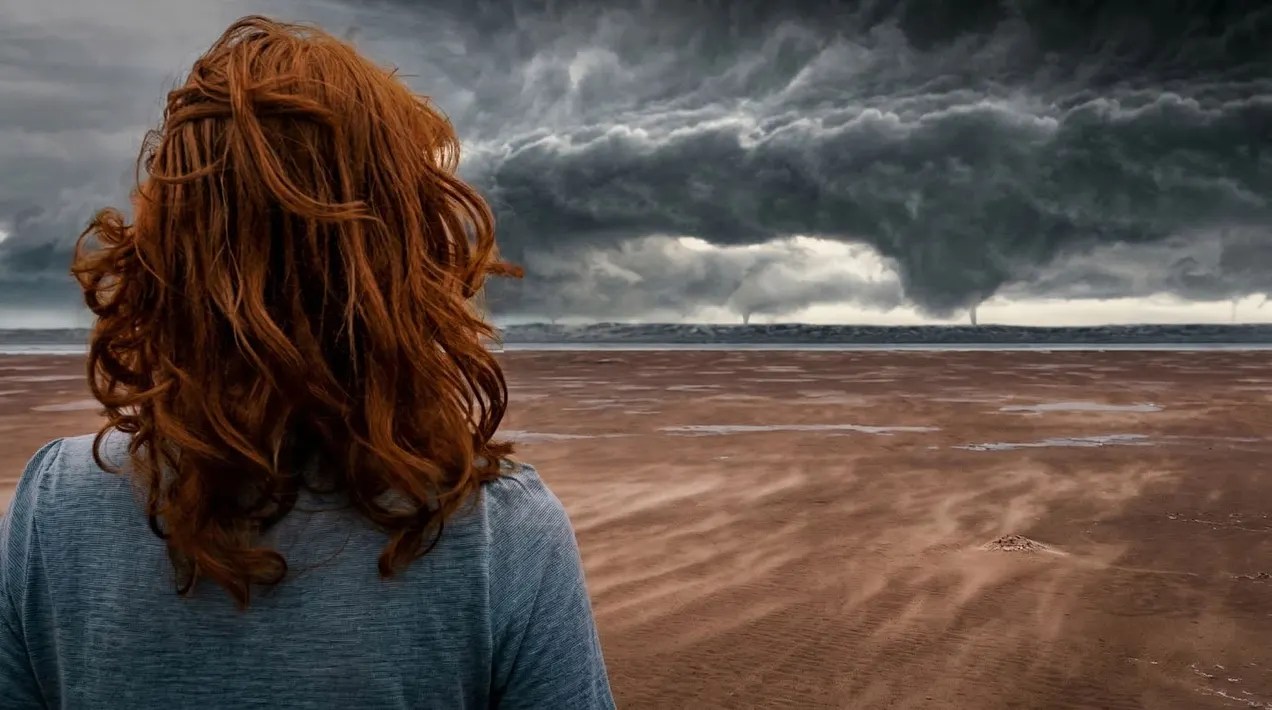
Further, in a fashion, to yesterday’s post, a piece by Nate Hagens on preparing for what promises to be (to put it politely) a challenging future. It’s via (R)D‘s old friend Patrick Tanguay (and his wonderful newsletter Sentiers), who does the introductory honors…
Nate Hagens has spent two decades mapping what he calls the “more-than-human predicament,” the interlocking crises of fossil fuel depletion, ecological overshoot, and economic fragility. This piece marks a shift in his focus: the diagnostic work is largely done, and the current moment demands a framework for action rather than further description of the problem. It’s quite long and perhaps a bit dry, but considering the complexity of everything he’s talking about, I think it reaches a nice balance between all the things and “ok, I can read this, sit with it, and have a well ordered map of what needs doing and a framework from which to work.” The framework has four levels—personal psychological grounding, trusted network-building, six broad intervention fronts, and a timeline—premised on the idea that none of the material work is possible without first stabilising the individual (“being human”) and building shared understanding among people who see the situation clearly.
The six fronts—physical infrastructure, ecological intervention, dignity systems for the dispossessed, governance, culture and meaning, and economic transition—are not a menu but an interdependent set of domains where work is needed simultaneously. Some are familiar territory for anyone thinking about collapse and resilience; others are less obvious. Hagens insists, correctly, on including dignity infrastructure for people who will lose livelihoods as supply chains contract and jobs are automated, and treats culture and collective meaning-making as essential rather than supplementary. He also argues directly that ideological critique, however accurate, is not a plan. That the moment calls for moving from naming what’s wrong to building what comes next.
What gives the framework its structure is the timeline underneath it all: three overlapping phases. Phase A is the stability window that still exists in much of the world, and the one in which trust, infrastructure, and institutions must be built while surplus and coordination capacity remain. Phase B is the period of shocks and triage, already beginning in places, where the goal is to hold systems together and prevent cascades. Phase C is the stable destination—regenerative, locally embedded, equitable—that gives the earlier phases their direction. Hagens’ central argument is that what gets built now sets the initial conditions for everything that follows, and that path dependence operates at a civilisational scale.
Most of the positive climate outcomes we are likely to see in the next twenty years will not come from technology, they will come from curtailed economic expansion driven by the very forces I described at the beginning of this essay: war, debt, and energy depletion. We already got a preview of this during the pandemic as economic activity halted. Industrial activity contracting is not a climate policy, but it is a climate outcome. […]
Subsidiarity and local governance capacity: decisions made at the lowest appropriate level, which in many cases is probably much more local than we currently assume. Communities need the ability to govern their own resource allocation when higher-level institutions can’t or won’t. […]
Collective imagination and sensemaking: the role of arts and creative work in helping communities grieve, adapt, and imagine. This is not a luxury, it is how human groups have always metabolized disruption to continue working together. […]
Shared reality and sovereign visioning: the capacity of communities to tell their own story and find their own vision for the future rather than have it told for them by algorithms, demagogues, or strangers with large followings. In a period of disruption, the communities that hold together will have a strong enough shared cultural narrative to metabolize hardship without breaking apart. This is not a soft category, it is essential and has the ability to bear weight. […]
This window is finite, and many of us – especially in the last few weeks – are increasingly aware that it is closing. We just don’t know exactly how fast. But everything that can only be built in stability – institutional trust, physical infrastructure, knowledge transfer, and relationships – has to be built now, in this window, before conditions change. […]
What does it look like? Regenerative, resilient, human-scale, embedded in local ecology, equitable in a way that does not depend on infinite growth to fund redistribution, and rich in meaning, social connection, and all the things that actually make human life good.
Eminently worth reading in full. The logic of Pascal’s wager suggests that we take Hagens’ advice seriously: “What to Do as the World Falls Apart: A Framework for Action,” from @natehagens.bsky.social (via @inevernu.bsky.social).
Evidence that taking action can matter: “Scientists have scrapped the worst‑case climate scenario – because action is making a difference,” from Andrew King.
And a reminder that there’s more action to take: “The world is heading toward a financial crisis – the state of US politics has left us ill-prepared,” from Eduardo Porter.
* Widely (but incorrectly) attributed to Benjamin Franklin
###
As we prepare, we might recall that the Academy of the Distrustful was founded in the library room of the Palau Dalmases in Barcelona. A Baroque literary and musical academy with the aim of promoting the study of classical and Catalan history and poetry, mostly in Spanish, by fourteen scholars headed by the noble Pau Ignasi de Dalmases i Ros. In the event, it lasted only several years: during the War of the Spanish Succession several of its members supported Charles III of Austria over (the man who became) Philip V of Spain— and disbanded the group.
On this date in 2005, 2025, the 325th anniversary of its foundation, the Academy was reconstituted as a humanities academy (in the broadest sense of the term) in the Sala Dalmases of the Historical Archive of the City of Barcelona.

“All the cities of the world are going to expand. We need to have a better understanding of what makes good urban habitat for home sapiens.”*…

“When did our vision of the future become so constrained, tired, and even dystopic?” Julien Crockett talks with Bruno Carvalho, the author of The Invention of the Future: A History of Cities in the Modern World, about the history of city planning and how urban design intertwines with a society’s prognostications and projections…
Cities have long been places of possibility—places where it seemed that we could break from the past and create an entirely new future. As Bruno Carvalho observes in his new book, The Invention of the Future: A History of Cities in the Modern World, this mindset is a key feature of what it means to be “modern”—a sensibility toward the present and the future as it relates to the past.
Yet, as Carvalho’s wide-ranging history details, a break from the past does not assume a positive vision of the future. In fact, Carvalho begins his book with the question “Where did the future go?”—the title of a debate between the venture capitalist Peter Thiel and anthropologist David Graeber. Both imagine that the only cities of tomorrow are on Mars. When did our vision of the future become so constrained, tired, and even dystopic?
Carvalho’s book returns to a recurring paradox we have faced since the Enlightenment: the better our capacity for creation and prediction, the more limited our ability to imagine a new future. He marvels, though, that “we know some of what is coming: urbanization and climate change, life and death. Between all that, there is a lot of space for reinvention.”
In our conversation, we look to the past to help us think through what reinvention might look like and discuss what it means to plan for a radically different future. We also discuss the legacies of Silicon Valley, the construction of New York City, urban futures moving from the West across the Pacific, and whether Carvalho is optimistic about what’s to come…
Eminently worth reading and pondering: “Where Did the Future Go?” from @lareviewofbooks.bsky.social.
* Jan Gehl
###
As we undertake to understand the urban, we might recall that it was on this date in 455 that the Vandals entered Rome, which they plundered for the next two weeks. It was, as sackings went (this was Rome’s third, of four altogether), relatively “light”: while the Vandals (who had destroyed all of Rome’s aqueducts on their approach) looted Roman treasure and sold many Romans into slavery, their leader Genseric acceded to the pleas of Pope Leo that the Vandals refrain from the wholesale slaughter of Rome’s population and the destruction of the Eternal City’s historic buildings.

“A simile is just a metaphor with the scaffolding still up”*…
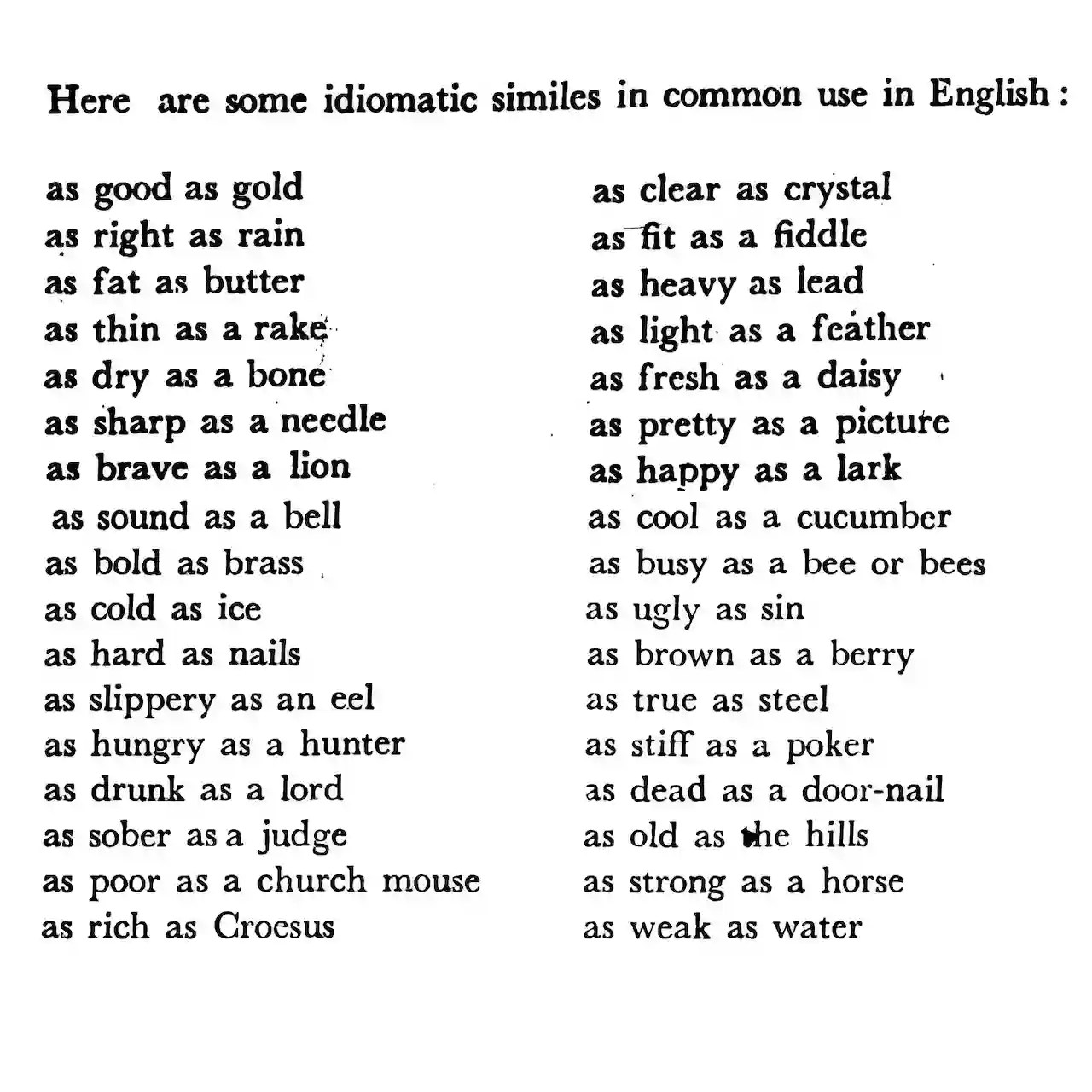
Russell Samora has been fooling around with figures of speech; with his colleagues at The Pudding, he’s fielded a fascinating analysis of of that comparative workhorse, the simile…
Similes are all around us. But, if you haven’t considered this figure of speech since grade school, here’s a refresher: similes compare a shared quality of two things, often using “like” or “as.”
I pulled every simile in the form “as ___ as ___” from tens of thousands of fiction books for the top 500 most common adjectives… I thought it would be a trivial exercise, but the more I poked around, the more questions I had…
Samora explains how similes are structured and how they are used (and with what relative frequency) in literature. He examines some of the most common– and several special cases (“The Ironic Ones”). And he explains his methodology and sources… all in the context of a lovely interactive data visualization.
It’s as cool as hell: “Comparisons as Predictable as the Sunrise,” from @pudding.cool.
###
As we agree with Steve Martin that “a day without sunshine is like, you know, night,” we might recall that it was on this date in 1789 that Richard Kirwan published his essay in support of the phlogiston theory (the belief, that dates to alchemical times, in the existence of a fire-like element (dubbed “phlogiston”) contained within combustible bodies and released during burning. Kirwan was among the last of its advocates.
A well-regarded scientist in the late 18th and early 19th centuries, Kirwan met and corresponded with Black, Lavoisier, Priestley, and Cavendish. Indeed, while scientific history remembers him as a defender of an incorrect theory, his work probably spurred Priestley and Lavoisier, who respectively discovered and named the actual elemental agent of combustion, oxygen.
But Kirwan is also remembered for a personal eccentricity (one of many) that led to some referring to him (all too poignantly) as “crazy as a bed bug”: he hated bugs (especially flies). Kirwan paid his servants a bounty for each one they killed.

“Common sense is not so common”*…

The Enlightenment is under attack by the Left and the Right. It can only be “saved,” Eliane Glaser argues, through use of its greatest legacy: permanent critique. And then there’s AI. After summarizing the critiques from both sides, she continues…
In consequence of this pincer-movement attack, the Enlightenment’s legacy is existentially vulnerable. It makes me deeply worried as someone whose entire career has been built on trying to understand and analyse the world around me – especially a world that still tries to confine thinking women to the realms of emotion and ‘personal experience’.
I believe that Enlightenment values are essential, but that we have largely forgotten how to make a good case for them: we need to rely on shared facts, tested by experiment; a public sphere where open discussion can take place; and the belief that discussion should be founded on reasoned argument. We need, moreover, to cherish the more political values of tolerance, freedom, human rights and the common good. Advocates for artificial intelligence have the temerity to claim that large language models are ushering in a ‘second Enlightenment’ (a claim that was uncritically echoed in a paper published by the World Economic Forum last year) when what we are in fact seeing is the destruction of the Enlightenment legacy under the false banner of its name. As the historian David Bell argued in The New York Times in 2025, AI is actually ‘shedding Enlightenment values’ by simply reinforcing ‘what we already think we know.’ In The Guardian,the journalist and geopolitical risk consultant Joseph de Weck warned that ‘AI is taking us back to the dark ages’, making us lazy, and stymying independent thinking.
The evidence suggests that we are going through a rapid de-enlightenment. Newspaper circulations, attention spans, and trust in forms of agreed knowledge are in freefall. Misinformation, disinformation and deepfakes are gaining ground. If we let go of the valuable aspects of the Enlightenment project, we open ourselves up to a world of AI blather, ‘my truth’ pronouncements, wobbly sentiment and unchecked power.
My unease with this parlous state of affairs has provoked me to go back and rethink the Enlightenment and what it has to offer. But, rather than unthinkingly recouping it as a mission, I want instead to tease out and weigh up its merits, to discern with nuance what is still fit for our times. I want to ask if it is possible to rescue the Enlightenment’s rallying power, and if it’s worth defending what the combined forces of Left and Right are coming together to attack. Are the Enlightenment’s deficiencies barnacles on an old ship, or integral to its design?…
And so she does. Do read on: “Flickering Enlightenment,” from @elianeglaser.bsky.social in @aeon.co.
* Voltaire
###
As we reclaim reason, we might spare a thought for a glorious product of the Enlightenment, Joseph Haydn; he died on this date in 1809. A composer of the Classical period, he was pivotal in the evolution of chamber music forms like the string quartet and piano trio, and is known as the “Father” of both the symphony and sonata forms. Haydn was a friend and mentor of Mozart, and a teacher of Beethoven; indeed, the Haydn, Mozart and Beethoven trio are sometimes referred to as the “First Viennese School.”
Schonberg wrote that Haydn “was the Classic performer par excellence, and in his long life, from 1732 to 1809, he grew up with the new musical ideas and, more than any one man, shaped them.”
You must be logged in to post a comment.